
Djuric: The fundamental postulates of international politics are changing – We must seize this historic opportunity
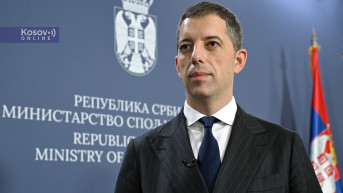
Serbia's Minister of Foreign Affairs, Marko Djuric, stated today that Serbia is in a historically complex moment that requires responsible and serious action, national unity, and institutional capacity. He emphasized the importance of democratically elected institutions in countering attempts to undermine Serbia’s interests, particularly regarding Kosovo, Republic of Srpska, and other key national issues.
“We are currently witnessing attempts in Kosovo and Metohija to intimidate the Serbian people and place them in a subordinate position. The judiciary under Albin Kurti is using so-called secret indictments to spread fear among the Serbian community, likely dissatisfied with how Serbs stood united, in solidarity, and with determination in the elections. We are also seeing citizens being summoned to police and prosecutorial institutions simply for participating in protests against Kurti’s authoritarian rule in 2023,” Djuric said in parliament.
He pointed out that this is just one illustration of why maintaining stability and institutions is crucial, warning that without them, the state would not be able to protect national interests in Kosovo, Republic of Srpska, or elsewhere.
“All our regional rivals and competitors welcome our weaknesses and use every opportunity to send a message to the international community that Serbia is not a credible partner,” Djuric stressed.
He highlighted that the fundamental postulates of international politics are undergoing significant change and that Serbia must not miss this opportunity. According to Djuric, the power dynamics within the United States, the leading force of Western civilization, are shifting, providing a historic chance for Serbia to align itself with these changes. He emphasized the importance of leveraging the contacts and connections that President Aleksandar Vucic and other officials have with key figures in the incoming U.S. administration. In this regard, he noted that one of Donald Trump’s sons, who is politically active and influential, was in Belgrade today.
He also pointed out significant changes occurring in Europe, particularly in key EU member states such as Germany, where the previous ruling coalition had been unfavorable to Serbia’s position on Kosovo and other national issues. Following elections in Germany, he believes that Serbia will have new partners in Berlin.
“Serbia must prepare for this new geopolitical reality,” Djuric stated.
“This historic opportunity emerging in the U.S. and Europe may not come again for many generations. We must engage with it fully and utilize our entire capacity. We will not allow Serbia to be humiliated or destroyed, nor its institutions to be dismantled. We will continue to build and improve our country, just as was done in the best periods of our history—when the Serbian people rose from a rural society to an advanced institutional state, serving as an example in the fight for freedom for many European nations of its time. Serbia remains a bastion of the fight for freedom. It will continue to live and thrive on the ideals of Karadjordje, Milos Obrenovic, and Saint Sava. I am convinced that the best times are yet to come and that we can create an atmosphere of social optimism, mutual respect, and national unity,” Djuric declared.
He also criticized the events that recently unfolded in the Serbian parliament, stating that an “ugly image” was sent to the international community, reinforcing negative stereotypes about the Serbian state and people.
“The last thing we needed was for our highest democratic institution to be trivialized and degraded, with MPs subjected to physical violence for expressing their views. How can we change this perception if we send a message that, as a society—not as a ruling party or coalition—we lack the capacity for strategic decision-making because we are engaged in street brawls instead of respecting democratic institutions? Who benefits from trampling on democracy by those who claim to defend it while disregarding the will of the majority of citizens who voted for the ruling coalition’s policies?” Djuric questioned.
He stressed that Serbia has clearly defined national policy principles, supported by the majority of citizens, prioritizing stability as the foundation for economic development and the preservation of national interests.
“The main advantage of Serbia is that we have achieved a broad social consensus on maintaining stability. That is priority number one—an absolute imperative,” Djuric emphasized.
The second fundamental pillar, he explained, is preserving Serbia’s independent and sovereign domestic and foreign policy, as well as military neutrality, amid global geopolitical challenges.
“This is a complex task, and part of the reason behind recent developments is that certain actors in the international community are uncomfortable with Serbia maintaining independent decision-making—both in foreign and domestic affairs,” he said, adding that many global players on both sides of the geopolitical divide do not want to see a Serbia that makes sovereign decisions.
“I am convinced that Serbia must and can preserve its independent position and decision-making capacity,” Djuric asserted.
He added that military neutrality is not only a reflection of Serbia’s development but also a response to the brutal violation of international law and NATO aggression 25 years ago, which resulted in the deaths of several thousand Serbian citizens. He noted that recent years have seen dignified commemorations of these events, unlike previous periods when they were downplayed or ignored.
Maintaining military neutrality, he emphasized, does not mean Serbia’s absence from international affairs or peacekeeping missions. On the contrary, Serbia is the third-largest peacekeeping contributor from Europe to UN missions.
Furthermore, he stressed that military neutrality requires a strong defense industry and military capabilities, which Serbia will continue to develop.
The third key foundation of Serbia’s national policy, according to Djuric, is economic development, which underpins all other national goals. Serbia, he stated, will continue to strengthen economic cooperation and promote the free movement of goods, people, services, and capital—both within the region through the “Open Balkan” initiative, which has created a unified labor market, and on a global scale, by securing access to markets worldwide.
As the fourth fundamental principle, he highlighted the fight for improving the demographic situation in Serbia.
The minister also noted that the fifth fundamental principle is the preservation and nurturing of the traditions of the Serbian people in Serbia, as well as those of all national communities living in Serbia.
"The preservation of culture, language, script, identity, tradition, and spirituality is not only crucial for us as a community, as it influences social cohesion, but also because the identity and tradition of the Serbian people or the identities of nations living in Serbia represent a universal contribution of Serbia to humanity," Djuric stated.
He added that the goal of those leading Serbia is to design policies that are not formulated from one election cycle to another, which are frequent, but rather for multiple generations or decades ahead. "This is a fundamental change in the paradigm of Serbian politics, which we rightfully take pride in on the international stage," Djuric said.
He also listed the results of Serbian diplomacy over the past four months, stating that since the beginning of December last year, eight bilateral visits to foreign countries have been carried out—Hungary, Slovakia, Romania, Greece, the Netherlands, Russia, China, and Israel—along with nine visits to Belgrade by foreign ministers from Italy, Slovakia, Denmark, Hungary, Kazakhstan, Azerbaijan, Vanuatu, Benin, and Egypt. He added that none of these visits were merely ceremonial but instead brought new political agreements and agreements in the fields of culture, science, and economy, thereby improving cooperation and overall relations with those countries.
He recalled that in cooperation with the BIA, an important and notable international event was organized in December—the Serbia-Africa Summit, attended by over 40 ministers, national security advisors, and other officials, creating a comparative advantage for Serbia over other countries.
He added that meetings with European countries have intensified, including with Serbia’s closest neighbors, and he particularly highlighted the meeting with Chinese Foreign Minister Wang Yi in December, during which a cooperation plan for the coming year was defined.
Djuric also stated that Serbia has the most extensive network of diplomatic and consular missions but that its presence in the international arena must be further strengthened.
"We are opening new diplomatic missions in emerging and growing markets, particularly in economically advancing countries, especially in Southeast Asia. Serbia will restore the work of its diplomatic mission in Vietnam. The government has decided to establish a diplomatic mission for the Baltic region, headquartered in Riga. We will strengthen our presence in Africa with an embassy in Tanzania. We will enhance consular services by opening consulates in San Francisco and Miami. Miami is particularly important from a political standpoint, given the significant number of influential and prominent political figures in the United States who come from Florida," the foreign minister stated.
He added that the final phase of preparations is underway for launching an electronic visa issuance system, which will significantly accelerate the movement of people toward Serbia while also reducing abuse. He also mentioned that work is being done on developing an AI-based system to support citizens in accessing consular services, which is expected to be completed in the coming months.

0 comments