
Djuric: Washington’s constructive role in the normalization process between Belgrade and Pristina is useful and necessary
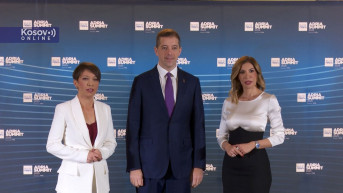
Serbian Minister of Foreign Affairs Marko Djuric emphasized today, at the first regional Euronews Adria Summit, that Washington’s constructive engagement in the process of normalizing relations between Belgrade and Pristina is both useful and necessary. However, he warned that in recent years this process has been made more difficult due to unilateral actions by the Pristina authorities and an ongoing campaign of pressure against the Serbian community in Kosovo.
“We are dealing with an establishment in Pristina that is not oriented toward dialogue with Belgrade and that seeks, through unilateral moves, to create a new political map,” Minister Djuric stated, according to the Ministry of Foreign Affairs.
He added that Serbia expects clear signals from the international community that such actions are unacceptable.
Djuric underlined that it is of essential importance for Serbia to build regional relations on the principles of friendship, stability, and mutual trust.
The Minister of Foreign Affairs pointed out that Serbia has made significant progress in its relations with most of its eight neighboring countries and that its goal is for the region to become an area of peace and economic development. In that context, he assessed that the initiative of the United States to use economic cooperation as an instrument for overcoming divisions represented an important step toward building a new type of relationship in the Western Balkans.
Speaking about energy security, Djuric emphasized that Serbia is approaching the diversification of energy supply sources and the development of renewable energy in a responsible manner. He particularly praised cooperation with Hungary, noting that this country, immediately after the imposition of sanctions on NIS, expressed its readiness to help Serbia maintain energy security.
The head of Serbian diplomacy reminded that Serbia continues to be a country with one of the lowest electricity prices in Europe and that its energy stability has not been endangered at any point.
When it comes to European integration, Djuric stressed that Serbia remains committed to reforms in the areas of the rule of law and public administration, adding that the European Commission’s recommendation to open Cluster 3 represents a strong signal that the country’s efforts have been recognized.
Speaking about relations with neighboring countries, Djuric highlighted the example of excellent cooperation with Hungary and the 2013 Declaration of Historical Reconciliation, which, as he noted, has become a European example of how a firm alliance can emerge from a complex past.
Djuric underlined that Serbia strives for the best possible relations with all its neighbors and believes in the strength of close, brotherly, and friendly ties.
“I believe that in our region we must treat one another as the best of friends—not only in bilateral relations but also in our joint engagement with Brussels, Washington, and other centers of decision-making,” Minister Djuric stated.
He concluded that cooperation and stability are the foundation of the region’s future prosperity.
Minister Djuric participated in the panel “The Region Between East and West” together with the Ambassadors of Hungary, Bosnia and Herzegovina, and Montenegro to Serbia — József Magyar, Aleksandar Vranjes, and Nebojsa Djokovic.


0 comments