
Djuric: We have exposed all of Kurti's disinformation that he spreads to the international public
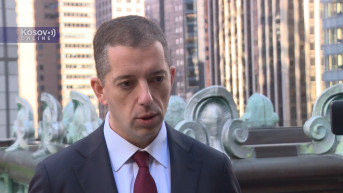
Ambassador of Serbia to the United States, Marko Djuric, stated that Kosovo Prime Minister Albin Kurti had developed an "impressive capacity" for spreading disinformation to the international public and that Serbia had approached this systematically. He emphasizes that it is Serbia's responsibility to counter this with adequate facts and by developing capacities to combat fake news.
"We fight every day. We have provided arguments to key addresses, and numerous offices monitoring developments in the Western Balkans, in our region. We are in constant communication with our institutions, the Office for Kosovo and Metohija, our people on the ground, the presidency, and the government, and we have been able to formulate arguments in a way and from a perspective that is receptive to the local audience here. This is very important because we cannot approach counterparts here from the same perspective as things may appear receptive in our region," Djuric told Tanjug.
According to him, through Kurti's actions, we see how strong his hybrid information warfare is, which he conducts daily against Serbia, aiming to divide the Serbs in Kosovo, portray the Serbian leadership as a criminal structure and organization, and divide public opinion in Serbia itself on the Kosovo issue.
When reminded of his statement in 2020 that it was better for Germany to send books to Pristina rather than tanks, and that "you cannot enter the United Nations with a tank", Djuric says he still believes that it would be better for everyone not to militarize Kosovo, which, even without additional weaponry, is faced with a government that does not have good intentions towards not only the Serbs but all non-majority communities.
"I still don't believe that sending rockets, tanks, and helicopters into the hands of an extremist regime, such as the regime of Albin Kurti, means anything other than encouraging him to take actions that are not appropriate. I think today more people understand this than perhaps three years ago," Djuric emphasized.
He says that even when he was the Director of the Office for Kosovo and Metohija, he participated in 221 rounds of negotiations in Brussels, but that leaving that position did not stop his involvement with Kosovo, as it remained a "very prominent topic" even in the United States.
When asked how difficult it had been for him to witness what was happening now and when talking to others, given his prior knowledge, Djuric stresses that it was emotionally more difficult because he had to watch the suffering of his people and the horrors "that are being inflicted upon us there" from a distance.
"Professionally, it was probably easier, because in my more than 150 visits to Kosovo and Metohija and actively engaging, leading in a way our system there for over half a decade, I gained an unprecedented insight that I could use here in a way that I know every detail about the processes, the people, the places, and I could portray the situation. So, as soon as something happened, we could react promptly, and that was very useful in certain situations," the ambassador emphasized.
He adds that it was particularly useful because he was in constant contact with our people on the ground, with the Office for Kosovo and Metohija, and with the state leadership in Belgrade, so he had the latest information available.



comments