
Dostanic: The Strengthening of the Freedom Party Will Not Change Austria's Position on the Kosovo Issue
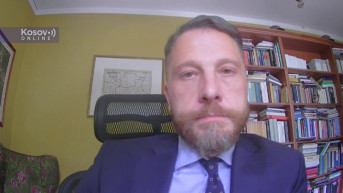
Dusan Dostanic from the Institute for Political Studies told Kosovo Online that no major surprises are expected in the Austrian elections on Sunday, and despite predictions that the Freedom Party will win, it is unlikely that there will be significant shifts in foreign policy or changes in the stance on Kosovo after the elections.
"There shouldn't be any big surprises; more or less, the results will mirror those of the European Parliament elections. This means that the Freedom Party of Austria will come out on top with over 20%, probably around 27%. The second place will go to the People's Party, led by Prime Minister Nehammer, while the Social Democrats will be in third place, followed by the Greens," Dostanic explained, citing poll projections.
On the other hand, Dostanic raises the question of what the reality of the Freedom Party's victory will be.
"This is a situation similar to the local elections in Saxony or Thuringia in Germany, or to the victory of the National Rally in France. Individually, the Freedom Party of Austria will be the strongest party, by far the strongest, but it will still be a party unable to form a government on its own. It's very likely that, despite their victory, they will remain in opposition at this time, as the other parties, at least according to their current statements, have no intention of forming a coalition with them," he explains.
He emphasizes that the strengthening of the Freedom Party, which has advocated against Kosovo's entry into international institutions, does not automatically mean a change in foreign policy or relations with Serbia.
As another important point, Dostanic mentions the central issues occupying Austrian public discourse, such as migration.
"Even if the Freedom Party were to enter the government, it's questionable whether the party would immediately prioritize the issue of Kosovo or Serbia, since these are not central topics. The main issue in Austria at the moment is migration, and this is the policy focus of the Freedom Party. Of course, the Freedom Party has previously shown significant initiative regarding Kosovo, questioning Austria's role and recognition, just as they insist on Austria's neutral status concerning the Ukraine conflict," Dostanic explains.
He concludes that expectations of drastic policy changes are unrealistic.
"Even if such shifts were possible, I think a much bigger question for Serbia is: What does Serbia want from Kosovo and with Kosovo? Signing the Brussels Agreement or the Ohrid Agreement, while hoping that Austria's policy on Kosovo will change, seems to me like a contradiction," he states.



0 comments