
Drecun: Pristina refuses to abandon the implementation of the CBK decision, nor is it open to compromise
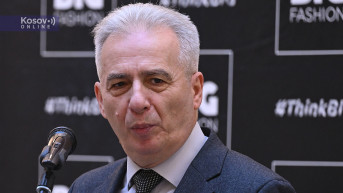
Milovan Drecun, a member of the Serbian Parliament, has assessed that Pristina is not willing to abandon the ban on the Serbian dinar in Kosovo and sees a lack of desire for compromise in Pristina's attempts to, as he says, produce an interstate agreement through a deal between the National Bank of Serbia and the Central Bank of Kosovo, as reported by RTV.
"I think the main problem is that Pristina wants to use this situation to force us into reaching an agreement at the level of the two banks, as they say, the National Bank of Serbia and the Central Bank of Kosovo. This would be a kind of interstate agreement, which is unacceptable to us. We cannot treat Kosovo as a state," Drecun stated for Tanjug TV.
He reminded that the principles adopted in the Brussels Agreement give Belgrade the right to finance the Community of Serb Municipalities, and this is also stipulated by the provisions of the Franco-German proposal.
"So, if this community were to be formed, then this problem could indeed be resolved. However, it's still a question of how. If the community were formed and Pristina still insists on some decision, then I'm not sure a solution can be reached. Everything that goes beyond the status-neutral framework in the dialogue between Belgrade and Pristina cannot be acceptable to Belgrade," Drecun said.
He mentioned that Pristina is aware of this and skillfully maneuvers and politically exploits the situation.
Drecun stated that the countries which have recognized Kosovo's unilaterally declared independence, along with Pristina, have pushed for strengthening Kosovo's international position through three main directions: "One was the system of unification through UNESCO, the second was admission into Interpol, and the third was admission into the Council of Europe," Drecun explained.
He added that behind these moves lies Kosovo's intention to join NATO.
"Behind this were ambitions to open a path for so-called Kosovo to join NATO, whether first through the Partnership for Peace or directly, and of course, towards the European Union. These three directions were the main ones. Given that they probably assessed that now they can 'break' the Council of Europe the easiest and that they can get through there, they initiated this activity. So, they want to move so-called Kosovo from a standstill on the international scene," Drecun elaborated.
He added that the biggest problem is that the world's most powerful countries determine what is legally possible and what is not.
"Unfortunately, the powerful dictate the law, and the law is whatever the strongest force in the world says it is," Drecun emphasized.
He also noted that Kosovo experiences a complete absence of the rule of law, severe endangerment of the human rights of non-Albanians, and a lack of democratic capacities within institutions.
"Do the West interpret and see it in the same way, and decide on it?" Drecun questioned, suggesting that Serbia needs to pay more attention to the messages coming from Pristina to know how to defend its interests.

0 comments