
EC: Pace of Serbia’s accession negotiations continues to depend on normalization of Belgrade-Pristina relations
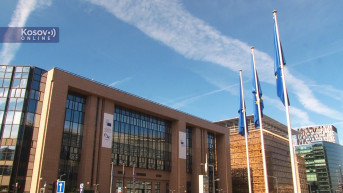
The European Commission’s assessment from previous years that Serbia has met the benchmarks for opening Cluster 3—Competitiveness and Inclusive Growth—and that the cluster is technically ready to be opened remains valid, according to the draft 2026 Enlargement Package, RTV reports.
The document, seen by Tanjug and due to be presented in Brussels today by European Commissioner for Enlargement Marta Kos, includes European Commission reports on ten candidate countries for accession to the European Union.
It also states that the overall pace of Serbia’s accession negotiations continues to depend on progress in the area of the rule of law and on the normalization of relations between Belgrade and Pristina.
The document also refers to the EU-facilitated Belgrade-Pristina Dialogue, noting that domestic political preoccupations on both sides prevented decisive steps toward implementing the 2023 Agreement on the Path to Normalisation and its Implementation Annex, thereby also preventing progress in the normalization of their relations.
The report, covering the period from September 1, 2025, to September 1, 2026, recalls that since Serbia’s accession negotiations began in January 2014, 22 of the 35 negotiating chapters have been opened, including all chapters under Cluster 1—Fundamentals—and Cluster 4—Green Agenda and Sustainable Connectivity—while two chapters have been provisionally closed.
The document also states that EU membership remains a strategic objective of the Serbian Government and that, during the reporting period, the government established a new operational team headed by the chief negotiator to accelerate progress in meeting the technical criteria for membership.
“Achieving Serbia’s objectives in the EU accession negotiations requires strong political will, implementation of the necessary reforms, a whole-of-society approach, effective policy planning and coordination, as well as sufficient human and financial resources across all institutions involved in the accession process,” the report states.
It adds that anti-EU narratives remain present in Serbian media and among political officeholders, and states that the funeral of Ratko Mladic in September 2026, attended by senior state and military officials, contributed to the glorification of Mladic in a manner contrary to the values underpinning Serbia’s path toward the European Union.
The report also notes that early parliamentary elections were held on October 25 and that, according to preliminary results, the Student List, which emerged from the mass student and citizens’ movement, won an absolute majority of seats.

comments