
Elek and Arsic: Health and education systems functioning normally; Simic: We are working on a solution for vehicles
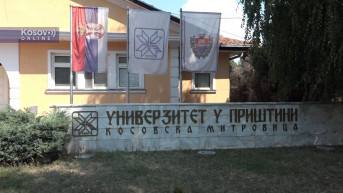
Following the start of the implementation of the laws on foreigners and on vehicles, Serb List Presidency member Igor Simic stated this evening that efforts are underway to find a solution that would allow citizens to use their vehicles. He emphasized that the priority is the preservation of the education and healthcare systems, while appealing to citizens to remain patient, as everything being done, he stressed, is in the interest of the Serbian people. The President of the Serb List and Director of the Clinical Hospital Center Kosovska Mitrovica, Prof. Dr. Zlatan Elek, pointed out that the healthcare system in northern Kosovo is functioning normally, that all employees are at their workplaces, and that this will continue in the future. The situation is the same at the University of Pristina with temporary headquarters in Kosovska Mitrovica, Rector Nebojsa Arsic stated, as reported by TV Most.
“As it was important to address the implementation of the Law on Foreigners, it is equally important to resolve the issue of motor vehicles. Certainly, the priority is to preserve the education and healthcare sectors and protect the thousands of people who could be affected by the Law on Foreigners—by our estimate, more than 10,000 individuals. An intensive diplomatic effort is being conducted with representatives of the European Union to find an appropriate solution that will serve the interests of our citizens,” Simic said.
He reiterated that several proposals are on the table and that a solution beneficial to the Serbian people could be reached very soon, provided that Pristina shows a degree of goodwill.
“What is important is that there is no punishment of our citizens, and we expect this to continue, with tolerance shown toward them until this issue is resolved. All proposals currently under consideration are designed to benefit our people. I ask our citizens for patience. I understand that this situation affects them, that they cannot use their motor vehicles normally—not as a matter of convenience, but of necessity, to reach doctors, kindergartens, obtain medication in central Serbia, or access salaries and pensions. Please be patient; we are working to find a solution. I must emphasize that even the current solution regarding documents did not ‘fall from the sky’; it is not a gift from Pristina, but the result of hard work. Do not believe those who have been misleading you—certain professors who do not live here and claim to care about the University, while the rector and all of us who are part of it supposedly do not. We care about the issue of vehicles as well and are working to resolve it,” Simic told TV Most.
He also noted that, regarding diploma verification, this is a process that would enable those interested in working within the Kosovo system to apply for jobs.
“In my family, some are employed and some are not; no one has verified their diploma, including myself, because I have no need for it, as I work within the system of the Republic of Serbia. Citizens ask about this daily, even though they are employed in the healthcare or education sectors, and I do not see the point of such inquiries unless they intend to leave their current positions and apply to be part of another system. That is the only logical explanation. Can they submit a request for verification? Yes. Do they need to? I do not see that they do. People have their employment status regulated within the Republic of Serbia; they receive salaries, and contributions are paid for both health and pension insurance. Therefore, I see no purpose in verifying diplomas—except, of course, for those who are unemployed and wish to apply for positions within the Kosovo system,” Simic said.
Healthcare system in northern Kosovo functioning normally
The healthcare system in northern Kosovo has been functioning normally since the implementation of the Law on Foreigners; all employees are at their posts and will remain so in the future, stated the President of the Serb List, Prof. Dr. Zlatan Elek.
He reassured citizens that there is no cause for concern and that the implementation of this law does not imply integration into the Kosovo system.
“The healthcare system is an extremely complex structure that does not depend solely on doctors or nurses; it is a system of interconnected vessels. We have a number of professors who work at the University of Pristina and are also engaged here, at the Clinical Center Kosovska Mitrovica, where they perform on-call duties. If the Law on Foreigners had been implemented in its original interpretation, they would not have been able to serve our patients. At the same time, we would not have been able to transport our most critical patients to our leading tertiary healthcare institutions—primarily clinical centers in Belgrade, Kragujevac, Nis, and Novi Sad—due to our vehicles, which are all registered with institutions in central Serbia and bear license plates from Novi Pazar, Belgrade, Kragujevac, and elsewhere. This is because we operate within the system of the Republic of Serbia,” Elek explained.
He emphasized that it is crucial for citizens to distinguish between two aspects: one relating to the laws on foreigners and vehicles, and the other—what causes the greatest concern—namely, integration into that system.
“To date, as Igor Simic has repeatedly stated, as has the rector across all faculties, and as I have stated as Director of the Clinical Hospital Center and President of the Serb List, representatives of the Serb List—including myself, Simic, and all of us who attend meetings with the international community—have never engaged in discussions regarding the integration of healthcare and education into the Kosovo system. What should reassure our citizens is that the Clinical Hospital Center continues to provide uninterrupted, 24-hour healthcare services, even after March 16, entirely normally, with all employees at their posts—and this will remain the case in the future,” Elek stressed.
University functioning normally despite pressures
Rector of the University of Pristina with temporary headquarters in Kosovska Mitrovica, Nebojsa Arsic, stated that the situation in the education sector mirrors that in healthcare—completely normal.
“Tensions have subsided, although we never ceased operations, despite numerous challenges and threats, including letters from Pristina concerning the eviction from the building of the Faculty of Technical Sciences and similar issues. These were various forms of pressure that were clearly coordinated; this was not coincidental,” Arsic emphasized.
He added that these pressures accumulated gradually, creating significant tension, but that despite this, the University continued to carry out all activities normally.
“Had this law entered into force, the University would have effectively ceased to function immediately. We developed various contingency plans—what to do in the worst-case scenario, including transitioning to hybrid teaching. We did not simply wait to see what would happen; we prepared for all possible scenarios. Fortunately, there was no need to implement them. We are continuing to operate normally and have resumed activities related to the enrollment campaign for a new generation of students. Today, for example, an Open Day was held at the Faculty of Technical Sciences, attended by a large number of high school students,” Arsic said.
He emphasized that this is what gives them encouragement.
“Approximately one-third of our students come from other parts of Serbia, and nearly 50 percent of our teaching staff do not possess Pristina-issued documents. Had this law come into force without an agreement, our operations would have been completely obstructed, or at the very least severely hindered, with very poor prospects for the future,” Arsic stated.
He concluded by expressing expectations of continued normal operations and even better organization in order to properly welcome the next generation of students.

0 comments