
Simic: If the Law on Foreigners had entered into force without a solution, we would have faced a catastrophic scenario
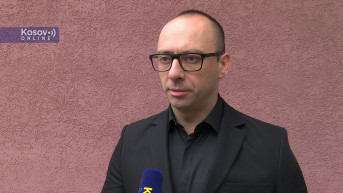
Igor Simic, a member of the Presidency of the Serb List, stated that a catastrophe and chaos would have ensued if the Law on Foreigners had entered into force on March 15 without an agreed solution, as the act stipulated that all those without Kosovo-issued documents would have had to leave Kosovo and would effectively have been expelled, Blic reports.
“Today, at the administrative crossings between central Serbia and Kosovo and Metohija, there would be people—both those who have lived their entire lives in Kosovo and Metohija, as well as those who need to come there to study, professors, doctors. We would have had blockades at Jarinje, Brnjak, Merdare, Bela Zemlja, Konculj—everywhere. Everything would have been completely paralyzed. And Kosovska Mitrovica would have been without students from central Serbia, Montenegro, and the Republic of Srpska; it would have been without doctors in the Clinical Hospital Center in Kosovska Mitrovica, Gracanica, or the health center in Gnjilane. In short, chaos would have occurred,” Simic told Blic TV.
He added that the economy would also have collapsed, as 3,000 students and several hundred healthcare and education workers spend their money in Kosovo.
“In other words, it would have been a catastrophic scenario. Had this solution not existed, the law stipulated that all those without Kosovo documents would have had to leave Kosovo and Metohija. They would literally have been expelled. We are talking about approximately 7,200–7,300 people who have lived in Kosovo and Metohija for years. That means that, as of today, they would have had to leave Kosovo immediately because they lack adequate documentation confirming the legality of their presence in that territory. Their ID cards, birth certificates, and marriage certificates would not have been recognized. So, if this law had been implemented without the agreed solution, those documents would not have been recognized—children’s birth certificates, people’s marriage certificates. First, these people would have been expelled, and we would have had thousands of Serbian families divided, with one parent on one side of the administrative line and the children and the other parent on the other side,” Simic said.
He noted that within Serbian families in Kosovo, there are situations where some members have documents and others do not, including paradoxical cases where both parents possess Kosovo documents but their child does not—simply because the mother had complications during pregnancy and gave birth in a clinical center, for example in Kragujevac.
“As a result, the place of birth listed in the birth certificate is Kragujevac, which Kosovo institutions did not recognize. Thus, parents would only be able to escort their child to the crossing, and that child would not only have to leave Kosovo and Metohija but, as someone without Kosovo documents, would never be able to inherit their parents’ property, meaning it would go to Kosovo institutions,” Simic explained.
He reiterated that people living in Kosovo will be allowed to obtain Kosovo documents on the basis of Serbian documents, thereby enabling them to remain.
“They will have to recognize those documents which they previously considered illegal or nonexistent; these will serve as the basis for obtaining Kosovo documents,” Simic emphasized.
He stressed that the Serb List will continue to monitor on the ground whether what has been agreed is being implemented in practice and will inform international representatives of any irregularities, requesting that they be corrected so that the rights of Serbs established by this solution are not undermined.
“We, as representatives of the Serb List, held dozens of meetings with international representatives over the past several months. Through hard work and many sleepless nights, we arrived at this solution, which is by no means ideal, but in this case enables life for Serbs in Kosovo and Metohija to continue, allowing Serbian educational and healthcare institutions to function and provide services to citizens, all in accordance with the laws of the Republic of Serbia. This is the result of exceptional efforts not only by representatives of the Serb List, but by the entire state leadership, including President Aleksandar Vucic, Minister of Foreign Affairs Marko Đuric, and Director Petar Petkovic,” Simic said.
Regarding the Law on Vehicles, he reiterated that representatives of the Serb List are also addressing that issue.
“Citizens must understand that at a time when there was a threat to the functioning of healthcare, education, and thousands of Serbs, that was the priority. However, that absolutely does not mean we have not been dealing with the issue of the Law on Vehicles. Even today, as part of the Serb List, I had serious discussions with international representatives and monitored what is happening in traffic,” Simic stated.
He noted that no drivers were fined today; instead, warnings were issued, and according to his information, 15 drivers received warnings that they might be fined next time.
“We have received assurances from international representatives that there will be no drastic penalties. Therefore, we will not allow citizens to be put in an uncomfortable situation. I call on them to be patient, but also—as was the case with the Law on Foreigners—to trust their state and their legitimate representatives. We are fighting, we will try to find, and I believe we will find a solution that will benefit our people. Will it be ideal? Absolutely not. Will ill-intentioned individuals find flaws? Certainly they will. But I want to assure citizens—we are working hard. When we have a solution, we will present it publicly,” Simic said.
When asked whether Albanian parties will reach an agreement on electing a president or whether elections are a more realistic option, he said he does not want to speculate and that the Serb List’s position is to await the Constitutional Court’s decision, in accordance with which they will act.
“What is certain is that we, as a political party, are absolutely confident in the support we have from our people, and we are always ready for elections. What we observe is that any calling of elections raises tensions, because Albanian political parties have nothing to offer their voters except hatred and harassment of Serbs. In such circumstances, we want to protect our people from that situation. But as a political party, we are fully prepared for elections at any time. The Serb List has always maintained that we do not want to interfere in who represents Albanians, and we have demanded that same right for ourselves,” Simic pointed out.
Asked whether the political crisis in Pristina could affect relations between Belgrade and Pristina, Simic said it inevitably will.
“Because no one in Pristina will be ready to take responsibility, especially regarding the dialogue process necessary to resolve outstanding issues. What we have had in recent years is a stalled dialogue, and on the ground that meant problems were not being resolved, but instead unilateral actions and escalation targeted everything bearing a Serbian prefix,” Simic stated.
Speaking about the Association of Serb Municipalities, he said it was conceived as an umbrella institution for the Serbian people, meant to protect their individual and collective rights, but that anything benefiting Serbs will not receive support from the authorities in Pristina, regardless of who leads those institutions.
Regarding the military alliance between Albania, Croatia, and Pristina, Simic described it as “a dangerous alliance that should concern every citizen of this country.”
“This is extremely dangerous. We are talking about a military alliance that is being tacitly formed, even though under UN Security Council Resolution 1244, KFOR is present in Kosovo and Metohija as an international force that must not allow the militarization of that area. Therefore, we have a situation in which two NATO member states are forming an alliance with a territory where NATO troops are already present. This is extremely dangerous and should concern every citizen of this country. The Kosovo Security Forces would benefit the most from this alliance. If two member states with NATO standards cooperate with the Kosovo Security Forces, it is clear that there will be a transfer of knowledge and skills, but also potentially equipment and other weapons that could be used for offensive operations,” Simic concluded.


0 comments