
Erdeljan: Egypt's Significance is greater than perceived, important agreements signed
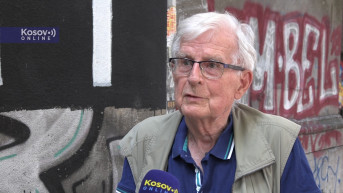
Every visit, including Serbian President Aleksandar Vucic's trip to Egypt, carries its diplomatic and political significance for both the guest and the host, and Egypt is a much more important country than it appears today, says foreign policy commentator Borivoj Erdeljan, a longtime correspondent for Politika from Cairo, Jerusalem, Athens, and a special reporter from the Middle East.
"It's certainly good that this visit happened. Egypt is a country that should never be underestimated," Erdeljan told Kosovo Online.
A particular aspect of bilateral relations with Egypt, dating back to the time of the SFR Yugoslavia, is the economic element. Erdeljan shared an interesting fact—at one point, there were around 30,000 Yugoslav 'stojadin' cars from Kragujevac in Egypt.
"They took a long time to break into that market, but they succeeded. There were also other significant economic relations," he added.
He also recalled that Egypt was the first country to sign a peace treaty with its "century-long" enemy, Israel.
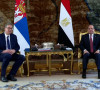
Commenting on the numerous agreements signed in Cairo in the presence of Presidents Aleksandar Vucic and Abdel Fattah Al Sisi, Erdeljan said that it is important to sign agreements with every country and added that relations must be built and maintained more thoroughly.
"Every visit is welcome. What it will bring is impossible to predict, but it is always useful to talk. Diplomacy and politics are hard work," Erdeljan added.
When asked about the importance of the partnership between Serbia and Egypt, he emphasized that there is no doubt it is of great significance, noting that Egypt is currently underestimated, although historically and in all critical situations, both past and present, it holds much more importance than it is given.
"In recent days, during the delicate negotiation process for the release of Israeli hostages and a potential ceasefire in Gaza, Egypt has been frequently mentioned. It is a mistake, not only ours but in general, to overlook and neglect Egypt, not only because of its 100 million inhabitants, geostrategic position, and the Suez Canal," Erdeljan pointed out.
He added that good relations should be developed with every country to maximize benefits and not be swayed by immediate gains.
"Getting a good hand in cards does not mean you've won the game and the prize. These relationships are built more enduringly and maintained more carefully. One should always speak with great respect for the Egyptian people, who are noble. A common mistake is to assume all Arabs are the same, but they are certainly not," Erdeljan said.
Egyptians, he added, know little about Serbs today, although they knew much more in the past, primarily through the "filter of the personal relationship" between Tito and Nasser.
"After Sadat's trip to Jerusalem, which Yugoslav policy opposed, it even instructed the diplomatic mission in Cairo to maintain as poor relations as possible with Egypt, considering Sadat's actions as a betrayal of the Arab nation. This was a fatal mistake that is slowly being corrected and 'ironed out,'" Erdeljan added.


comments