
EU is trampling on itself if it accepts Pristina's candidacy
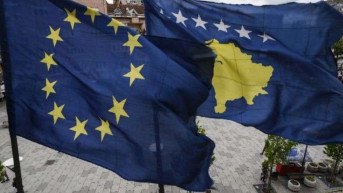
Belgrade has mobilized all political and diplomatic resources so that Pristina's request to receive candidate status for membership in the European Union, which Kosovo Prime Minister Albin Kurti intends to submit tomorrow, remains a "dead letter", Novosti writes.
Serbia's argument that accepting this application would be an unheard-of precedent is based on three key points.
"The first is the Treaty on the EU, that is, the Treaty of Lisbon from 2007, which stipulates that only states can become members, which Kosovo de facto and de jure is not. If the candidacy were accepted, the EU would practically trample on its constitution," Novosti reports.
Another fact is that five EU countries - Spain, Greece, Cyprus, Slovakia, and Romania - do not recognize Kosovo's independence, and the acceptance of Pristina's candidacy requires the consent of everyone in the EU.
"The third is that not only that Kosovo is not a member of the United Nations, but in the umbrella international organization, it cannot "get" even half, let alone the two-thirds majority required to get a seat on the East River. Because, out of the 193 members of the UN, Kosovo could count on a maximum of 83 votes," the text adds.
The news reports that Kurti confirmed yesterday that the application would be submitted by the end of the week, and Pristina planned for it to be tomorrow when the leaders of 27 member states would gather in Brussels at the European Council.
Kosovo also counts on the help of the Czech Republic, which currently holds the EU presidency, and which should forward that request to the European Council, which should send the application for further consideration to EU institutions and bodies.
More precisely, the European Parliament, as well as the assemblies of the member states, should be informed about Kosovo's request, according to the rules. The final word on whether the request will be rejected or accepted should be given by the European Council, unanimously, after consultation with the European Commission, and after obtaining the consent of the European Parliament, which decides by the majority of its members.
Even if Pristina's application gets the green light from the European Council and the European Parliament, the question is how the leaders of the five European countries that did not recognize Kosovo would vote to accept their candidacy at the European Council.
The Minister of Foreign Affairs of Serbia, Ivica Dacic, and former diplomat Zoran Milivojevic believe that, if no one else, Cyprus and Spain must be against it because of their internal territorial problems, and they do not rule out the possibility that some countries that formally recognize Kosovo's independence would also be against it.
Dacic said that Serbia was working to ensure that the EU members who had not recognized Kosovo's independence, from the status aspect, challenged Pristina's announced candidacy, and that they would state that there were no conditions for discussing it. He added that talks were being held with Hungary, which, although it had admitted, did not vote for Kosovo.
Milivojevic says that Pristina's application is a maneuver that is apparently in line with the majority in the EU that supports them:
"First of all, I recognize Germany here, bearing in mind the recent statement by Chancellor Olaf Scholz that it was good for Pristina to apply. When it comes to the law, such a request does not make any sense, because it is simply legally impossible. Namely, Article 49 of the Treaty on the EU recognizes only states that have full international legal personality as possible members. And Kosovo is not that, it is an entity under the UN protectorate. Secondly, it is not even possible to consider this request politically, because such a thing requires the consensus of all member states, and five of them do not recognize Kosovo", Milivojevic says.
They also indicate that the hypocrisy and paradoxical behavior of the EU since the outbreak of the Russian-Ukrainian conflict are so great that it is hypothetically possible for the EU to trample on the key documents on which it rests.
"Because, if they do not react to the fact that Pristina does not respect either Washington or the Brussels Agreement, which was guaranteed by the EU itself; if they take from the UN Resolution 1244 as if from a “buffet” only what suits them, what prevents them from bypassing the framework document on which the European Union rests - the EU Treaty," Novosti writes.
"Empty" conclusions, they ask for dialogue
The EU General Affairs Council, which consists of ministers in charge of European affairs, at yesterday's meeting, at least officially, did not deal with the announced application of Kosovo for candidate status. In its conclusions, the Council asked Belgrade and Pristina to engage in dialogue without delay in order to reach a comprehensive legally binding agreement on the normalization of relations. They also called for respect and implementation of all previous agreements and refraining from unilateral and provocative actions that could lead to tensions and violence.
The conclusions welcome the overall progress of Serbia, achieved in the accession negotiations so far, as well as the fact that EU integration is a strategic goal for the new government of Serbia, but express regret that Belgrade did not introduce sanctions against Russia.
Collision with postulates
As reported by Novosti, Kosovo's request for EU candidate status was in direct conflict with several European norms and rules, as well as with two key articles of the Treaty on the EU.
The first is Article 2, which reads: "The European Union is based on the principle of respect for human dignity, freedom, democracy, equality, respect for human rights, including minority rights, and the rule of law."
"If the EU accepts Pristina's application at a time when terror is being carried out against the Serbian community in Kosovo and Metohija; when Kurti's destructive policy trampled on all its rights and endangered lives and property - Brussels will trample on the basic postulate on which the European Union rests," the text adds.
As emphasized, the second was Article 49. It states that "any European country that respects the values from Article 2 and is committed to their affirmation may submit a request to become a member of the Union. The European Parliament and the parliaments of the member states are informed of this request. The applicant country addresses its request to the Council, which decides unanimously, after consultation with the Commission and after obtaining the consent of the European Parliament, which decides by a majority of its members. The accession criteria established by the European Council are taken into account."

comments