
Zaimi: The focus of the Berlin Process is on the integration of Balkan countries, the Belgrade–Pristina relationship is key
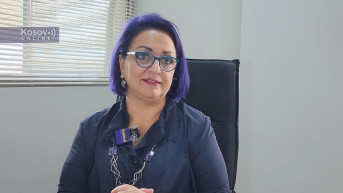
Researcher at the Center for International Strategic Studies in Tirana, Gerta Zaimi, stated that the focus of the Western Balkans Summit held in London as part of the Berlin Process was on the integration of the Balkan countries, not only in the economic but also in the political sense. In that context, she added, the relationship between Pristina and Belgrade is the most important and key to joining the European Union.
“The fact that the capital of the United Kingdom was chosen to host the Berlin Process clearly shows that there are two main issues of greatest interest here. The first is the interaction between the Balkan countries themselves, and that aspect has been central from the very beginning. The European Union keeps telling us that we need to integrate with one another, so integration is an essential issue, not only in the economic aspect, but also in the political relations between countries,” Zaimi said.
She added that the second issue was illegal immigration and crime.
“The United Kingdom is very interested in immigration and in the channels or routes used for organized crime. As far as immigration is concerned, it is clear that the Balkans are no longer problematic. Those who intended to leave have already left. Those who still want to go to Britain do so by applying for jobs and obtaining work permits, and so on. I do not see the Balkans, with the population it has, as problematic in that regard. However, the Balkans do represent a problem in terms of transit routes, whether for immigration or organized crime. This is because organized crime exists in the Balkans and can cooperate with organized criminal groups in other countries that are not friendly toward the European Union. These routes must be controlled and cut off. As for integration, there is no doubt that the countries of the region need to work harder, but Europe also has to set an example, since we see that Bulgaria and Greece, both EU members, have shown little goodwill or desire for a quick integration of some of these countries,” Zaimi emphasized.
She assessed that, from a technical standpoint, the Western Balkan countries are making progress.
“Albania and Montenegro are undoubtedly advancing in every respect, even by opening clusters of negotiation chapters with the EU. I don’t see any major technical problems. When Bulgaria joined the EU, it did not have fewer problems than we do now. Romania also did not have fewer problems than we have. In fact, if we go back many years, even Greece or Portugal did not have fewer problems than our countries when they joined. They became EU members due to specific geopolitical circumstances. Even now, the rapprochement that the European Union is pursuing with the Western Balkans is being driven primarily by political reasons. These political reasons undoubtedly include the relations between different countries. In this context, the relationship between Pristina and Belgrade is the most important and cannot be ignored. Everyone thinks so, and at all summits organized within the Berlin Process, the Belgrade–Pristina relationship has carried great weight and has been considered crucial for these countries’ accession to the European Union,” the analyst said.
Speaking about the relations between Belgrade and Pristina, Zaimi stressed that they are undoubtedly at a standstill, but added that Albania is also affected by this issue.
“Albania’s entry into the European Union has nothing to do with the relations between Pristina and Belgrade. But can the EU ignore these problems? Can these countries join even though they are in conflict with each other? I don’t think Kosovo and Serbia will join the EU unless they resolve this issue. First, because there are still several European countries that do not recognize Kosovo. Second, because the experience of Cyprus shows that Europe does not want to bring an open conflict within its own borders once these countries join. The experience of Cyprus shows that it is counterproductive to admit a country with such an unresolved issue. In my opinion, Albania is not affected by this conflict, but as far as Pristina and Belgrade are concerned, they should resolve this issue between themselves as soon as possible. I believe it can be resolved. It is true that Serbia is lagging behind in opening negotiation chapters on integration, but that is due to its internal problems, as it is in a political deadlock that it needs to overcome,” Zaimi concluded.



0 comments