
Gerxhaliu: The CBK campaign arrived late; the EU and USA are against the decision on the dinar
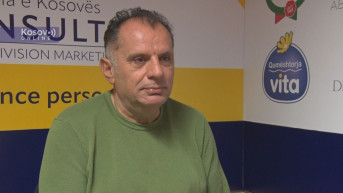
The Central Bank of Kosovo announced yesterday that a transitional period for the implementation of the cash operations regulation would last for the next three months, and economic expert Safet Gerxhaliu assessed for Kosovo Online that such a campaign had come too late, as, he emphasized, the issue of the dinar had already been politicized and Kosovo might incur the cost of extending European Union measures, as well as that it would be a topic of dialogue in Brussels.
Gerxhaliu emphasizes that it is wiser to learn from mistakes and "prevent some things, rather than cure them", and that there is no alternative to dialogue.
"The problem is that any relationship between the Serbs and Albanians, or between Kosovo and Serbia, can never have a purely economic character without political connotations, and it is precisely this politicization that brings the situation to where we are now. I think this decision was made in very difficult circumstances considering that dialogue is ongoing in Brussels and some agreements for normalization are expected. Considering that Kosovo is under sanctions, and measures of the European Union, and in that context, special results for normalization of relations in Kosovo should be achieved, to introduce such a decision, I think it is not in favor of either the Government or Kosovo, especially in terms of the normalization of relations between Kosovo and Serbia and between the Albanians and Serbs," Gerxhaliu said.
He emphasizes that perhaps it would have been different if there had been earlier announcements in that direction, and that now the whole process has acquired a political dimension.
"I have a strange premonition that this will certainly be a part of the dialogue in Europe, and considering that Kosovo does not have much political power or diplomacy to somehow slow it down, I think this problem will continue. I am glad that the Central Bank has started with some campaigns and statements, but I think it's too late and it should have been done a few months ago. Now we are where we are, and honestly, a compromise solution must be found. The important thing is that I see all countries, and economic powers, such as EU countries and the USA, are against such a decision of the Government of Kosovo, there will be great pressure, but the worst thing is, I think this will be another reason for EU measures towards Kosovo to last for a long time," Gerxhaliu said.
Gerxhaliu emphasizes that much more has been lost with this decision than gained.
"Considering that there is a lack of responsibility, whether individual or institutional, such mistakes happen, and these mistakes cost Kosovo in several dimensions. This is not just a mistake that will have political and economic consequences, but also integration, and moreover, psychological. I think we shouldn't show any euphoria that we are doing something for populism and maybe some preparation for the campaign for the next elections because ultimately, the interest of every politician must be the state and the citizens, and not always the government and the interests of the political party," Gerxhaliu said.
Speaking about the three-month transitional period of the Central Bank of Kosovo, Gerxhaliu emphasizes that those who made such a decision must find a way out.
"I have looked at the CBK statement, there are about ten points they have prepared as a scenario for mitigating this crisis and what has been created, but the problem is that it is no longer about economic steps when it comes to the relationship with the dinar, now it is a politicized issue, it has taken on a completely different dimension, and I think it will be very challenging to resolve it, but surely those who made that decision will have to have some alternative, so they crafted it and they should find a way out of it. I said that this decision was made in very difficult circumstances and in that context, I think a big mistake was made, which will affect Kosovo in several steps," Gerxhaliu said.
Knowing the character of the Government and Albin Kurti, Gerxhaliu emphasizes that they will not admit that mistake.
"The truth is that even today if you ask the governor of the CBK, he will say that there is no extended deadline for the implementation of that decision, but the truth is that the transitional period for the next three months, and I don't see any point there, just a comma, and it will surely be extended because the pressure from Europe and the US is such that it is simply difficult to resist," he says.
Gerxhaliu points out that a big problem is the lack of communication between the Central Bank or the Government of Kosovo with citizens of Serbian nationality to inform them about the measures, and that the law was not passed recently.
"In those documents from the Central Bank, it is very well indicated that there is one currency, so simply, the headline that day that the Serbian dinar is banned was very provocative, and it provoked people much more than the decision itself as a decision. In that context, if someone works in Albania and lives in Kosovo, they will not receive their salary in the Albanian currency, but they will be able to receive it here in euros, so there are no problems with that, it can be solved and it is solved, but the problem is that it has been politicized to such an extent that now it is far more looked at from a humanitarian dimension than from an economic, real one," he said.
If one looks at the points made by the Central Bank of Kosovo, he emphasizes that there is no reason to fear. However, he adds that any alternative no longer carries any economic weight.
"Now it's more emotional, it's more political, and whatever is offered, some other outcome is expected, and that outcome will be far more political in nature than it will be economic or social," he concluded.
Top of Form


0 comments