
Kacarska: The Berlin Process is a condition for EU integration, upcoming summit one of the most uncertain
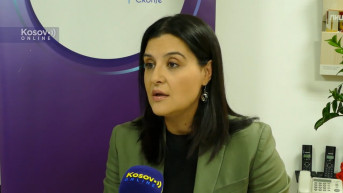
Simonida Kacarska, Director of the Institute for European Policy in Skopje, says for Kosovo Online that the Berlin Process is becoming a condition for the European integration of the Western Balkans and that the upcoming summit in Berlin will likely be one of the most uncertain.
Kacarska recalls that the German government, which is organizing this summit, along with other EU governments, has criticized Kosovo in recent months. She notes that the German government's special envoy even suggested that Kosovo's participation in the Berlin Process might be reconsidered, although this is not what would conventionally be called an exclusion.
“Often, the example of Bosnia not signing the transport community agreement in Trieste is cited, and how it later joined, that is, it is interpreted as the country blocking itself through such actions. The trade barriers imposed by Pristina are certainly not viewed positively at the moment, and the discourse from the EU leadership, especially from Germany, has been quite strict. So, it wouldn’t be surprising to see a scenario in which five countries participate or focus on specific agreements during the summit,” she explains.
She emphasizes that the benefits of this initiative are intended for the entire region and its citizens. Kacarska reminds that initiatives such as more affordable roaming, work on the digital and green agenda, and green corridors at borders, often associated with other initiatives, are actually part of the Berlin Process.
“The big idea behind this initiative is that through economic cooperation among these countries, by creating a common economic market, which has been signed as a document and project, we will create conditions for everyone to advance economically, contributing to the reconciliation of the region, something we all know is necessary. Of course, the greatest benefit will go to the largest economy in the EU, if that is the question. But the goal is that we all benefit, as the foundation and motivation of this process are very similar to that of the European Union, through economic cooperation between former enemies or countries that had severed ties, to foster closer relations,” Kacarska states.
She notes that the economic potential of the regional market is not revolutionary and won’t make us rich, but it will certainly contribute to EU integration.
“We shouldn’t forget that this is actually part of these initiatives. The common economic market is crucial as one of the pillars of the new EU initiative, the Growth Plan. The Growth Plan has four pillars, the second of which is precisely supported by the Berlin Process, meaning it is becoming a condition for European integration itself,” she says.
Kacarska points out that the upcoming summit is likely one of the most uncertain.
“It is quite tense, that’s clear to everyone. In the worst-case scenario, Kosovo might not attend, based on current predictions. And in another scenario, where both Kosovo and Serbia are present, it would be quite tense. Naturally, that wouldn’t be a good sign for the 10th anniversary of this process, nor for the capacity of the entire region, as other countries, besides those I’ve mentioned, might sit on the sidelines. I think we are all aware that it is very difficult for the entire region to progress without resolving this conflict,” Kacarska concludes.
0 comments