
Gogic: Attacks on the Serbs in January are a way to obstruct new negotiations between Belgrade and Pristina

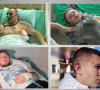
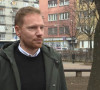
Political analyst Ognjen Gogic assesses that the attacks on the Serbs from Kosovo during January are Pristina's response to negotiations on a new Franco-German agreement and a way to obstruct those negotiations.
He reminds that the heightened tensions in Kosovo occurred during the summer, when the Serbs had problems with identity cards, license plates, and arrests, and when they responded to that by setting up barricades.
"Now that situation culminated in the sense that there was a rise in political tension and a balance of forces, which, at first, did not cross the line to become violent, but now it has happened. There has been an eruption and it could have been expected," Gogic told Kosovo Online.
He pointed out that when there was a rise in tensions and an outpouring of frustration, the Serbs, as the smaller and weaker party in Kosovo, always suffered the worst.
He said that in this situation, the biggest dilemma was whether the increasingly frequent and serious attacks on the Serbs since January were spontaneous and isolated events and the result of the behavior of individuals who felt on the one hand frustrated, while on the other hand, they were encouraged by Pristina's policy, or was it about something that was orchestrated.
"At the first moment when these attacks started after the New Year, around Christmas, my impression was that it was isolated and that it was about individual cases, however, now it is still a bit too much and the impression is created that it is still a series attacks and something orchestrated," Gogic said.
He believes that if both cases are taken into account, it is not known which is worse, because, as he explains, if the attacks are organized, there is some political intention behind them, and if the cases are isolated, the problem is how to get in the way, because individuals feel emboldened to undertake attacks themselves.
According to him, the only way out was to severely punish those who carried out attacks, in order to send a message that they did not have the right to do it.
In Kosovo, he emphasized, an atmosphere of impunity had been created, so the Albanian side had gotten the impression that it could attack the Serbs without incurring any responsibility or punishment.
Considering the overall situation, Gogic believes that "we have entered a kind of spiral of attacks", and that it can be expected that these attacks may become more numerous and more serious.
When asked whether the international community would react to such behavior by Pristina, Gogic says that the international community always gives priority to local institutions and does not interfere, but expects the police and judiciary in Kosovo to take action.
"I think that as long as the problems are solved at the local level, the attacks will increase and that the international community will react only when things get out of control and the situation becomes too serious. And I think that the attacks and the pressure on the Serbs will increase as negotiations on a new agreement will continue," Gogic said.
Regarding how the Serbs can be helped at the local level, given that they have left the institutions in the north, Gogic believes that this is a serious issue because incidents also occur in the south of Kosovo, where the Serbian side has not left the institutions.
"There is a Kosovo police force in the north of Kosovo made up of Albanians who speak Serbian and they are the first point of contact. However, the problem with the actions of local institutions is obvious and the Serbs should turn to the international representatives operating in Kosovo, namely EULEX and KFOR," Gogic stated.
According to his words, it should be insisted that EULEX and KFOR increase their presence in the north of Kosovo, in order to deter the Albanians from attacking the Serbs.
0 comments