
Gogic: The Constitutional Court has introduced new uncertainties into the political crisis in Kosovo instead of resolving it
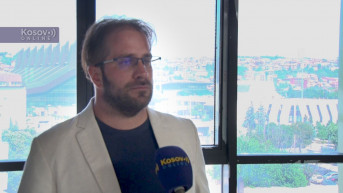
Political scientist Ognjen Gogic stated that the Constitutional Court’s decision did not resolve but rather introduced new uncertainties into Kosovo’s institutional crisis. He emphasized that the key problem lies in the fact that Albin Kurti lacks a majority, and the opposition lacks the will to form a new government.
“The Constitutional Court’s ruling doesn’t seem to have contributed to resolving this crisis, as parties have taken completely different interpretations of what the Court actually ruled. It appears this will continue in the coming period. What we have seen so far, failed sessions, will keep happening because the parties haven’t reached a consensus on how to emerge from this crisis,” Gogic told Kosovo Online.
The Constitutional Court ruled on May 26 that MPs have a maximum of 30 days to complete the constitution of the parliament.
For Gogic, the key uncertainty is – what happens after that deadline?
“Neither the Constitution nor the Court’s ruling says what follows if the Assembly is not constituted within that time frame. It’s likely the Constitutional Court will need to speak again on this issue and possibly take a position that allows President Osmani to dissolve the Assembly. The Court will have to interpret whether, after the deadline, the dissolution of the Assembly is permitted given that it hasn’t been constituted. That is a legal gap,” Gogic explained.
At the same time, he warned that not only have the parties failed to agree on the constitution of the Assembly, but there is also no agreement on a parliamentary majority.
“So far, neither the current government nor the opposition has announced that they have reached a deal on forming a new majority. If they had, everything would have been resolved,” Gogic believes.
He considers issues such as whether the vote for the future Assembly president will be public or secret, or the candidacy of Self-Determination’s Albulena Haxhiu, to be completely peripheral.
“These are all side issues, artificial topics masking the fact that no one wants to form a government, and no party is able to reach an agreement with any other party in Kosovo,” Gogic emphasized.
He explained that the candidate’s name is a “political decoy” and that the opposition knows Kurti would not change his decision, just as they would not support any other candidate from Self-Determination.
Hence, he sees two possible scenarios for resolving the institutional crisis.
“The real question is what the opposition wants, because according to the Constitution, the party that won the election proposes the candidate. But that doesn’t mean the candidate must be from that party. Why doesn’t the opposition tell Kurti that they have agreed to form a government and want to propose their own candidate? That wouldn’t stop him – because the Constitutional Court said the party with the mandate should work on building consensus and dialogue – to propose a candidate,” Gogic said.
The second scenario, he clarified, is that the opposition might “tactically” vote for Haxhiu so the Assembly can be constituted.
“That would then open a legal path for them to form the government. The issue here is that Kurti doesn’t have a majority, neither for electing the Speaker nor for forming a government, and the opposition doesn’t want to either. So we are stuck in a deadlock where no one wants to take responsibility for forming the institutions,” Gogic concluded.



0 comments