
Gogic: Differing views on the KLA are not the problem—what’s problematic is restricting freedom of expression
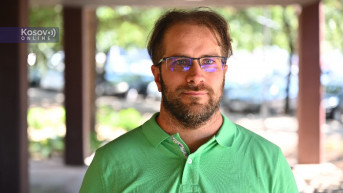
Political analyst Ognjen Gogic told Kosovo Online that in recent months, the Kosovo Police have been interpreting the concept of inciting national hatred and intolerance in an extremely broad manner, on the basis of which they have been arresting people and holding them in custody—even though this actually restricts freedom of expression.
Speaking about the arrest of Igor Popovic, Deputy Director of the Office for Kosovo and Metohija, Gogic said that the case appears to be politically motivated, as it involves a violation of the right to freedom of expression.
"What Popovic said in no way insulted or threatened the Albanian people—he did not speak about the Albanian people at all. He spoke about Serbian victims of crimes that have never been properly addressed and whose perpetrators have never been punished. That was the focus of his statement, and in itself, it should not be offensive to the Albanian people," said Gogic.
According to Council of Europe standards and the practice of the European Court of Human Rights, he noted, freedom of expression is interpreted very broadly—precisely to prevent every statement from being labeled as hate speech. There is a very clear line between freedom of expression and hate speech, and, he emphasized, freedom of expression can include controversial speech.
"Popovic has the right to speak critically or negatively about the KLA—he doesn’t have to be right; he can be wrong—but he has the right to say it, and that cannot be interpreted as an insult to the Albanian people because he does not equate the KLA with the Albanian people. So, what we have here is someone being denied freedom because of expressing a value judgment, which may or may not be accurate. This should be treated as a human rights issue. Ultimately, if Popovic said something offensive, KLA veterans can sue him in a civil case for defamation. The issue is not whether what he said is true or false—the issue is that he has the right to say it, and it cannot be considered hate speech because he did not target an ethnic group," Gogic explained.
In his view, Popovic’s arrest should be seen in the context of political turbulence in Kosovo, with authorities in Pristina taking increasingly extreme steps due to the overall political situation.
"These statements and arrests came at a time of high tension in Kosovo, during a political crisis among Albanians, with emotions running high—and Popovic is collateral damage. But as the political situation approaches resolution, the circumstances will likely become more favorable for his case to be reconsidered, and some appeal may overturn the current decision. This should be viewed in the context of the turmoil in Kosovo, as it seems there will be new elections. The Vetëvendosje government is facing legal challenges over its governance, and in such a situation, they may be resorting to more extreme measures—perhaps thinking they won’t be in power much longer and trying to do as much as they can while they still have control," Gogic assessed.
He also raised the question of which part of Popovic’s speech actually offended the acting Minister of Internal Affairs, Xhelal Sveçla—was it the criticism of the KLA or the reference to Serbian victims who have not received legal redress?
"Perhaps that’s what became controversial. Perhaps, going forward, anyone who speaks at commemorations for Serbian victims in Kosovo will face similar consequences. Maybe it’s considered offensive simply to remind the public that there are victims who have not received justice. When it comes to the KLA, there have been processes—both in the Hague Tribunal for the former Yugoslavia and now before the Specialist Chambers. KLA commanders are on trial for war crimes—clearly, there is a basis for these proceedings. But it’s also clear that Serbs and Albanians have different views of the past.
There has never been a real dialogue—neither within nor between the two peoples—on who did what to whom. We have different views on the KLA, and that in itself is not a problem. The problem arises when freedom of expression is restricted. This is not about the KLA at all—Popovic can express views that are historically inaccurate; he can be wrong in his assessment of the KLA. He has that right under the principle of freedom of expression, and he cannot be criminally prosecuted for it. If someone believes they’ve been insulted by that, they can sue him privately—but a criminal proceeding cannot be conducted for that reason," Gogic concluded.

0 comments