
Gogic: The EU has not rolled up its sleeves like this in a long time and offered a technical solution for the situation in Kosovo
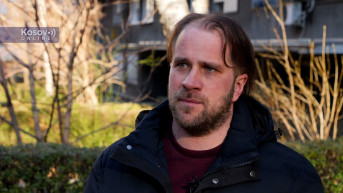
Political scientist Ognjen Gogic assesses that the solution concerning the application of the law on foreigners in Kosovo represents a positive step forward for Serbs, the kind that has not been seen for years. He adds that it is encouraging that the EU has “rolled up its sleeves and come forward with technical solutions,” but also expresses concern that implementation in practice may not look the way it was agreed.
Speaking to RTS, Gogic notes that the law on foreigners has formally begun to be applied, but that additional measures have been introduced to protect certain categories of Serbs.
“These are essentially two groups – Serbs who live in Kosovo and Metohija and Serbs who stay and work there,” Gogic explains.
The first category, he said, consists of Serbs who live in Kosovo but have so far been unable to obtain Kosovo documents.
“We have people who were born in Kosovo or have lived there all their lives, yet they could not obtain documents. One of the reasons is that they were born in maternity hospitals in central Serbia, so the Kosovo institutions did not recognize those documents,” Gogic says.
As he stated, the second category consists of those who moved to Kosovo due to marriage.
“We have Serbs from central Serbia or The Republic of Srpska who married people from Kosovo and live there, but could not obtain documents because their marriage certificates were not recognized,” he adds.
According to the agreement, people from both of these categories should be given the opportunity to regulate their status.
“These are individuals who have lived in Kosovo for decades and cannot be regarded as foreigners,” the political scientist emphasizes.
One Thing Is the Agreement, Another Its Implementation
However, he expresses concern about how the agreement will function in practice.
“One thing is the agreement, and another is its implementation. What follows now is the practical elaboration that should make it possible for all of this to be carried out,” he points out.
Gogic notes that by-laws and administrative instructions were adopted only immediately before the start of the law’s implementation.
“The three-month deadline has already begun to run, while the infrastructure for implementing the law has not yet been fully established,” Gogic says.
For this reason, he expects that the deadline for submitting applications could be extended.
“There will probably be a delay, because three months will not be enough to resolve all these issues,” he stresses.
A Special Category: Employees in Healthcare, Education, and Students
He also noted that employees in Serbian healthcare and educational institutions in Kosovo represent a special category. According to him, they are expected to receive residence permits for a period of 12 months, with the possibility of extension.
“The mayors of ten municipalities with a Serb majority are supposed to submit lists of employees and students, after which Kosovo institutions would issue residence permits,” Gogic explains.
However, he warns that numerous administrative obstacles could arise in practice.
“There is a possibility that Kosovo institutions will analyze those lists and deny residence permits to some individuals,” he says.
According to him, the new agreement represents a certain step forward compared to the previous period.
“This is a positive step forward that we have not seen for years. A compromise has been reached – neither side is completely satisfied, but a certain minimum of interests has been protected,” Gogic emphasizes.
Nevertheless, he adds that the new regulations should not be expected to pass without problems.
“This is indeed an encouraging step, but we should not relax too much. New challenges and problems will likely emerge in the coming period. What is encouraging in this situation is the new engagement of the European Union, which we have not seen for years. Here the European Union has rolled up its sleeves and come forward with technical solutions that produced this kind of compromise,” Gogic concluded.
Milivojevic: The EU Reacted in the Right Way for the First Time
Former diplomat Zoran Milivojevic, speaking on the RTS news program, said that in the case of the implementation of the law on foreigners, the EU reacted in the right way for the first time, thereby avoiding a serious crisis that would have arisen had the law been fully applied, particularly regarding education and healthcare.
“It could not have passed without a reaction from Serbia and the Serbian people because stability and security would have been called into question. This time the EU recognized the danger and reacted in the right way, as is expected from a mediator. They have become aware of the consequences. Now is the opportunity for the EU to show genuine interest in mediation so that the dialogue can continue,” Milivojevic stresses.
He also notes that, had a solution not been reached, an exodus of the Serbian population could have occurred, adding that this is an opportunity for the EU to demonstrate credibility on an impartial basis, and for Brussels to understand that there can be no genuine dialogue without a compromise solution.
“Dialogue has no alternative. When it comes to education and healthcare, this is an opportunity for these issues to return to the table. Serbia has always supported dialogue, and the head of European diplomacy, Kaja Kallas, is responsible for initiating that process, while the EU Special Representative for the Belgrade–Pristina Dialogue, Peter Sørensen, should show initiative,” Milivojevic said.

comments