
Gogic: Slim chances that any international official will call on Kosovo to abandon the implementation of the Law on foreigners
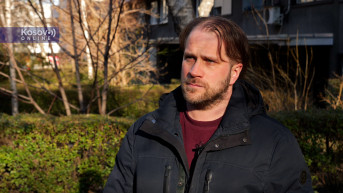
Political scientist Ognjen Gogic told Kosovo Online that there is little likelihood that any international official will call on Kosovo to abandon or postpone the implementation of the Law on Foreigners, as representatives of Kosovo’s institutions have stated that the law is being implemented at the request of the European Union.
He also assesses that it may be assumed that Kosovo used the start of the implementation of this law to simultaneously request the integration of Serbia’s healthcare and educational institutions in Kosovo into the Kosovo system.
According to Gogic, the European Union has already spoken out on the Law on Foreigners and supported its implementation.
“Voices close to the Government of Kosovo claim that the law is being implemented at the request of the EU, as Kosovo has a Stabilization and Association Agreement with the EU and visa liberalization, i.e. the ‘White Schengen’ regime. Both of these oblige Kosovo to record, in a certain manner, the entry and stay of foreign nationals on its territory. This is compatible with the process taking place at the EU level, with the Entry/Exit System (EES), that is, the digital registration of foreigners. Consequently, Kosovo has a corresponding obligation to establish a system for registering foreign nationals. Therefore, there is little chance that anyone will call on Kosovo to abandon or postpone the implementation of the Law on Foreigners,” Gogic told Kosovo Online.
He notes that the implementation of the Law on Foreigners was postponed on two occasions, in line with the postponement of the EES system, which was initially scheduled to begin in October last year but was subsequently delayed. Another reason for postponing the law’s implementation was the holding of local elections in October and parliamentary elections at the end of December, as it was considered inappropriate for implementation to begin during that period.
“Such circumstances no longer exist. Only if Kosovo fails to elect a president and goes to parliamentary elections again could one potentially envisage another postponement of the law’s implementation; otherwise, no. Kosovo enjoys full support for its implementation, although it has been stated that its application should be adjusted to the needs on the ground. There was also mention of a working group formed under the auspices of the Government of Kosovo, reportedly including representatives of international missions, tasked with facilitating the implementation of the law, particularly with regard to the position of the Serbian community,” Gogic says.
According to him, the implementation of the Law on Foreigners and the integration of Serbia’s healthcare and educational institutions into the Kosovo system are not “organically linked issues,” although they were opened simultaneously.
“If we assume that the implementation of the Law on Foreigners forms part of Kosovo’s obligations in the EU accession process and that it stems from EU requirements, it may also be assumed that Kosovo used this moment to simultaneously request the integration of Serbia’s healthcare and educational institutions in Kosovo into the Kosovo system. This is because the implementation of this law inevitably raises the issue of the status of those institutions, given that a number of their employees come from Serbia, reside in Kosovo temporarily, or live there continuously. Naturally, their stay in Kosovo will be called into question by the implementation of this law, as under its provisions they become foreigners. One could therefore say that this was a hidden agenda — to open the issue of those institutions alongside the implementation of the law,” our interlocutor assesses.
What is contentious, Gogic emphasises, is that insufficient attention is being paid to the way in which the implementation of the Law on Foreigners disproportionately affects certain categories of people.
“For years, even decades, certain individuals have lived and worked in Kosovo holding documents issued by Serbia. They have not been there illegally, nor did they enter Kosovo without the knowledge of Kosovo’s institutions, as border crossings are controlled by the police. Their stay was not illegal immigration; rather, their long-term residence was entirely lawful from Kosovo’s perspective throughout that period. Now, however, this law is being applied to them without due regard for those specific circumstances and the legitimate rights they acquired during that time,” he points out.



comments