
Graovac: Kurti uses the strategy of Sarajevo's political elite to confront Serbia
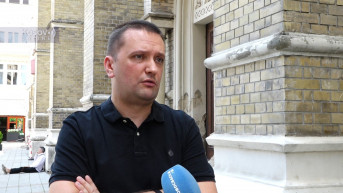
Commenting on the announced cooperation between the Institute for War Crimes in Pristina and the Memorial Center in Srebrenica, historian and analyst Srdjan Graovac from the Center for Social Stability states that Pristina and Sarajevo support each other towards a common goal, which is the independence of Kosovo and the dissolution of Republika Srpska.
"On one hand, we are well aware of the strategy of the political circles in Sarajevo, which is to use the principle of genocide that allegedly occurred in Srebrenica in their attempt to dismantle Republika Srpska. Albin Kurti has a similar strategy, and he does not hide it. If you consider his behavior and statements in the previous period, you will see that he persistently repeats that there are four alleged genocides committed by Serbs against Albanians in Kosovo and Metohija," our interlocutor says.
He explains that this narrative about genocide serves as a basis for Kurti to confront Serbia and its influence in Kosovo, and that the essence of his narrative is similar to that of the Bosniak political elite.
"If the Serbs committed genocide in Srebrenica, then Republika Srpska is a genocidal creation, and accordingly, it should be abolished. He thinks similarly; if the Serbs committed genocide in Kosovo and Metohija, then Serbia cannot invoke international law because, in his opinion, a nation and a state that committed genocide should be denied certain possibilities and pressured to meet his political interests," Graovac states.
He believes that Kurti will insist on this narrative precisely to put pressure on the international community, to further pressure Serbia to accept the independence of Kosovo, and to insist in the international geopolitical arena that the same rules cannot apply to Serbia as to other countries.
He also notes that it should not be forgotten that Pristina insisted on being among those who would adopt a Resolution on Srebrenica.
"When you take everything into account, it becomes clear that Pristina has been trying for a long time to align with political Sarajevo. Both have a strong lobby in the United States, in particular, and this is an attempt at cooperation to support each other towards a common goal," Graovac says.
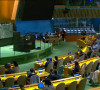
He believes that Serbia has a response to this and cites the discussion in the United Nations General Assembly about the Resolution on the Genocide in Srebrenica as an example. He recalls that the Americans, Germans, and other co-sponsors insisted that Serbia not be informed about this resolution to catch it off guard, but Serbia achieved exceptional success by not having the majority of countries support the resolution.
"Since the majority of countries were against it, they cannot achieve that moment of mobilizing the public on a global level, and this is how we opposed the Resolution on Srebrenica. We will have to apply the same principle when talking about the alleged genocide in Kosovo and Metohija. The only way to counter it is to convince the international public that it did not happen and that it is a political deception, nothing more than part of a political strategy. The more allies we gain, the lesser their ability to mobilize foreign public and international community support for their interests," Graovac says.

0 comments