
Hetemi: Agreement with Montenegro on the exchange of archival material important for sustainable peace in the region
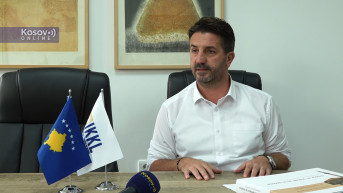
The Director of the Institute for War Crimes in Kosovo, Adem Hetemi, stated that the agreement on the exchange of archival material, signed with the Ministry for Human and Minority Rights of Montenegro, is important for preserving peace in the region.
“The agreement signed by one of the ministers of the Montenegrin government concerns the handover of archival material related to the most recent war in Kosovo, specifically material held by Montenegrin institutions that is relevant to documenting war crimes and the treatment of civilians during the war. This includes official footage, communication between institutions, as well as archives showing how refugees were received and how people moved during the Kosovo war. More or less, all material documenting any activity related to crimes during the war. For example, when we went there, we received material from Montenegro's national broadcaster RTCG, from the municipality of Ulcinj, the municipality of Rozaje, the municipality of Tuzi, and others,” explained Hetemi.
Asked whether Croatia is also expected to be included, given that there is already an agreement with Bosnia and Herzegovina, Hetemi said they actually have arrangements with state and cultural institutions engaged in such work in other countries in the region, including Albania, North Macedonia, and the Srebrenica Memorial Center.
“We have such arrangements with all countries in the region, except Serbia. Unfortunately, they were not interested in cooperating on this issue. We also cooperate with Croatia in this area, and our institutions are expanding regional cooperation by entering into similar agreements with other countries, including the Republic of Croatia. Many countries in the region hold archival material in their judicial and educational systems, as well as in military structures. Our efforts are crucial for documenting the experiences and everything that was lived through during the Kosovo war. Therefore, enabling access to this material is essential for us to build an informed and credible historical record of the war in Kosovo during 1998 and 1999,” Hetemi emphasized.
As he pointed out, these agreements aim to expand regional cooperation and improve good neighborly relations.
“We want to promote a commitment to truth and accountability. By enabling access to official archives, including those in the region, our Institute fulfills its role of documenting war crimes to support judicial initiatives of other institutions and ensure that the dignity of the victims is preserved. At the same time, these efforts highlight regional solidarity, especially when we see Kosovo refugees receiving help in other countries. This is important for forming the narrative about Kosovo and the region. These agreements contribute to building sustainable peace in the region and a more sincere approach to the past. This is not only about Kosovo, but a regional interest in generating credible sources about past events,” Hetemi concluded.
The agreement on the exchange of archival material was signed on July 25 during Hetemi’s visit to Montenegro. Interlocutors of Kosovo Online assessed that the agreement carries more symbolic significance than being a substantial step toward war crimes investigation.
Petar Ristanovic, a research associate at the Institute for Serbian Culture in Leposavic, believes the cooperation primarily has a political dimension and sends a message of "closeness between Albanians from Montenegro and those from Kosovo."
Commentator and publicist from Montenegro, Perica Djakovic, noted that the agreement went unnoticed in the Montenegrin public, while Amer Alija, a lawyer from Pristina with the Humanitarian Law Center, stated that the agreement with Montenegro involves the exchange of information and possibly obtaining evidence related to war events.


0 comments