
High chances of escalation if a third party, namely Washington, does not intervene
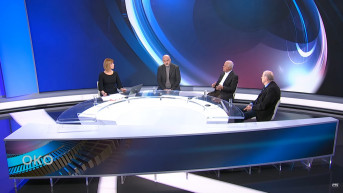
The editor-in-chief of "Kosovo Online" portal Milos Garic, a long-time correspondent from Germany Miroslav Stojanovic, and diplomat Zoran Milivojevic agreed that there was little chance of approving the presence of Serbian security forces in northern Kosovo, but also that there were high chances of escalation if a third party, namely Washington, did not intervene, RTS reports.
Garic said in the TV show "Oko" that there was no chance for KFOR to accept the presence of Serbian security forces in northern Kosovo and Metohija but that it was good to ask and be reminded of the existence of United Nations Security Council Resolution 1244. It seems to have been forgotten, as he says, and it is good to get those big people from the big stage to rush out right away and say it is impossible even though the request has not arrived yet.
Answering the question of whether the extension of detention for 30 days for the arrested policeman, because of which the barricades were set up, can further complicate the situation in Kosovo, Garic says that the Serbs have now become a key factor in Kosovo, their persistence and determination to oppose Kurti, not to agree to what Pristina is doing, to the implementation of the plan to persecute them and, as he says, that is now the biggest problem for Albin Kurti.
"The Serbs know that if they give up and allow Albin Kurti to convince them to give up their demands, which at this moment is the release of Dejan Pantic from custody, they know that then every one of the people at the barricades will be a target of Kurti's police tomorrow. It's about instilling fear in the Serbs," Garic pointed out and added that the key was how persistent the Serbs could be.
Commenting on the statement of the German Minister of Foreign Affairs, who said that by postponing the elections, Pristina made a concession and that the barricades were expected to be removed, Garic said that the barricades were not even set up because of the elections, as it was completely clear that they could not be held.
"People from the West are unaware of how dangerous the problem in Kosovo is. Their hypocrisy is terrifying," Garic said.
He emphasized that the condition for reaching a new agreement was to honor and fulfill the agreements already reached.
A long-time correspondent from Germany, Miroslav Stojanovic, says that it is good that this initiative was launched, but the question is if it will reach the author of the Resolution, whether it is KFOR that is authorized to respond, or is it the Security Council.
"I think this initiative leads to diplomatic offensive, and from that point of view, it is good," Stojanovic noted.
Former diplomat Zoran Milivojevic is of a similar opinion and pointed out that the moment was right to activate Resolution 1244.
How long this situation in Kosovo will last, Milivojevic says, depends on Washington.
"It is clear that the Pristina side and Kurti will not give up the politics they are leading now and that they were also leading in the past. It is a strategy to confirm Kosovo's statehood even with the use of force and methods that have nothing to do with law," Milivojevic indicated.
He adds that if the Americans do not intervene, he expects that we will enter into a serious escalation, and there are two reasons for it. The first is that the Serbs are more determined than ever before to persist in their demands, even if Belgrade does not have mechanisms to influence them to end their demands, and the other that Kurti shows that they are ready to impose a solution that implies a direct conflict.
"If there is no intervention by a third party, I am afraid that this time we will really have an escalation," Milivojevic said.
Stojanovic adds that Kurti is sowing programmed political minefields.
"Kurti lights a fire, then that fire goes out, and he makes a point of how he contributed to calming the situation, for example, by postponing the election," he said.
When asked whether Belgrade and Pristina could return to dialogue, as Borrell is calling for, Stojanovic said that in situations like that, causes and consequences got mixed up, and then everything is relativized.
"When I say that Kurti is doing this as it is programmed, I think that he is speeding up the situation, creating an atmosphere that sometimes leads to heat indicating that this matter must be quickly resolved because it is explosive. He thereby puts pressure on Brussels, but also on Washington, although I have the impression that Washington is a little more restrained now than in the past," Stojanovic said.
He pointed out that Escobar sent a political message by visiting Decani first and then Pristina.
"It will probably be the same as before, that he will decide, but the points will again go to Kurti, who will say that he has contributed to calming the situation," Stojanovic said.
Milivojevic added that he did not think Kurti was alone in this story because the Germans had shown with the statements of Chancellor Scholz and the Minister of Foreign Affairs that they were not on his side.
Speaking about December 17, as an important date when the representatives of the German Chancellor and the French President, Lajcak and Escobar, announced their arrival in Belgrade, Milivojevic says that the European plan, the amended and supplemented edition that we received in Tirana, should be activated and that's why they are coming, and the attempt is to activate that plan and to return to dialogue based on that plan.
"President Vucic is right when he says that it is D-Day, because there will be strong pressure to accept the platform for continuing the dialogue based on that plan," Milivojevic noted and added that it would not be realistic to talk about that plan if this situation continued until December 17.
Commenting on the announcement that the Pristina representatives will apply for EU membership, Stojanovic says that the chances of Kosovo joining the EU are zero, but the formal opening of that process will mean some kind of points for Pristina.
Milivojevic adds that before the upcoming meetings Serbia will insist that the Brussels Agreement be in force and that the CSM be formed, and this time they should not count on Serbia to make a concession. The proof of that is the activation of UN Resolution 1244, Serbia is activating a mechanism that is legally responsible for Kosovo, which is the Security Council.
He reminded that according to the EU Statute, only states could apply for membership in the Union.
"In any case if Kosovo had an access to the UN, it would not be important whether Serbia recognizes it or not. At that moment, the Kosovo story would be over, there would be no Resolution 1244, and there would be no state Serbia with its borders as they are today," Milivojevic explained.


0 comments