
Igor Luksic: We need to renew enthusiasm in the region regarding EU integration
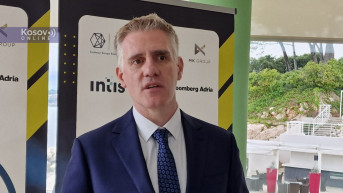
The former Prime Minister of Montenegro, Igor Luksic, assessed that in that country, but also in the entire region, in the previous ten years, the enthusiasm and spirit of integration had been lost, regarding membership in the EU, and that the country still had a lot of work to do, and that one of the important tasks - renewing essentially integrative enthusiasm.
"I was prime minister when we opened negotiations in July 2012, and then I answered similar questions - when I expect Montenegro's membership in the EU - in 2020/2021. That seemed realistic to me and I seemed to give enough space for everyone to get used to that circumstance. Today we are in the year 2023, and I am not sure that I would be ready to answer your question, in any terms," Luksic told Kosovo Online.
He notes that in the previous ten years, the enthusiasm and spirit of integration, which was stronger before, has been lost, and everyone has allowed the previous decade to pass with insufficient engagement and without sufficient effect.
"Montenegro has opened all chapters, closed three, but I cannot say that we are at the end of the process. It seems to me that we have a lot of work ahead of us. Overall, in the region, one of the important tasks is the renewal of essentially integration enthusiasm," said Luksic, who retired from active politics.
At the panel of the "Strategic Economic Forum" of the Southeast European Business Cooperation Network (SEEBDN) in Savudrija, Croatia, he said that a new concept of the accession process is needed.
He is in favor of associate membership, according to which the countries of the Western Balkans would participate in EU bodies, without voting rights, which they would acquire only after fulfilling all obligations and conditions.
When asked about regional cooperation and the "Open Balkans" initiative, he recalls that he initiated the Western Balkans Six ten years ago, as a way to encourage trade and connectivity in the region, remove barriers, bring countries closer to the EU and show that they are capable of cooperating for future EU membership.
After that, he says, in 2014 that initiative got a stronger political form, through the engagement of Berlin and the Berlin Process, which, according to him, led to several important results, which were reflected in the definition of infrastructure corridors, the Action Plan for the establishment of a regional market, in the Green Agenda for the Western Balkans...
"These are all very concrete benefits that we had in establishing and implementing regional initiatives. But I can't shake the impression that we've somewhat lost enthusiasm for all that, that there's a lot more talk than work, and that there's a lack of initiative not only on the part of the Western Balkans, but in the EU as well," states Luksic.
When asked whether the "Open Balkans" is good for the region, he answers that "artificial dilemmas" are often created in the region and that in fact, the initiation of the Western Balkans Six, its shaping through the Berlin process, and all its effects, and finally membership in EU - a path that was already defined and mapped out.
He is of the opinion that it would be better to implement what has already been agreed, rather than looking for new initiatives.
"If it is necessary to rebrand something, to encourage people to accept some marketing content, it all makes sense, but I don't see that leaving the already well-trodden path in which everyone participates, for something else, brings any special benefits," Luksic believes.
This, he adds, does not mean that the countries in the region that are interested in deepening cooperation faster are doing so, and he does not see anything controversial in that, but he also states that we should not forget that the goal of the Berlin process is to connect on the basis of European standards.
"If we want to mutually encourage trade in agricultural products, with as little paper and certificates as possible, then we should bring our institutions to the level of the European standard and then abolish all papers," said Luksic.

comments