
Janjic: Serbia can now get more than it asked for
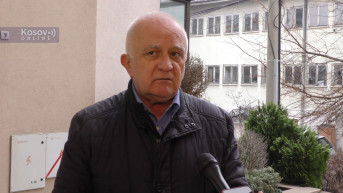
The director of the Forum for Ethnic Relations, Dusan Janjic, assessed that the result of yesterday's round of dialogue in Brussels had been expected and that, in fact, a serious diplomatic negotiation process was only now beginning. Janjic indicates for Kosovo Online that Serbia had gained more room for maneuver in connection with the Community of Serb-majority Municipalities, regarding jurisdiction and regional autonomy in the north of Kosovo.
"We got what should have been expected, a serious step in the right direction, as the name of the proposal, says - it is the path towards the normalization of relations between Serbia and Kosovo," Janjic told Kosovo Online.
He also assessed that yesterday's talks had been different compared to those in December and that now a serious political debate was in order both in Kosovo and Serbia, but also at the international level.
"A serious diplomatic negotiation process is starting," Janjić is convinced and adds that there will be key talks during March when he expects the formation of a monitoring team and the implementation of the proposal from April.
He says that this is a difficult process, which will lead to the development of Serbia and its membership in the EU.
When asked what steps should be taken by the Government of Serbia, Janjic points out that the National Security Council should be reconvened first, if an agreement on the formation of the Community of Serb-majority Municipalities, by Albin Kurti, is reached by March 24.
"Now we need to adopt some 'landmarks' for negotiations, present them in front of the Parliament and decide who will represent Serbia in that implementation team," Janjic said.
When it comes to the chief negotiator Aleksandar Vucic, Janjić adds that according to the opinion of the international community, but also the domestic public, he should remain in that position, but that it is necessary to create a special body with representatives of the Government of Serbia, the Office for Kosovo and Metohija and the opposition, which will advise on further steps.
When asked whether the West was in a hurry to reach an agreement between Belgrade and Pristina before the 10th anniversary of the signing of the Brussels Agreement, Janjic said that all the parties participating in the dialogue had "some deadlines", but that the hurry had been made in order to come out of the phase in which there was a threat of war.
"We got out of the stages of barricades, police, and drone attacks towards the end of December... We will see the implementation plan, we will see the deadlines. I don't believe in EU deadlines and it is better to clear it up in March, or April than to wait until later to argue about it. We had so many unrealistic deadlines which were determined by Lajcak's team, that it stifled everything," Janjic said.
He emphasizes that the deadlines are not fixed, but that past experience indicates that they are determined based on the priorities of the West.
"For them, even seven days is too much when they determine someone's obligations, and when their obligations are fulfilled, we have to wait five years," Janjic states.
Commenting on the situation in Kosovo, since Kurti is the target of criticism from the opposition there, Janjic says that it is known that Kurti and the opposition are not in love.
"There, the opposition, unlike ours, is unique in its view that the agreement should be implemented, it considers it desirable, and above all, as a means of bringing the US closer together. That is what is unique for the opposition, so Kurti is criticized from all sides," Janjic said and added that even Vlora Citaku, whom he saw as the future president of Kosovo, knew very well that the US had changed its position and that there was no mutual recognition.
However, on the other hand, he says that Serbia got more room for maneuvering - precisely thanks to the bad policy and abuse of the CSN by both Thaci and Kurti.
"Article 7 of the agreement on the CSM, foresees that the CSM, as agreed in 2013 and 2015, can be upgraded with serious autonomy, along with the independence and status of the Serbia Orthodox Church. Serbia is in a position to get something that it did not even ask for because the CSM was a narrow ideological political project of the Serbian Progressive Party and Tomislav Nikolic," Janjic said.
When it comes to the Serbian opposition, he says that he understands the opposition on the right side of the political spectrum, the pro-Russian opposition, which does not want the EU or NATO, does not want dialogue but believes that we should wait for the end of the war, for Russia to win, and for Serbia to be a governorate, which is their legitimate position, about which the voters will decide.
"But I see the pain of Ponos and the others who cannot admit that this is the way we can go to the EU because there is no other. I would also like to be another way, but there isn’t. The Democratic Party, Ponos, the entire red-green bloc, should, according to their program, support the proposal. I don't understand Ponos's policy of spite and insults. Without that, we will get less than we can," Janjic observes.
According to him, there is hard work ahead, but he adds that the Serbian Progressive Party must change the way it communicates and that the media stop producing a civil war because Serbia does not need that kind of atmosphere, but rather an agreement.
"That we have a working team, negotiators; that we regularly go before the assembly; that there are narrower bodies for informing the parliamentary clubs. So whoever wants to – can; whoever doesn’t want to - should go to the street. We have a way to achieve the maximum, and the space is large," Janjic repeats.
Serbia, he concludes, can create the Community of Serb-majority Municipalities as a coordination of municipalities in all areas of competence, with the protection of cultural heritage through cooperation with the Serbian Orthodox Church, and can achieve regional autonomy in the north.
"They didn't even dream of that, Tadic refused it in 2009. And, I don't know if there are better-protected minority communities than that, according to the documents. Serbia can grab a full basket, but I'm afraid that the political decissiions will cause elections. If the elections are postponed until the beginning of next year, then we can do a lot," Janjic said.

0 comments