
Jevtic: Attacks on Serbian returnees are a result of the policy of the regime in Pristina
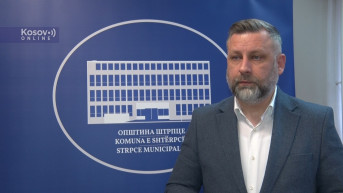
Dalibor Jevtic, the mayor of Strpce municipality and former Minister for Communities and Returns, tells Kosovo Online that security, economic sustainability, and usurped property are pressing issues regarding the return and survival of the Serbs in Kosovo. He states that frequent attacks on the Serbs are a result of the processes and implementation of the current regime's policy in Pristina, urging the international community to stop observing passively and to react urgently.
"Security, economic survival, and usurped property were problems before, while I was the minister, and they still are. These are issues that cannot be solved by a single ministry or institution. I have always emphasized that until other institutions get involved, the problems related to security, economic survival, and usurped property will not be resolved. There have been attempts to institutionally address these issues through the formation of inter-ministerial working groups, involving all other relevant ministries in the process. However, the general problem, not only regarding returns, is that decisions that were made were never implemented. So, the implementation of decisions to solve problems, as well as the implementation of existing laws prescribed here in Kosovo regarding the rights of non-majority communities, is a burning issue," Jevtic says.
He sees frequent attacks on the homes of Serbian returnees, which mostly remain uninvestigated and without adequate punishment for the perpetrators, as a result of current political and social processes.
"What concerns me now is that, previously, returnees had an address where they could turn to get help and support, even in situations where some of those cases might not be resolved. They had some security in the form of the Ministry for Communities and Returns, which they knew would address these problems and speak out about them loudly, which is not the case today. So, when the last institution that previously dealt with all these problems within the Kosovo system no longer speaks out when an attack, robbery, or arson of returnees' property occurs, it is indeed worrisome. This can only result in further escalation or an increase in this problem due to all the other issues we have concerning how the current regime in Pristina treats non-majority communities, especially the Serbian community where the largest number of returnees is expected," Jevtic says.
He also addressed attacks on the property of the Serbian Orthodox Church, which he sees as a part of the process and implementation of the policy of the current regime in Pristina. This policy aims to erase everything with the Serbian prefix and somehow make it disappear.
"There is a rewriting of history, and I see it as a part of what the institutions of the current regime in Pristina are doing, which is very dangerous for the future if we talk about something that the international community constantly emphasizes, namely multi-ethnicity in Kosovo. A very worrying fact is that those who are doing this, those who are implementing such a policy, meaning the Government of Kosovo, are doing it with a very clear goal. I have no expectations from them because their intentions are very clear on this issue. They know that one of the pillars of the survival of the Serbs in Kosovo and Metohija is precisely the Serbian Orthodox Church, and that's why they are doing it. They want to weaken that pillar, in a way to destroy it, and, I repeat, I have no expectations from them. We will persistently pose questions to representatives of the international community about how long they will remain silent on all this and whether they will finally take some action to stop such a process. We will keep asking this question whenever we have the opportunity and will not give up until we get an answer, and not just an answer, but finally some kind of reaction," Jevtic says.
He states that the international community can influence the change of everything harmful in the current regime's approach to the Serbian community through certain methods.
"I wouldn't like to speak here in the context of punishing citizens because citizens, I mean all citizens of Kosovo, are not guilty of anything. I am talking about the fact that those politicians and political leaders who make decisions that are escalatory, that aim to expel a certain number of the population, prevent return, influence the survival of a certain people..., that such political leaders must bear certain political sanctions and consequences for that and not the citizens. The international community is now dealing with certain problems and returnees in a bureaucratic way, but also all citizens who have certain problems, due to such a political situation, are losing patience. They don't have time for bureaucratic procedures, waiting for these elections, waiting for those elections, wondering what will happen here, when will this happen..., because we have been living in these conditions for decades. That's why I can always quote the US Ambassador in Belgrade who said, 'The Serbs in Kosovo deserve an answer to the question of what their future will be'. So, that's what we are asking for; we need to know what mechanisms are in place to protect the lives of the Serbs in these areas, and what we can expect in the future. When we see what is happening these days in northern Kosovo, all that pressure being exerted, and now this decision about the dinar, we want to see concrete steps that the international community can indeed take and say, 'Enough, Kosovo needs and must be multi-ethnic'. Unfortunately, I fear that this will not be the case in the near future," Jevtic says.
He warns that all this currently happening has a very negative impact on the process of the return of the Serbs but also on the survival of the Serbs in Kosovo.
"Someone's decision to return to Kosovo is not only influenced by direct attacks on the property of the returnees but also by the fact that when someone wants to resolve the issue of their property, they are accused of alleged war crimes. These things affect not only the return but also the Serbs who live there today, primarily to remain and survive under such conditions. I have no expectations that anything will change in terms of this relationship by the current regime in Pristina, but the question remains for the international community: how long will they silently observe all this, and what will they do about it to avoid having a negative impact, not only on the return but also on the survival of the Serbs in these areas? And what I must say and emphasize somewhere is that through the formation of the CSM, we expected that precisely through that mechanism we would have through that institution to protect the issue of the return process, property issues, etc. All this postponement and avoidance of proceeding with the formation of the CSM aims to cause as much damage as possible that will be irreparable at one point and which, when the CSM is formed, if ever, will not be able to compensate for all the damage that has been done in the meantime by the political actions of the regime in Pristina," Jevtic warns.


comments