
Jevtic: Pristina's long-term plan is that the return of the Serbs to Kosovo never happens
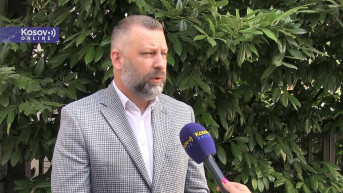
The Mayor of Strpce and the former Minister for Communities and Return in the Kosovo Government, Dalibor Jevtic, said today that since Prime Minister Albin Kurti had been in power, no one was talking about the return of the Serbs to Kosovo and that those who lived there faced pressure almost every day, new arrests and attacks on property.
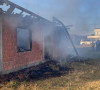
On the occasion of the recent burning of the house of the returnee Janackovic family and the attack on a young Serb from Gracanica, who was beaten by three Albanians, Jevtic indicates for Kosovo Online that the Kosovo Prime Minister has recently increased the pressure on the Serbs in order to divert attention from the key issues, which are the continuation of the dialogue and formation of the Community of Serb-majority Municipalities.
"The incidents are just a continuation of the constant pressure on the Serbs living in Kosovo and Metohija, especially on those who want to return or have returned. On the other hand, in a political sense, such actions are aimed precisely at diverting attention from those topics that are important in the continuation of the dialogue, if it is to be successful, and that is the formation of the CSM. Therefore, that is the overriding goal of Kurti and the current regime in Pristina when it comes to incidents like this," Jevtic said.
He added that it was not only about physical attacks on the Serbs and the burning of returnees' houses. He states that there are also arrests, both of prominent Serbs who live in Kosovo and of those who want to return and settle the issue of property that has been usurped from them.
He points out that all of this is a part of Pristina's long-term plan to prevent the return of the Serbs to Kosovo.
"It's all a concept, a 'recipe' that has been applied for a long time, and it has been especially radicalized since Kurti came to power," Jevtic pointed out.
Commenting on the statement of the President of Serbia, Aleksandar Vucic, that since then there have been more than 400 attacks on the Serbs, their property, and holy sites, the Mayor of Strpce emphasizes that this is exactly the true picture of the current regime in Pristina.
"Kurti claims that Kosovo is the most democratic country in the region, that in terms of democracy there, when you listen to him, everything is going great and everything is ideal. But the reality on the ground is exactly what the various data indicate. The reality is constant attacks on the Serbs, the increase in crime since Kurti came to power, corruption affairs in which the main actors are members of the current regime in Pristina," Jevtic said.
At this moment, when it comes to the situation in Kosovo, Jevtic points out, that things that are happening are everything but democracy and it is difficult, he points out, to expect that tomorrow will be better, on the contrary, every day it is getting worse, and the position of the Serbs is getting harder and harder, whether they live south or north of the Ibar.
Jevtic says that from the position of the Serbs and Serbia, dialogue has no alternative.
"Our interest is peace and that all problems are solved through dialogue because this is our chance to really solve the problems that stand in the way of our survival in a different way than what is currently the situation," Jevtic said.
When asked whether the Serbs could rely on the international community to be able to influence Pristina, given that until now it either had not reacted or the reaction had been "lukewarm" to all the incidents, burning of houses and arrests of the Serbs during the last months, Jevtic is not optimistic that the positions and policies of the Pristina authorities will change significantly.
He expressed his belief, which he said he had indicated before, that "Kurti will not form the CSM, but, on the contrary, will do everything to prevent it from happening".
"When we talk about the international community, unfortunately, Brussels has so far proven to be weak in terms of guarantees that what was agreed will be implemented. If the CSM, as the most important point of the Brussels Agreement that was signed ten years ago, has not yet been implemented, then I can't expect any other results of the dialogue either," Jevtic emphasized.
He also pointed out that whenever a new round of dialogue was coming up, "on the ground we have more and more problems, incidents, attacks, more police actions under various pretexts and arrests of the Serbs".
He believes that the international community should take the first step, which should be in the context, of not only a declarative warning or criticism towards Pristina but concrete measures that will contribute to those who do not implement what was agreed to be sanctioned.
"If this does not happen, we will continue to have the same situation, and for months and years we will speak from the same position as we are speaking today," Jevtic concluded.
When asked how many people had returned to Kosovo since Albin Kurti was Prime Minister, Jevtic says that no one is talking about returning today.
"Since Kurti brought his 'lapdog' to the head of the Ministry for Communities and Returns, no one talks about the return anymore. They arrested Zaric, a man who insisted on returning to Lubozhde, and have you heard that someone from the Ministry said something? That has never happened before when that Ministry was led by someone from the Serb List. And that tells you that the question of returning from the moment when Nenad Rasic became the head of that Ministry was marginalized and then there is no going back," Jevtic said
According to him, that Ministry used to deal with survival and important issues for the Serbs, but now, he emphasizes, that is no longer the case.
"Now that Ministry is dealing with what is the agenda of Albin Kurti, which is to reduce the number of the Serbs in Kosovo and Metohija," Jevtic concluded.

0 comments