
Joksimovic: Good Friday Agreement ended conflicts, but substantial reconciliation has not been achieved to this day
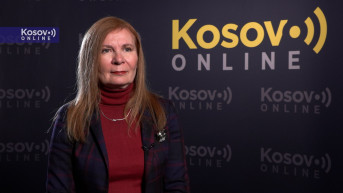
Aleksandra Joksimovic, Director of the Center for Foreign Policy and former Ambassador of Serbia to the United Kingdom, says that the Good Friday Agreement of 1998 brought peace to the island and an end to terrorist attacks, serving as a good example for other crisis situations worldwide. She notes that some of its positive elements can certainly be applied to the Belgrade-Pristina dialogue, but it is certain that the model as a whole cannot be adequate.
The Northern Ireland model in the context of the Belgrade-Pristina dialogue has been reinvigorated by UK Special Envoy for the Western Balkans Stuart Peach, who cited the Good Friday Agreement as a good example for this dialogue, which resolved the conflict between opposing factions in Northern Ireland.
Discussing Northern Ireland, Joksimovic explains to Kosovo Online that the centuries-long conflict reached its climax during a thirty-year period of unrest and armed conflicts between Belfast forces and IRA forces, which carried out a large number of terrorist actions, resulting in 3,500 deaths and 50,000 wounded.
"The conflict was ended by the Good Friday Agreement of 1998. The success in negotiations was attributed to British Prime Minister Tony Blair, who was at the beginning of his mandate at the time, and the international factor was also involved in the negotiations, as the United States worked intensively to reach an agreement. The agreement ended the conflict, but to this day, substantial reconciliation has not been achieved. Even today, you will see in Belfast all the walls that existed during the conflict. In fact, there is tension in society that is pacified through shared government because there is a proportional electoral system and proportional participation of parties in power," Joksimovic says.
However, as she points out, Brexit brought new tensions.
"The biggest problem that arose in Northern Ireland is the United Kingdom's exit from the EU because the EU was the glue that allowed the border between Northern Ireland and Ireland to be relativized, meaning that those who wanted in Northern Ireland could feel like members of Ireland. The closing of the border due to Brexit has caused new tensions in society, which threatened to escalate into a new type of conflict," the former ambassador in London says.
As she adds, from 1998 to the present, the majority of votes and the possibility to appoint the head of government have always been held by unionist parties, i.e., Protestant parties inclined toward London. However, two years ago, for the first time, the Sinn Fein party, the successor to the IRA, which advocates for unification with Ireland, won the majority.
"Then, for the first time, it was unable to form a government because unionist parties did not accept it. There were major interventions, and it was regulated, and at this moment there is a government led by Sinn Féin, a party that advocates for Irish unification. Moreover, the Irish Constitution allows Northern Ireland to decide by referendum, and it is also significant that over time, the percentage of the Catholic population compared to the Protestant one is increasing, which may one day allow for a different status of Northern Ireland than it is today," Joksimovic points out.
She notes that some elements of the Good Friday Agreement have been incorporated into other peace negotiations, such as the Dayton or Erdut agreements.
"However, it seems to me that those who speak about Northern Ireland today, who give a chance for it to be some kind of model, have different views on the roles assigned to different participants in these relations. If, for example, we look at Dublin, Belfast, and London, some perceive Belfast as Northern Mitrovica, while others perceive it as Pristina. So what is Belgrade then, is it Dublin or positioned like London? Depending on how we view the different roles in this triangle of Dublin-Belfast-London, we draw different conclusions about the application of this agreement, or model, to the current situation in the Belgrade-Pristina dialogue. Some positive elements can certainly be applied, but it is certain that this model as a whole cannot be adequate to what is happening in the Belgrade-Pristina dialogue," Joksimovic concludes.


0 comments