
Lajcak: Implementation of the Basic Agreement blocked by Kosovo; formation of the CSM inevitable
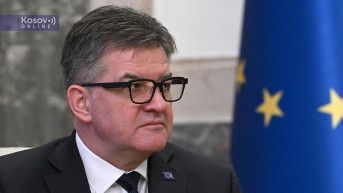
The establishment of the Community of Serb-majority Municipalities and the implementation of the Ohrid Agreement are conditions for Kosovo's membership in international organizations, as well as for the continuation of its path towards the European Union, the EU Special Representative for Belgrade-Pristina relations, Miroslav Lajcak, stated in an interview for Nacionale.
Lajcak notes that Kosovo Prime Minister Albin Kurti refused to even initial or formally submit the Basic Agreement to the United Nations.
"These were proposals from the European Union to provide additional guarantees and to further strengthen the status of the Agreement, as Kurti persistently demands. But likewise, initialing or formally sending the agreement to the UN was not sufficient for the Kosovo Prime Minister, who seeks formalization through the bilateral signing of the agreement between Kosovo and Serbia," Lajcak said.
He adds that the Basic Agreement and its implementation remain blocked by Kosovo, which, according to him, "should take just a small step."
"One of those steps is the adoption of a Government regulation referring the Statute of the Community of Serb-majority Municipalities to the Constitutional Court for a review of constitutionality, to unblock the entire process of implementing the Agreement. But that is not happening; instead, time is being wasted. For anyone who reads the Agreement on the path to normalization, it is clear that this agreement would bring so many clear benefits to the population of Kosovo. And the population of Kosovo should be asking legitimate questions to their government about why they still cannot enjoy them," Lajcak says.
Even more decisive is his stance on the Community of Serb-majority Municipalities, whose implementation he sees as inevitable in any context of Kosovo's path towards European bodies.
"The failure to do so represents a violation of Kosovo's obligations to the EU and its domestic law. The establishment of the Community of Serb-majority Municipalities should also be viewed in the context of Kosovo's ambitions to join international organizations. These organizations, especially those dealing with the protection and promotion of the rule of law, attach great importance to fulfilling their members' obligations under international law," Lajcak adds.
Regarding the negotiations in Brussels and the refusal of the chief negotiator, Besnik Bislimi, to attend talks, Lajcak stated that it had turned out there were currently more questions than answers.
"The discussion will have to continue, even at the political level. Let me remind you that the European Union has been informed about the regulation of the Central Bank of Kosovo. At the same time, we have been very clear that the consequences of the regulation seriously affect the population of Kosovo Serbs and other communities across Kosovo, especially the financial support they receive from Serbia. The lack of prior consultations and communication means that there are currently no alternatives, which particularly negatively affects schools and hospitals. That is why this week we organized a meeting in Brussels – to address the concerns of the international community and seek solutions. The EU and its member states have requested that this be resolved within the Dialogue, as the dialogue is the only platform for finding comprehensive and sustainable negotiating solutions to issues between Kosovo and Serbia," Lajcak emphasized.
When asked to comment on the statement by French President Emmanuel Macron, who spoke about "decisive weeks" ahead in the implementation of all provisions of the Agreement, particularly regarding the CSM, Lajcak said that it was not for him to comment on Macron's statements but that he was grateful to the French President for his personal commitment and support to the dialogue.
"The European Council, in its conclusions of October 26-27, 2023, expressed regret over the 'lack of implementation of the Agreement on the path to normalization by both sides and the annexes to its implementation, as well as other agreements reached in the dialogue facilitated by the EU. A unanimous call was made to Kosovo and Serbia to implement them without delay and preconditions. This includes the establishment of the Community of Serb-majority Municipalities. It was further stated that normalization of relations is an essential condition on the European path for both sides, and both countries risk missing important opportunities in the absence of progress. Knowing that this was unanimously supported at the highest level by all EU heads of state and government, this gives a very clear indication of the EU's position," Lajcak said.
He adds that furthermore, in its conclusions of December 12, 2023, the European Council stated that the New Growth Agenda for the Western Balkans would be "based on strict conditionality," linking its proposed implementation to, among other things, progress in the rule of law, regional cooperation, and constructive engagement by Serbia and Kosovo in the EU-facilitated dialogue.
"So, you see, there is a part of thinking about the consequences here. In this case, it will affect the financial support from the EU to Kosovo and Serbia in case of non-compliance with the obligations from the dialogue. Taking into account these last two official EU documents, it provides the context why President Macron is calling on Kosovo to make the necessary brave decisions, which will enable it to progress on the European path, including the establishment of the CSM," Lajcak said.
Responding to the statement that Kurti said he wouldn't move an inch if the agreement was not signed, Lajcak emphasizes that the normalization of relations primarily concerns Kosovo and Serbia, the stability of the region, and their common future in the European Union.
"We have supported the parties in reaching this Agreement, which clearly describes what needs to be done to normalize relations and how to do it. The question arises when. So, we have opened one door, but you have to go through them yourselves to open many more. Let me also emphasize that the EU is not a party to the agreements reached within the dialogue but a mediator. The responsibility for implementing and respecting the agreements mediated by the EU lies with the parties. Therefore, the parties have very clear obligations to fulfill, and each party will be assessed based on their implementation regarding the path to EU membership," he emphasizes.
He emphasizes the consistent EU stance, which has also been publicly expressed multiple times, that the Agreement in its entirety is binding for both parties.
"Its implementation will be an integral part of their European path. To add some context, none of the dialogue agreements in the past were officially signed. This does not make them any less legally binding, and what is important to us is the level of execution. But of course, we understand Kosovo's concerns, and for that reason, we have offered Prime Minister Kurti guarantees or additional options for further strengthening the status of the Agreement, i.e., formalization in line with previous dialogue agreements, such as initialing or even formal submission to the UN. Unfortunately, Prime Minister Kurti has not found this acceptable so far. Also, we must not forget that the Agreement on the normalization process is a step towards comprehensive normalization, but certainly not the end. So why not take advantage of the benefits it offers now," Lajcak added.
Asked about the consequences of not implementing the Ohrid Agreement, Lajcak says that for Kosovo and Serbia, progress on the path to Europe means progress in dialogue.
"Without achieving progress, which means implementing all dialogue agreements and engaging constructively, in good faith and the spirit of compromise and reconciliation in the dialogue, there will be very little progress in their European integration agenda. In fact, it means that both countries risk falling behind while the rest of the region moves forward. EU enlargement is again a major topic in the EU thanks to Ukraine, and the EU is very serious about it. But we all know that windows of opportunity never last forever and that enlargement will not happen automatically for Kosovo and Serbia without progress in the dialogue," the EU Special Representative emphasized.
Asked whether any measures would be taken against Serbia following the events in Banjska, he emphasized that it was not up to him to comment on measures.
"Let me emphasize that there is absolutely no justification for violence, and we have strongly condemned the violent attack in Banjska in September and the violence against KFOR soldiers in May 2023. The EU has not seen sufficient progress in terms of accountability for both events. This is being closely monitored in Brussels as it represents a clear unprecedented escalation, and the EU expects full and immediate investigations. All perpetrators must be brought to justice without further delay," Lajcak emphasized.
He adds that in line with the statement of the EU High Representative of June 3, Brussels was implementing reversible measures against Kosovo due to the lack of decisive actions to de-escalate tensions in northern Kosovo.
"We welcomed Kosovo's steps towards fulfilling some of the EU's demands, but they have not been fully met. In December 2023, EU member states reminded that Brussels was ready to lift the measures in case of further progress in meeting the existing demands. So, discussions are ongoing. My immediate reaction after Banjska was to call for the lifting of measures for solidarity. I have had many discussions on this topic within EU structures, but also with member states, and not everyone shared my opinion, as many member states feel that the EU wants to see a clear positive signal from the Government of Kosovo," Lajcak stated.
He emphasizes that one option that would definitely be considered a positive signal is the possibility of new swift local elections in northern Kosovo, with the fastest way still being the resignation of the current municipal presidents.
"Another positive signal would be sending the Draft European Statute for the establishment of the Community of Serb-majority Municipalities for legal review to the Constitutional Court. Unfortunately, none of this has happened. Because, ultimately, Kosovo wants to join the European Union. If your strategic goal is to be a part of the team, you have to be a team player. Coming from a small country and being a part of my country's EU and NATO membership, my advice to you is to listen to your friends, and if they have suggestions, recommendations, or doubts, try to accommodate them," he said.
When asked to comment on reports of heated arguments between Kurti and Vucic during meetings, Lajcak does not deny that there are moments when the situation gets very heated.
"We are discussing issues that are sensitive for both Kosovo and Serbia. But as a general rule, both Josep Borrell and I always remind the parties not to tolerate offensive statements and that the official language of the dialogue is English. Before the conclusion of the Agreement on the Normalization of Relations, the atmosphere improved significantly, and we had very sincere but also good discussions. Of course, President Vucic and Prime Minister Kurti do not see things the same way, but they have directly talked to each other and explained their positions. Unfortunately, since last year's incidents and ongoing crises, the atmosphere has deteriorated again, which does not help with normalization. It goes without saying that it is impossible to discuss sensitive normalization issues in an atmosphere of constant confrontation," Lajcak stated.
Asked about the "explanation" of Resolution 1244 as a reference in the preamble to the agreement on the CSM, as well as the "arbitration commission," which were received with great concern in Kosovo, Lajcak says:
"Every agreement is based on compromises and, to the greatest extent possible, respects the red lines of each party. The Draft of the European Statute reflects this balanced approach. On the one hand, it is strongly supported within the legal and therefore constitutional framework of Kosovo. On the other hand, it refers to UN Security Council Resolution 1244, which is still in force, as a formal expression of the opinion or will of the United Nations," he said.

0 comments