
Kabasic: Kurti has shown that the law in Kosovo is not the same for everyone
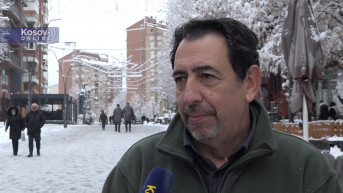
Former judge of the High Court in Kosovska Mitrovica, Nikola Kabasic, expressed doubt that Kosovo’s Prime Minister Albin Kurti would comply with the Special Prosecutor’s third summons for testimony, thereby demonstrating that the law does not apply equally to everyone in Kosovo.
"I don't believe Kurti will respond to the third summons from the prosecutor’s office, knowing his political and personal history, as well as that of the entire Self-Determination movement. He will certainly not appear. Elections are taking place in Kosovo, and any power struggle between the judiciary and the government has consequences. Even if elections were not ongoing, Kurti likely wouldn’t appear, as it serves as a demonstration of his power and his consistently poor relationship with the judiciary," Kabasic told Kosovo Online.
When asked whether the court would order Kurti's detention or whether authorities would enforce the law, Kabasic emphasized that the law is clear.
"Anyone who has knowledge or information about a criminal offense is obligated to respond to a court summons, and this applies to Kurti as well. He is being summoned as a citizen and as the Prime Minister, who has certain information about corruption-related criminal acts for which one of his close associates in the government is being accused. He is obliged to respond to the summons," the former judge explained.
Kabasic pointed out that, as Prime Minister, Kurti’s schedule would be accommodated by the prosecutor’s office.
"However, past instances show that Kurti has not responded to the prosecutor’s summons. Instead, his aides and chiefs of staff have negotiated with the prosecutor’s office to arrange for them to come to the government office or another location convenient for Kurti to give his statement. This is unacceptable, as the law applies to all citizens, including Kurti. He must comply with the summons, provide a statement, and share any information he has regarding the alleged criminal offense. He is not a privileged witness, nor is he exempt from his duty. He also does not fall into the category of witnesses who, due to illness or age, cannot come to the prosecutor’s office. If the court or prosecutor’s office wishes to demonstrate that the law is equal for all and to avoid discrimination in its application, they have several options. They could order his detention, impose fines if he refuses to testify, or detain him for up to 30 days if he refuses to cooperate," Kabasic said.
When asked about the potential outcome of this case, especially given the strict measures imposed on Serbs for minor offenses, Kabasic highlighted the discrimination in the justice system against Serbs.
“In this case, the VIP status that the Self-Determination enjoys before Kosovo’s judiciary is evident. I have spoken about this history. Over the past ten years, there have been numerous criminal proceedings initiated against the Self-Determination officials. These include the current Minister Svecla, Minister of Justice Albulena Haxhiu, and Speaker of the Assembly Glauk Konjufca. Multiple criminal proceedings have been initiated against them, and even indictments were filed, but the outcome has been consistent obstruction of the legal processes on their part. The courts have also acted in a way that ensured they were not brought before the court and did not face accountability, leading to the expiration of statutes of limitations. Currently, we have the situation with Svecla, who is charged with two criminal offenses,” Kabasic said.
He compared this situation to how Serbs are treated.
“By comparison, imagine if a Serb or a Serbian MP in the Kosovo Assembly threw smoke bombs or firecrackers. They would already be in multi-year detention and would be charged with not only two criminal offenses like Svecla – causing general danger or obstructing an official in performing their duties – but also with unconstitutional activities, conspiracy for terrorism, or something similar. The status that the Self-Determination or Albanians have before the courts begins with the initial act, that is, the criminal complaint, where a lighter qualification is usually chosen, rather than a more serious one. For Serbs, however, the heavier qualification is reserved. After that, Serbs are subject to mandatory detention lasting several months. Even if detention is lifted, they would face extremely high bail amounts to defend themselves while free,” the interlocutor concluded.


0 comments