
Kasolli: Kosovo without a voice on the international stage; Maloku: The Attention of the international community has shifted
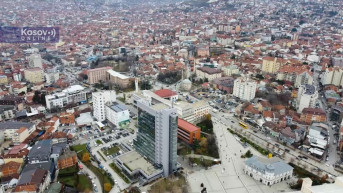
Kosovo’s internal political crisis has seriously damaged its international standing in 2025, blocking integration processes and leaving Kosovo outside key European and financial initiatives, political analysts have assessed, Ekonomia Online reports.
Political analyst Afrim Kasolli believes that 2025 has been one of the most unfavorable years for Kosovo in political and diplomatic terms.
He assesses that Kosovo has remained the only country in the Western Balkans without access to EU funds from the Economic Growth Plan, directly linking this to the internal political crisis and the lack of functional decision-making.
“This can freely be described as a bad year for Kosovo in political terms, both with regard to internal developments and international affairs. If we were to start listing the failures that Kosovo has experienced, they are enormous and it would take much more time to mention them all. We are ending the year with Kosovo remaining the only country in the Western Balkans that was unable to access EU funds related to the Economic Growth Plan for the Western Balkans. Despite the economic crisis, the political scene has prevented access to external financial sources. The agreement with the World Bank has also remained on the shelf,” he said.
He adds that, despite some new international recognitions secured with the support of allies, Kosovo this year lacked real influence on the international stage and a clear voice capable of articulating its strategic interests.
“I can mention some diplomatic successes in terms of securing a few new international recognitions, but all of this was achieved with the support of Kosovo’s allies. Meanwhile, the internal economic crisis is deepening— inflation, energy prices. After the publication of the new national strategy of the United States, where frustrations and sharp criticism of the EU by the U.S. administration can be observed, along with a U.S. reorientation toward other geopolitical areas, Kosovo in this respect is lost, without a voice on the international stage, with no one to speak on behalf of Kosovo’s interests in this regard,” he said.
Political scientist Albinot Maloku assessed that in recent years, and particularly during 2025, Kosovo has found itself in an extremely unfavorable position with regard to its European integration objectives.
“In recent years Kosovo has had an extremely poor position in terms of its goals, especially European integration. The factors that influenced this position are also internal, as a result of political crises and blockades, but also an inappropriate strategic orientation that Kosovo has pursued, at certain moments jeopardizing its relations with certain allies such as the United States and the EU,” he said.
He emphasized that failures to join the Council of Europe and Interpol, as well as the lack of progress in international recognition, are not linked to the success of foreign policy, but rather to broader geopolitical circumstances and an ineffective institutional approach.
“We failed to join the Council of Europe, we failed to join Interpol, and some recognitions came as a result of other geopolitical circumstances, rather than as a result of the success of Kosovo’s foreign policy under the leadership of Donika Gërvalla. I believe that the obligations and needs that Kosovo has must be fulfilled, but there is also another factor. I am referring to the EU, which has taken a hypocritical approach toward Kosovo in terms of implementing its obligations in good faith, despite the willingness Kosovo has shown to join the EU and move forward in this process. So we also have an external factor, which then led to other factors on the geopolitical level, following the war in Ukraine, and it seems that the attention of the international community has somewhat shifted away from Kosovo and its needs,” he said.

comments