
Klasic: Reconciliation in the region cannot be achieved through resolutions and political decisions
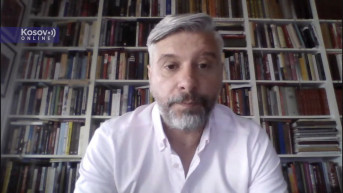
The adoption of the Resolution on the Genocide in Srebrenica brings nothing new to the countries in the region, Croatian historian Hrvoje Klasic says for Kosovo Online, adding that reconciliation cannot be achieved through resolutions and political decisions.
"This resolution does not obligate anyone, nor does it mention Serbia or Serbs, not even Republika Srpska, let alone suggest that any of these are genocidal, whether state or nation. On the other hand, genocide cannot be prescribed by a UN resolution, so that now everyone must say that it was so. However, we have court judgments in The Hague which do not state that Serbia and the Serbs are a genocidal state and people, but rather clearly list politicians and military commanders who were convicted for what was declared as genocide. So, the matter is very clear on this point," Klasic emphasizes.
He notes that reconciliation and facing the past cannot be achieved through resolutions and political decisions, whether they are resolutions in the Croatian Parliament, the assembly in Belgrade, or the UN, but rather it must be "a comprehensive process in which everyone enters with a clear heart and mind, meaning they must be sincere about it."
"What does not happen in our region is that we still do not view crimes and criminals with the same eyes, but instead, we divide them based on national, religious, or some other affiliation. So, we still behave as if 'our criminals' are somewhat lesser criminals and we have understanding for them, while crimes committed against us are much greater than those committed against others. And that is a big problem. When you have a situation where people convicted by courts, whether in the region or in The Hague, appear publicly on television shows, then we cannot talk about any resolution changing anything," our interlocutor believes.
He says he is disappointed with those who accept the announced resolution on Jasenovac because, as he assesses, it is "insincere towards Serbs."
"I may sound strange to everyone, but if I were a Serb, a descendant of victims of the Ustase regime, I would be very disappointed. Because why talk about a resolution on the genocide in Jasenovac, what about other Serbs who were killed in Glina, Banija, Kordun, Lika, Herzegovina, and there were at least three times more of them than those killed in Jasenovac. What are they, lesser victims of genocide?" Klasic asks and adds that the intention of that resolution is misguided and that it is "unfortunately completely political."
According to him, serious historians, politicians, and journalists in Croatia do not dispute what happened in Jasenovac, but when it comes to Srebrenica, the situation is different, and he adds that he would like to see a change in attitude towards it in both Serbia and Republika Srpska.
Croatia, he notes, protests against the resolution on Jasenovac because it is thought that this resolution is used as some kind of countermeasure to what is happening with the Srebrenica Resolution and that it is politically motivated.
"Only the intent is condemned, not the content, in the sense that 'genocide did not happen'," Klasic explains.
He emphasizes that the Srebrenica Resolution would have passed unnoticed, like many other resolutions that come daily to the UN General Assembly, "if Serbia had not made a completely unnecessary fuss about it."
"I think it was a big diplomatic mistake by the Serbian political and state leadership, because nothing, really nothing, would have happened," the Croatian historian assesses.
He believes that the Srebrenica Resolution cannot be the basis "for any lawsuits" because, he reminds, Serbia has already been sued and acquitted for genocide in The Hague.
Its adoption, he repeats, will not change anything in the relations in the region.
"We will continue to live parallel realities, in the sense that our politicians and some irresponsible intellectuals will continue to live in the past, will still have nothing to offer, and will not look to the future," our interlocutor believes.
However, Klasic adds that citizens function completely differently; they travel and work in neighboring countries, listen to their music, and watch their films, and that is the "parallel world that when you read the newspapers and listen to politicians, you are not aware of."
He warns that those politicians who see their mission in beautifying and correcting the past do not mean well for their people and cites the example of Germany and France.
"Not all Nazis in Germany were punished after '45, not all ended up in prison, not all privately even renounced their views. Not all French forgot what they did from 1940 to 1945. However, both Germany and France got politicians who looked forward, and just five years after the war – and we are now 30 years after the war – Germany and France extended a hand of cooperation and friendship, and a few years later, Germany and France together became the engines of the EU, places where people from all over Europe and all over the world want to come to live. Europe develops in some way precisely because Germany and France became allies," Klasic concludes.



0 comments