
Kochis: Including Kosovo in the US natural gas network is both a strategic and business matter for the US
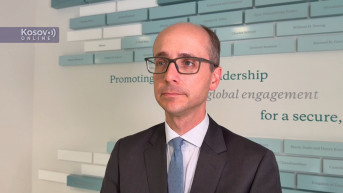
Daniel Kochis, Senior Fellow at the Center on Europe and Eurasia at the Hudson Institute in Washington, told Kosovo Online that energy is one of the key pillars of US engagement in the Western Balkans and that, for Washington, integrating Kosovo into the American liquefied natural gas import network is both a strategic and business matter.
According to Kochis, the United States wants as many countries as possible to be connected to the American liquefied natural gas (LNG) import network and views this both as a rule of law issue and as a way to limit the malign influence of external actors.
Commenting on the messages sent to Kosovo by US Embassy Chargé d'Affaires in Pristina Anu Prattipati, who recently stated that the United States encourages Kosovo to enter into a long-term energy partnership with the US through liquefied natural gas in order to secure its energy future, and that by delaying this decision Kosovo risks becoming the only place in the Western Balkans without access to American gas, Kochis said that the White House is trying to convey that projects of this kind require time to establish the necessary infrastructure.
"This is a strategic opportunity, but also an energy opportunity, including one that could improve air quality in Kosovo. The United States is, of course, involved in modernizing certain coal-fired power plants. I think the transition to an LNG platform is something the White House has been advocating for quite some time," he said.
Asked how important energy cooperation will be in future US-Kosovo relations, Kochis said he believes energy will be one of the key pillars of cooperation.
"It is something the United States wants to export. We have seen what it has brought to countries such as Lithuania. We have also seen the terminal on the island of Krk. That is why I think connecting as many countries as possible to this network of pipelines and LNG infrastructure will be viewed as beneficial both for countries such as Kosovo and for the United States itself," he assessed.
According to him, the proper way to interpret the State Department's message is that this is a pathway for bringing American investment into the region.
"It is a rule of law issue. If the region is viewed as a stable environment, it will attract more American investment. At the same time, it will limit Chinese and Russian investment while keeping American investors in the region," Kochis believes.
Projects such as modernization through the DFC (US International Development Finance Corporation), Kochis added, show that Washington today has numerous instruments it uses to encourage energy projects in the region.
"The United States wants to see a unified and interconnected whole. That is why, for Washington, including Kosovo in this framework is simultaneously a strategic and business issue, but also one on which it would like to see greater willingness and determination from authorities in the region. That is precisely why we saw this very unusual public intervention by the US Embassy's chargé d'affaires," Kochis concluded.



0 comments