
Kozarev: NATO is committed to the Western Balkans, it will not give up on this region
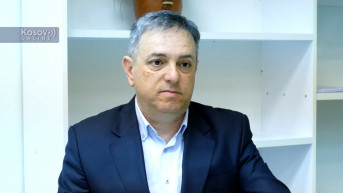
Macedonian Professor Atanas Kozarev, dean of the Faculty of Law, International Relations, and Diplomacy in Skopje, stated in an interview for Kosovo Online that the visit of NATO Secretary-General Jens Stoltenberg to the Western Balkans demonstrated the significance of this region for the Alliance.
He emphasized that he expected Stoltenberg to enhance political dialogue in the Western Balkans.
"First of all, I want to say that the visit of the esteemed high diplomat, Mr. Stoltenberg, is very substantive and not just declarative but also of a significant nature. Why? I believe that this visit is primarily related to increased security risks and threats that have emerged on the southeastern flank of NATO. At the same time, I could say that geopolitical upheavals are still current and are largely associated with a certain Russian influence", Kozarev said.
He added that there were still sensitive points in the Western Balkans that, under certain influences, could easily turn into crisis hotspots.
"So, yes, the visit is significant and expresses, above all, NATO's commitment to the Western Balkans on one hand, and I expect a very clear message from Mr. Stoltenberg that NATO is not giving up on this region but counts on it. Regarding the purpose of the visit, I believe it would be to enhance the political dialogue of Western Balkan countries, aiming to deepen political cooperation in supporting reforms and confronting new hybrid cyber threats, fake news, etc. I would give a more specific answer to your question in the sense that although there is a new group like Bosnia and Herzegovina, Georgia, and Moldova, which are current and at the forefront of NATO's focus at the moment, I still think that NATO is paying a lot of attention to this region, primarily the Western Balkans, considering the specific sensitive points in each of the countries it will visit, such as Bosnia and Herzegovina, then Serbia, Montenegro, Macedonia, Kosovo, and all this will culminate in some conference of theirs. It should not be forgotten that the leaders of NATO member states stated back in July 2022 that the Western Balkans is of strategic importance to them and that, according to their words, NATO will be committed today and in the future, primarily at an accelerated pace, to the issue of stability and peace in the Western Balkans", the professor emphasized.
When asked if he considered the relations between Belgrade and Pristina to be the most challenging for the security of the region and whether Stoltenberg would send general messages of support for peace or expect concrete demands and warnings, the professor was explicit.
"The question is quite specific, and I would like to say that when it comes to Kosovo, as I mentioned earlier, every country in the group or on the path of Stoltenberg's visit has its internal issues and problems. Recently, we heard a statement from Albin Kurti in which he expressed the view that Serbia claims certain areas in Bosnia and Herzegovina, referring to Republika Srpska. Well, that is a sensitive issue that can raise doubts, and I expect there will be serious messages on this matter. Stoltenberg will, of course, establish his base in Nothing Hill in Kosovo and will have meetings with commanders who, I believe, will receive concrete information and instructions for their further actions", Kozarev emphasized.
The professor added that there were also numerous internal problems in Bosnia.
"When it comes to Bosnia, it is known that since 2010, the country has been invited to join the NATO Membership Action Plan, which is the first step towards not prejudicing or accelerating membership, as there are other internal problems that need to be addressed. Therefore, I think that this visit essentially signifies emphasizing NATO's commitment to the region and a strong message that everyone together must invest much more in strengthening relations with NATO. In my opinion, this is the priority goal and purpose of such a significant visit", Kozarev believes.
The security expert emphasizes that, on the other hand, North Macedonia is a NATO member and is currently facing the challenge of constitutional changes.
"These changes are, of course, in the interest of both the European Union and NATO, and I think discussions might revolve around these issues, which are quite important. We must acknowledge that the war in Ukraine has dismissed all theories in this area, demonstrating that non-military threats already exist in the world. Therefore, I believe that Stoltenberg, with his presence and visits to the highest state authorities in all these countries, is essentially demonstrating courage and bravery in these difficult times when each of these countries individually faces enormous challenges. I would like to emphasize here: Kosovo—Banjska, Bosnia and Herzegovina: problems with terrorism, internal issues, destabilization in the realm of ideas stemming from Republika Srpska and its leaders advocating for the division of Bosnia, Russian influence that could exacerbate open security issues in these regions. All of this would culminate in a concluding idea for this year that NATO is the future of these countries and can guarantee their security, primarily against military threats that unfortunately exist in these areas", the professor concluded.

0 comments