
Krieziu: Both voting methods are legal – Parties have a duty to build consensus for constituting the Assembly
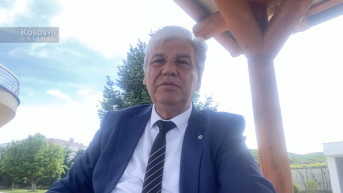
Former Constitutional Court judge Kadri Krieziu emphasized that debates about whether one form of voting is more legitimate than another, or whether the voting method can be changed during the session, are entirely meaningless. In a statement to Kosovo Online, he underscored that both open and secret ballots are lawful, and that political parties bear the responsibility of building consensus to constitute the Assembly of Kosovo.
Krieziu explained that the Constitutional Court highlights that the constitutive session is specifically regulated by the Constitution and the Assembly’s Rules of Procedure, noting that, as such, it has a ceremonial character and follows a predetermined agenda that is not subject to amendment or debate.
“The Court also emphasizes that the constitutive session is not subject to standard parliamentary procedures. This is a key point, as it invalidates much of the recent political debate on the matter. By not taking a position on the method of voting and by clearly stating that standard procedures do not apply, the Court effectively suggests that debates over which voting method is more lawful, or whether the method can be changed mid-session, are baseless. The Court reaffirms that both open and secret voting are legal. The voting method is not decisive for achieving consensus. In either case, a candidate may fail to secure the required 61 votes. This implies that the Constitutional Court is not a forum for resolving political disputes. It also stresses that the real issue is not the form of voting, but the lack of political will to cooperate and reach consensus,” Krieziu stated.
He emphasized that the Court clearly indicates that political parties are obliged to build consensus for the constitution of the Assembly.
“Consensus is not only inherent to the spirit of the Constitution but is a prerequisite for electing the Speaker and Deputy Speakers of the Assembly. By reinforcing the 30-day deadline—now holding the weight of a binding court decision—the Constitutional Court properly supplements its 2014 ruling, which previously did not address time limits,” he said.
Krieziu also pointed out that Article 67 of the Constitution, concerning the election of the Speaker and Deputy Speakers, stipulates that these two steps are to be treated as a single, unified process. Therefore, the formal constitution of the Assembly should not be viewed as two separate stages.
“This means that political responsibility for reaching consensus does not lie with one parliamentary group alone, but with all Assembly members. In the election of the Speaker, the leading party must work with others to secure 61 votes. However, the constitutional obligation does not end there. If other parties insist that the responsibility lies solely with the first-ranked party, then the first party could argue that, in the election of the Deputy Speaker, responsibility lies with the second and third parties—thus perpetuating a deadlock. In this way, one obstructive interpretation is replaced by another, ultimately making the constitution of the Assembly impossible,” he explained.
He warned that “shifting responsibility from one side to another is not only childish but also a dangerous game with Kosovo’s credibility,” and is in direct contradiction with the Court’s conclusion that constitutional norms must be interpreted in a way that enables institutions to function—not paralyze them.
“This is a crucial moment to emphasize: while the Constitutional Court cannot impose political will to reach consensus, this does not mean that nothing happens after the 30-day deadline expires or that the constitution of the Assembly can be held hostage indefinitely to political will,” Krieziu stressed.
What Happens If the 30-Day Deadline Is Ignored?
He rejected claims that non-compliance with the 30-day deadline has no legal consequences or cannot lead to early elections as unfounded. He also dismissed the notion that the President of Kosovo has no role or authority concerning the constitutive session.
“It is important to recall that Article 84, point 2 of the Constitution states that the President of the Republic is responsible for ensuring the constitutional functioning of institutions. Furthermore, Article 112 establishes the Constitutional Court as the final authority for interpreting the Constitution and assessing the conformity of laws. Article 116, point 1 clearly states that Constitutional Court rulings are binding on the judiciary and on all persons and institutions in Kosovo. Therefore, failure to comply with a Court ruling constitutes a violation of the Constitution. If MPs fail to constitute the Assembly within 30 days as ordered by the Court, they act contrary to Article 74 of the Constitution, which obliges MPs to perform their duties in accordance with the Constitution,” Krieziu said.
He stressed that ignoring the Court’s decision after the 30-day deadline and violating Article 74 means that Assembly members are “actively obstructing the constitutional functioning of the Assembly.”
“In such a case, the President, acting entirely within her constitutional authority, has the right to determine that the legislature has failed to fulfill its constitutional duty to constitute the Assembly and, as a way out of this absurd situation, may call for new elections. It should be noted that, if such a presidential decision were to be challenged before the Constitutional Court, there is no logical scenario in which the Court would contradict its own ruling that the Assembly must be constituted within 30 days,” he concluded.
Krieziu once again called on political parties to demonstrate responsibility and patriotism, emphasizing that “Kosovo is not a subject of ridicule or a field for political experimentation.”



0 comments