
Laci: Conflicts within the EU do not contribute to the enlargement to the Western Balkans
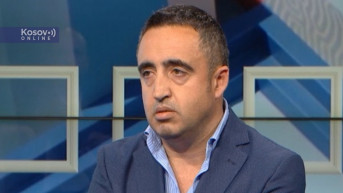
The Chief Editor of the show "In the Crosshairs" on TV News 24 from Tirana, Dritan Laci, stated that friction within the European Union does not contribute to the possibility of enlargement to the Western Balkans, and that the region is disappointed by constant promises and deadline extensions.
"The enlargement of the European Union to the Western Balkans will depend more on the will of the leaders and the political situation in member states, especially in France or Germany, and we must admit that the situation is not positive. Despite the rhetoric that the Western Balkans is part of the continent and should become part of the EU to prevent the influence of other countries, primarily Russia and China, these are so far just words from European officials. In the EU, there is a wind blowing of what is called 'right-wing extremism,'" Laci told Kosovo Online.
He reminded that some EU leaders, such as Hungarian Prime Minister Viktor Orbán or Italian Prime Minister Giorgia Meloni, aim to change the character of the Union into an alliance of independent states.
"Others, like Le Pen or Wilders in the Netherlands, are even calling for the dissolution of the EU. These internal conflicts will not help the region's EU accession process," Laci believes.
On the other hand, he noted, leaders from the Balkans have stopped believing unconditionally in the possibility of joining the EU anytime soon.
"This is due to predictions that have not materialized. Let’s not forget that in 2018, Oliver Várhelyi stated that Serbia and Montenegro could join the EU by 2025, which is now not expected. He recently said that this membership is possible within five years, or by 2029," Laci recalled.
Commenting on the appointment of Marta Kos as the new EU Commissioner for Enlargement, Laci said that she is definitely closer to the region than the current commissioner, Oliver Várhelyi.
"In her youth, she lived in Yugoslavia, and she is much more familiar with the problems of the Western Balkans, as well as the situation in Serbia, Kosovo, Bosnia and Herzegovina, and Croatia. Additionally, Kos has experience in diplomatic affairs, having been Slovenia's ambassador to Germany and Switzerland," he noted.
He emphasized that Kos will take over the role at a time when the situation in the Western Balkans has become tense.
"She is assuming the role at a difficult time when it seems the situation in the region has become strained, with the normalization talks between Serbia and Kosovo at a deadlock, and where the priority has shifted to the armament of states," Laci concluded.


0 comments