
Lacmanovic: Serbia would navigate difficulties more easily if there were more unity on key issues
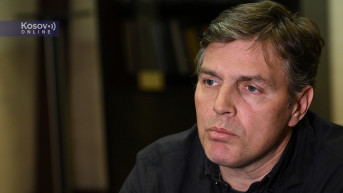
Predrag Lacmanovic from the "Faktor plus" agency, regarding the announcement by Serbian President Aleksandar Vucic that it was time to establish a large Movement for the People and the State, says that it wouldn't be a bad idea for there to be more unity in Serbia on key issues because it would make it easier to navigate through all the difficulties it encounters.
Last week, Vucic stated that the idea behind this movement was to have the strength to accelerate Serbia's economic growth and defend its national and state interests.
According to Lacmanovic, the movement should be an umbrella organization that will largely bring together like-minded individuals, both those actively involved in politics and those not involved in politics but who have an influence on public opinion and whose opinions are respected, as well as organizations, movements, small parties, local leaders, visible political parties in Serbia's political life, and the main parliamentary parties that share similar ideas.
"Perhaps they differ on certain issues - such as how to implement economic policy, even how to conduct policy towards Kosovo, but if they maintain the same firm national course, that we must not yield to every pressure, I think they all have a place where they can come together. And the idea is not bad, because Serbia needs a unified national stance on perhaps the most important issue, which is perhaps the question of the survival of the Serbs," Lacmanovic says.
He recalls that there has been talk about this movement in the past, and he believes that it has evolved and matured, but Aleksandar Vucic felt that something like this is necessary at this moment and that it is the next step in uniting the Serbs or a good part of them, in order to achieve great goals.
"Many great projects have been announced, both concerning Serbia's economy and infrastructure development. But also regarding attitudes towards Kosovo, attitudes towards the war between Russia and Ukraine, and perhaps attitudes towards the Israel-Palestine conflict, it wouldn't be bad if we were more united on key issues. In this way, Serbia would navigate through all the difficulties it encounters more easily," Lacmanovic believes.
When asked whether the Brussels dialogue with Pristina would be easier for the Serbian side if there was a broader societal base represented by such a movement or if internal tensions within the movement were possible that could hinder decision-making, Lacmanovic says that he assumes there will be disagreements at times, but that it is not a hindrance to reaching a common stance through dialogue.
"There will probably be discussions before presenting ourselves to representatives of foreign powers with whom we must negotiate because as much as they pressure us, they also financially assist us. We see who the investors are here. Serbia cannot escape Europe and the West. We aspire to such an economic path and development. On the other hand, it's better to have unity, but why not also have a tougher stance? Even if it means slowing down the economic path a bit, sometimes it will even accelerate, depending on the pressure and expectations placed on us. Aleksandar Vucic, as well as other representatives of ours, in many cases, state 'We will not recognize Kosovo'. That's a red line that those governing Serbia will not cross. There will be disagreements sometimes; I assume not everyone will agree with everyone's idea, that's normal in any organization, but I don't see that it will be a major obstacle to ultimately having a common stance," Lacmanovic says.
Speaking about the parties he sees in the new movement, our interviewee says he assumes that the main candidates will be some right-wing spectrum parties.
"Whether it's Dveri, the Oathkeepers, the People's Party, which has significantly reduced in size... I believe they will be invited as parties or individuals from those parties. I assume the Socialist Party of Serbia will receive an invitation, and they will all go for talks. That's politics; we'll see under what conditions they will be invited and under what conditions someone will accept to be a part of the movement to preserve their identity. This primarily refers to the Socialist Party of Serbia. They probably fear being engulfed by the movement, so they might go under certain conditions to preserve their leftist idea and ensure their name doesn't disappear from the political spectrum. I assume such conditions will be set by Ivica Dacic or his colleagues from the party, maybe others as well, but these are modalities that can be resolved. That's politics; there are always negotiations, and in politics, you must be prepared to compromise. Perhaps some parties will become stronger individually within the framework of the movement," Lacmanovic says.
As one of the potential points of contention in the future movement, Lacmanovic sees, as he puts it, excessive appetites that some people always have.
"Someone a priori wants a certain position immediately, but the question is whether they have deserved it. This is something that will happen, that someone will want a lot without having previously demonstrated certain qualities or proven themselves in practice. I believe there will be individuals who will want to join the movement and have an idea that they should get a special place. It's similar to a political party. Sometimes the appetites are big but the space is limited," Lacmanovic points out.
Speaking about the perception of the Kosovo issue in Serbian society, he says that a portion of the population, perhaps tired of the 1990s, sanctions, and wars, frightened by the strong pressures of the major powers, is scared of the Kosovo issue, which leads to the belief that maybe everything imposed by states leading global politics should be accepted.
"There is a great struggle for Kosovo to ultimately become an independent state, which I believe will never happen. Behind that are many problems that Serbia faces and would face even more if such a thing were to happen. But regardless, the majority of citizens in Serbia see Kosovo as part of Serbia and do not want it to be recognized," Lacmanovic notes.

comments