
Latinovic: Kosovo and Cyprus are connected by UN Security Council resolutions
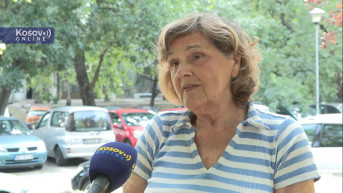
Former Ambassador to the OSCE, Branka Latinovic, indicates that the remark by European Commission President Ursula von der Leyen about the unification of Cyprus is clear evidence that the European Union firmly stands behind each of its members.
“The President of the European Commission made a very strong and decisive statement regarding the preservation of the territorial integrity and unity of Cyprus, and this is just one example of how the EU stands behind its members. The EU is not just a system of values and financial benefits but also support for the territorial independence and sovereignty of a country. Naturally, this also pertains to the issue of common security and defense policy, and this statement should be interpreted in that sense,” Latinovic says.
She adds that Cyprus is a European precedent because, despite unresolved territorial issues, it was admitted to the European Union.
“The reasons are different, and so are the models. Cyprus is indeed a frozen conflict, but even as such, it was admitted to the EU, contrary to all principles, not only of the EU. Every international organization takes into account which state is admitted and whether it has control over its entire territory. That is a sine qua non principle, and the EU abandoned this in the case of Cyprus. It admitted Cyprus despite the fact that it does not have control over a third of its territory. This was done under significant influence from Greece, which had a blackmailing capacity,” this career diplomat explains.
She emphasizes that the EU has since strengthened its positions regarding the conditions for the admission of other members.
“This is not only related to Serbia, as we have Resolution 1244, and we can always say that this territory is under the UN mandate, which was also the case for our membership in the Council of Europe,” Latinovic recalls.
She warns that, on the other hand, the EU's announcements about admitting other new members, such as Moldova or Ukraine, are questionable.
“In Moldova, you have Transnistria (Pridnestrovie), where this country practically has no control over that part of the territory, and there is a pro-Russian local government. Secondly, what will happen with Ukraine, how will that war end? Will we have a new frozen conflict, or will it be resolved in another way when negotiations begin? But these are all new challenges that the EU and the contemporary world face,” Latinovic believes.
When asked if the Cyprus solution model could be applied to Kosovo, Latinovic is skeptical.
“The causes are different, the story is different. I think these are things that cannot be compared to what we have in Kosovo and Metohija. But one fact remains that the EU's position stems from the UN's stance on preserving the unity and territorial integrity of Cyprus. Of course, we have Turkey's position, which differs,” Latinovic clarifies.
She adds that Kosovo and Cyprus are connected by UN Security Council resolutions but are separated by their different contents.
“First, we have UN Security Council Resolution 550 from 1983, when what was called the Turkish Republic of Northern Cyprus declared independence. In that resolution, the entire act is declared invalid, and UN members are called upon not to recognize that state and not to establish diplomatic relations. This is something that does not exist in Resolution 1244 or later resolutions. Secondly, the entire negotiation process led by the UN regarding the unification of Cyprus was conducted with the aim of how to regain that part of the territory and how to provide appropriate models: whether it is a federation or a confederation. It was mostly aimed at a federal model, considering the causes for this situation are entirely different from this one,” Latinovic emphasizes.
She reminds that, compared to Kosovo, the Cyprus issue arose under different historical circumstances.
“It was the time of the Cold War, the military junta in Greece that declared the annexation of Cyprus, the Greek coup in Cyprus, then-President Makarios who left the country, then Nikos Sampson who was the leader of the movement for the unification of Cyprus with Greece and was President of Cyprus for eight days... Then the Turkish intervention in Northern Cyprus, the return of Makarios... These are all things that cannot be compared,” Latinovic concludes.

0 comments