
Less: MacShane's proposal is dangerous, calls for expulsion of Serbs from the north
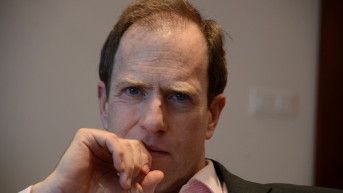
Timothy Less, a contributor to the Center for Geopolitics at the University of Cambridge, stated in an interview with "Blic" that the proposal by Denis MacShane, former British Minister for the European Union, to "resolve" the Kosovo crisis through the mass relocation of Serbs from Kosovo to central Serbia was "immoral and dangerous, as it essentially called for the expulsion of Serbs from their homes in the north of Kosovo."
MacShane, in his scandalous proposal on Twitter, also accused Serbs from northern Kosovo of "completely refusing to live in peace."
"Fair enough. Can we have a large international package that will enable them to move to Serbia? We don't need the poison of Protestant predominance in Northern Ireland or Kashmir infecting the Western Balkans," MacShane wrote.
Historian Rory Yeomans, also from the UK, immediately responded to MacShane's, to say the least, dangerous proposal on Twitter.
"The Independent State of Croatia model for solving the Serbian question. It didn't work back then either," he wrote on Twitter.
Less, in his statement to "Blic," warns that if MacShane's proposal were ever taken seriously, which "will not be the case," it would cause a significant escalation, pushing Serbia closer to the radical step of deploying its army to protect Kosovo Serbs.
"The statement is also amateurish! It reveals a lack of understanding of the situation in northern Kosovo and a lack of understanding even of the article in the Financial Times on which he claims to base his position," Timothy Less says.
Last week, Alicia Kearns, a member of the British Parliament, prepared the ground for such an idea by accusing the Serbian Orthodox Church of smuggling weapons into Kosovo, which was soon denied by KFOR.
Less also warns of this statement, pointing out that MacShane's idea is concerning and that it is understandable why Serbs are alarmed, "especially after last week's comments by Alicia Kearns."
"Fortunately, Denis MacShane does not make policy in the UK and is, in fact, an insignificant figure as he was convicted and imprisoned for fraud in the past decade. The British government understands the situation in Kosovo better and clearly advocates for the autonomy of the north. This is the position of those in the British political establishment who pay attention to the Balkans, and also of the broader international community," Less emphasizes.
Less points out that he never expected someone in today's time to call for the expulsion of Serbs.
"MacShane maintains the stance he took 20 years ago, when he probably last paid significant attention to the Balkans. At that time, I was working on the issue of Kosovo's final status in the Foreign Office, and MacShane was the Minister for Europe, strongly advocating for Kosovo's independence," Less reveals.
Less further adds that during discussions at the time, MacShane was told that if independence for Kosovo was his position, northern Kosovo should at least be allowed to remain part of Serbia, and that incorporating the north into an independent Kosovo would sow the seeds of the next Balkan conflict.
"It seemed that events confirmed our fears, but I did not anticipate that MacShane would call for the expulsion of Serbs, not Kosovo Albanians. However, I emphasize that he speaks for himself. Although Serbs have many things to worry about, they should not be concerned with the words of a long-retired and discredited figure like Denis MacShane," Less says.
Historian Stefan Radojkovic, in his statement to "Blic," warns that MacShane's idea is barbaric but not unimaginable.
"It resembles models that were applied during the time of the Independent State of Croatia, but also the population exchange between Greece and Turkey. Ethnic cleansing is an absolutely barbaric act, but unfortunately, it is not unimaginable when considering Europe's history during the 20th century. It is particularly concerning when taking into account that a significant number of EU states are ethnically homogeneous, with few minorities. This raises the question of whether a genuinely multi-ethnic state is desired or if it is just rhetoric," Radojkovic warns.
Radojkovic points out that Croatia is an EU state that has reduced its minorities to a statistical error, especially Serbs, with Brussels turning a blind eye and remaining silent.
"That is why such an idea must not be allowed. One would think that we have overcome all this, but history constantly reminds us that we have not," Radojkovic says.
Former diplomat Vladislav Jovanovic tells Blic that Kosovo's plan for de-escalation leads to ethnic cleansing but without weapons.
"Under the influence of the US, KFOR allowed local police and some armed forces to appear in the north. Not only for them to start moving around the north, but they also established bases there, and they intimidate Serbs with guns at the ready," Jovanovic says.
As he adds, "all of this creates a boiling atmosphere of insecurity, mistrust, and fear among Serbs."
"This is part of a strategy of ethnic cleansing envisioned to end as 'Operation Storm' did in Croatia, but without the necessary use of military force as there, because it is enough for everything to boil over and create a situation for Serbs to realize that 'they don't belong' somewhere and leave Kosovo, and then things will be 'fine,'" he says.
0 comments