
Lunic: Conflicts Suit Pristina; It's Up to the US to React and Question Whom They Support
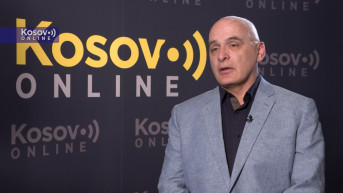
Executive Director of the Council for Strategic Policies, Nikola Lunic, pointed out that Pristina is the only side that would benefit from new conflicts, and that it is up to Washington to have a ready response to this issue, given their support for the transformation of the Kosovo Security Force (KSF) into armed forces.
After Kosovo officials warned of the possibility of escalating relations and a potential war with Serbia, and the State Department expressed concern that local tensions in the Western Balkans could escalate into serious political issues, Lunic emphasized to Kosovo Online that Serbia's official stance is completely opposite to what Kosovo's Prime Minister Albin Kurti states.
Namely, he said, Serbia benefits from a stable Western Balkans region.
"At this moment, a potential conflict would only benefit one side, and that is Pristina, or more explicitly, the current government in Pristina. Serbia does not want any conflict; on the contrary, Serbia benefits from a stable Western Balkans region. As we recently heard at the NATO Summit, the Alliance does not support the transformation of the KSF into the armed forces of Kosovo, but they are practically ignoring this. Unlike them, the US supports the transformation of the KSF into the armed forces of Kosovo, but on the fundamental principles of democracy they hold, which are multiculturalism, democracy, and the rule of law," Lunic said.
He reminded that Kurti contradicted these principles in his article published on the eve of the NATO Summit in the New York Times.
Kurti, he emphasized, refers to the proportional state of Albanians and Serbs in Kosovo and states that Kosovo is not a multinational but a mono-national society.
"Thus, he is creating his mono-national armed forces. This will definitely be a problem, but it is a problem for the US. They need to question whom and why they support in the long run and what they are doing in Kosovo in terms of supporting such an approach to creating armed forces that will be a source of destabilization in the region," Lunic believes.
Considering the upcoming elections, at this moment, the Western Balkans and Kosovo are on the margins of the importance of foreign policy in America, Lunic assesses, adding that in the current election campaign in the US, as never before in history, foreign policy has not taken precedence over internal policy.
Therefore, he observes, if US foreign policy is to be reassessed, it will be done by the new administration.
He emphasizes that Serbia should build strategic relations with the US regardless of which administration is in power in Washington.
"We even have joint military cooperation with our forces in Sinai, and I believe that this will continue to deepen, and at least from the Serbian side, I think Washington represents a strategic orientation," Lunic concluded.
Executive Director of the Council for Strategic Policies, Nikola Lunic, emphasized that new incidents are possible if Pristina continues with the uncontrolled deployment of special units in northern Kosovo without consulting KFOR and NATO, or if it continues with further provocations.
He stressed that it is crucial for Serbs not to participate in creating incidents and to show openness to coordination with the West and the US.
"The potential for incidents exists, but it can remain only at the level of an incident. It is important that Serbs no longer participate in creating such situations. It is important for Serbs to continuously work on stabilizing this situation, meaning relaxing relations. This means working with reliable partners and allies, which are the leading Western countries, because it is clear that this cannot be done with Albin Kurti," Lunic emphasized.
Commenting on why Serbia is highlighted as a factor of instability in the Western Balkans, Lunic said that at this moment, it is a pragmatic approach aimed at reaching a final agreement on the normalization of relations between Belgrade and Serbia.
He explained that if only one side is condemned, then in such a situation, the possibilities for agreement are closed.
"That is why the US has a balanced approach to both sides at this moment, expecting a political agreement. A political agreement will sooner or later lead to the necessity of creating a security agreement that we all must be aware of, because if it is announced in Pristina that they have established two regiments in the KSF and that next year they are establishing a third regiment, and that by 2028 they will definitely establish the armed forces of Kosovo, we must see with our American partners and the EU how to ensure transparency, multinationality, structure, and bilateral relations," concluded Lunic.


comments