
Marinkovic: There was no massacre in Racak; the truth we proved was also accepted by the court in The Hague
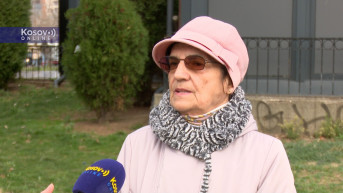
The investigative judge in the "Racak" case, Danica Marinkovic, said on the occasion of the 25th anniversary of the event that the only truth was that members of the terrorist organization KLA had been killed that day and that the version of a massacre had been fabricated as a pretext for the bombing of the Federal Republic of Yugoslavia. A great victory for Serbia is, as she emphasizes, that the indictment in the "Racak" case was dismissed in The Hague, and no Serb was convicted as responsible for that event.
On the other hand, Marinkovic expresses sadness that, despite the truth being proven and everyone in the international community knowing it "even if they don't admit it", the consequences of the bombing continue.
"It has been 25 years, however, the truth about Racak is only what I, as an investigative judge, determined, and we knew it from the first day. It is sad that after 25 years, the consequences of NATO bombing are still present, and they will continue. We cannot bring back the dead, and illnesses are spreading, the impact of depleted uranium has taken its toll, and the material damage caused is also significant. However, the truth is a fact that I pointed out from day one - there was no massacre of innocent civilians in Racak, as falsely presented by American spy William Walker. His statement, which resonated around the world, served as a pretext for NATO bombing and aggression against the then-Federal Republic of Yugoslavia. This truth remains today and will be talked about even after me", Marinkovic said for Kosovo Online.
She claims that there is evidence for her statements, which she gathered during the investigation and on-site inspections.
"We found large quantities of weapons, trenches, a headquarters that we discovered, KLA uniforms... All of this proves that Racak was a major stronghold and headquarters of the terrorist group KLA and that on January 15, 1999, terrorists were killed in an action carried out by members of the Serbian Police", she emphasized.
Recalling the events in Racak after the conflict on January 15, 1999, Marinkovic said that, as the duty investigative judge, she had been informed, as the law requires, by the duty police service that there had been action in Racak, that there had been conflicts, and it was assumed that there had been casualties, and a decision needed to be made whether to conduct an on-site investigation.
She recalls that she immediately formed an on-site investigation team with the duty prosecutor, and they set out on January 15 to Racak, to the police station in Shtime. She notes that representatives of the OSCE Verification Mission were also in the police station, informed that the team would conduct an on-site investigation in Racak.
As she emphasizes, after discussions, they did not accept to go on the on-site investigation and tried to convince her that it was not desirable for the investigative judge to go to the field.
"Of course, I decided on that in consultation with my associates, and we went to Racak. On January 15, we entered the village and found a large quantity of weapons. However, they started shooting at us, and due to the risk, we were prevented from continuing further. It was not safe on the ground", Marinkovic stated.
She points out that the team, upon returning to the Shtime station, informed the OSCE representatives that they would try to conduct the investigation again on January 16. The same happened on January 17.
"We couldn't enter the village of Racak. As soon as we approached, gunfire would start immediately. The representatives of the peace mission were also informed about everything. After several discussions with them, they tried to stop me and refused to allow me to go with the police. They suggested that they could drive me and bring me back. Naturally, I did not accept that and explained to them the procedures according to the Law on Criminal Procedure, that I go to the on-site investigation, and the police secure the scene, not foreigners. I told them that they could join us only as observers and get all the explanations if they didn't understand", she recalls.
Representatives of the OSCE did not accept the proposal of the Serbian team, Marinkovic emphasizes. On the contrary, they "angrily threatened" that she, as a judge, would be to blame if she entered Racak and if there were more victims.
"Walker's deputy, John Drewienkiewicz, threatened me that he would personally ensure my arrest and take me to The Hague to stand trial", Marinkovic said.
William Walker, she explains, staged the entire event and the story about the massacre. That was his task.
"On January 16, he went to the field without authorization and an agreement with investigative authorities, which he should not have done. We saw the picture that went around the world; he found a ravine, and there were the dead. The question is, who were those dead, when did they die, and who killed them? Walker immediately came out with a statement that supposedly a massacre had occurred in Racak, that the Serbian Police had done it, that he saw a terrible scene, that some bodies were missing parts, and that it was an unprecedented massacre of the civilian population", Marinkovic recalls Walker's version of events.
All of that, she points out, was a lie and a scenario that Walker planned with his collaborators and his backers who sent him on a mission.
His statement was accepted, and no one waited for the investigative authorities to conduct an investigation, says Marinkovic, emphasizing that on January 18, during the on-site investigation, she found 40 bodies of KLA members in the mosque in Racak.
"There were 40 bodies in the mosque; I immediately ordered those bodies to be transferred to the Institute of Forensic Medicine in Pristina. I immediately formed a team of forensic pathologists and ordered them to perform autopsies. Belarusians joined them, and after two days, the Finnish team joined. After the autopsies, the unanimous conclusion was that the individuals died, the cause of death was injuries from firearms exclusively manual, that shots were fired from a distance, and that no evidence of a massacre, as Walker presented to the public, was found on anybody", Marinkovic stated.
However, she says that the truth about Racak came to light after the investigation conducted by the investigative authorities under her leadership, after presenting material evidence found on the scene, autopsies, ballistic expertise... Paraffin gloves, she emphasizes, showed that the deceased had traces of gunpowder particles on their hands, indicating that they themselves used weapons.
"All of this evidence was submitted and disclosed when I brought it to The Hague, where I was a defense witness in the case against Slobodan Milosevic. There were testimonies before me; however, the strongest piece of evidence in a criminal proceeding is when the investigative judge appears as a witness. After my testimony and the testimony of Professor Dobricanin, who was with me in the field all the time as a court expert and participated in the autopsy procedure, the indictment was dismissed in The Hague, and no one was accused and convicted for Racak among the individuals who were on the indictment. That is our great victory. The truth we proved was accepted by the court in The Hague", Marinkovic pointed out.
Therefore, she notes, Pristina is now not able to rely on any judgment and bring charges against anyone.
According to her, after the events in Racak, Pristina immediately tried one policeman upon the arrival of UNMIK and KFOR in Kosovo. However, it turned out that this man had not been a participant in those events.
"Pristina has no evidence that a massacre occurred in Racak. All the evidence we collected and all the documentation were transferred from Pristina to Belgrade. There is a book where all the court documents are collected, titled 'The Truth about Racak'", she notes.
"All the accusations heard from Pristina today are false", Marinkovic emphasizes, adding that they have no material evidence about Racak except the practice of finding false witnesses.
There is a possibility of trying individuals who are not accessible to competent authorities in absentia, but for that, as the former judge explains, there must be material evidence submitted in the proceedings.
After 25 years since the events in Racak, the greatest victory for Serbia, Marinkovic states, is that no one was accused and convicted in The Hague for that case.
On the other hand, she concludes that representatives of the international community will never accept the truth because it is a well-known fact that their goal was only to bomb Serbia, and Racak served as a pretext.
"If it wasn't Racak, they would have invented something else. They decided to bomb us. We know how the Rambouillet conference happened, so we are helpless there; after all, they are a great military and world power. However, the truth is on our side, and one should fight for it and never give up, hopefully, the truth will come to the forefront", Marinkovic says.
All representatives of the international community who were once in Kosovo, she assesses, knew what really happened in Racak; they just didn't want or dared to admit it.
"You see, Helen Rant, in 2008, when her conscience kicked in and she was writing her autobiography, admitted that she was forced to sign that supposedly a massacre had occurred and to confirm Walker's version. She stated and said that among the casualties had been members of the terrorist group KLA. It's all clear, but their goal is not to admit the truth; it doesn't suit them", Marinkovic concluded.
0 comments