
Markovic: There is no reason for the word Metohija to offend anyone
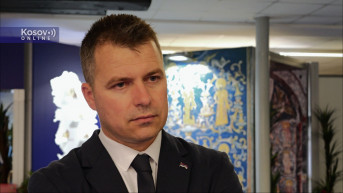
Historian Marko Markovic told Kosovo Online that there is no reason for the word Metohija to offend anyone or for anyone to oppose its use, since in its original meaning it contains nothing negative. As he explains, Metohija is an old medieval term denoting church property.
He adds that Metohija refers to the part of Kosovo where the largest number of churches and monasteries are located.
“When we look at medieval charters, inscriptions, records, and other written sources from that period, we can see that there was hardly a single village without a church, a monastery, a hermitage, or other traces of Christian, that is, Serbian culture. The multitude of those churches and monasteries can be summarized in one word – Metohija, meaning church property. The entire area of Metohija literally represented the property of the Church, since every medieval monastery functioned as a kind of feudal estate. Where the land of one monastery ended, the land of another began, and so on endlessly,” Markovic explains.
In the past, he says, there were periods when the term Metohija was used more or less frequently.
“There was a time when the term Hvosno was used, and later, when the Turks occupied the area, it was referred to as part of Old Serbia. At the Berlin Congress, that territory was also described by that term – the territory of Old Serbia. Later we had some other expressions, first Kosmet, and later simply Kosovo,” the historian points out.
Claims recently made by officials in Pristina that the term Kosovo and Metohija represents “the language of Slobodan Milosevic,” according to Markovic, have nothing to do with historiography or science.
“That has solely to do with the daily politics of the Albanian elite in Kosovo and Metohija. The term Kosovo and Metohija began to be used after the liberation in 1912, during the Kingdom of Serbia, and later during the Kingdom of Serbs, Croats and Slovenes,” he explains.
Only later, after the end of World War II and the rise of the communists to power, the word Metohija gradually began to be set aside, replaced by the shorter term Kosmet, until constitutional amendments and subsequent developments led to the term Metohija being increasingly removed from use.
When asked why today’s politicians in Pristina do not want to hear the word Metohija in public discourse, Markovic says it reminds them that the territory of Kosovo and Metohija was, unambiguously, in the Middle Ages, part of the kingdom and later the empire of Serbia.
“It clearly points to the Serbian identity of that territory, and that is precisely what they want to push aside,” Markovic concludes.

0 comments