
Djuric: The word “Metohija” means property of the monastery; Gërvalla: It is an expression of hegemonistic aspirations
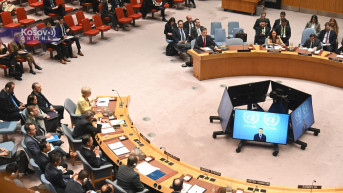
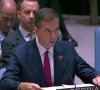
At the end of the UN Security Council session on Kosovo, Serbian Minister of Foreign Affairs Marko Djuric responded to the claims made by Kosovo’s Foreign Minister Donika Gërvalla, who stated that there is “no such thing as Kosovo and Metohija,” calling the term “an expression of Serbia’s hegemonistic ambitions toward Kosovo and the language of Slobodan Milosevic.” Djuric replied that the term most certainly exists and, in its original meaning, refers to monastic property, appearing in medieval historical records, and cannot be attributed to Milosevic or any modern politician.
Djuric emphasized that the term “Metohija” holds deep historical significance for the Serbian people, while also expressing respect for the Albanian people, their tradition, and their culture.
“In Serbian tradition and culture, the word metohija or metoh, which originates from the Greek language, means monastic or church property. In records from the 11th, 12th, and 13th centuries, the term metoih is clearly used to denote church estates in the western part of Kosovo and Metohija. It is not a derogatory term, nor can it be attributed to Slobodan Milosevic or any other Serbian politician. It is part of our identity, culture, and tradition,” Djuric said.
At the same time, he pointed out that Albanians refer to that part of Kosovo as “Dukagjini” in their language, just as they have their own names for other parts of Kosovo.
He also stressed that Serbs and Albanians are not destined to be enemies.
He underlined that, despite the difficulties, dialogue is the only option leading toward a better future in which the economy of the region could become a driver of European growth — something that is not the case today.
Djuric also noted that it was encouraging that during the session there was near-unanimous consensus among UN Security Council members regarding the difficult position of the Serbian people in Kosovo.
He added that this sends a message to Albin Kurti, Xhelal Sveçla, and others in Pristina that violations of the rights of Serbs have not gone unnoticed, and that their behavior must change without delay.
Responding to accusations against the Serbian president, Djuric stated that Aleksandar Vucic has never made any statement calling for war, but has consistently advocated economic cooperation, through initiatives such as “Open Balkan,” within which Albania, Serbia, and North Macedonia work to create a common market.
“Unfortunately, Kurti’s government rejects every such initiative and continues its repression,” Minister Djuric said.
He also dismissed accusations of genocide against Serbia, stressing that such a term must not be misused, especially for political purposes.
He added that such irresponsible statements make it harder to normalize relations between Serbs and Albanians, noting that the ethnic composition of Kosovo today shows that Albanians make up over 90 percent of the population, while more than 200,000 internally displaced Serbs still lack conditions to return to their homes.
Djuric also observed that the majority of UN member states respect Serbia’s sovereignty and territorial integrity within the borders recognized by the UN, and stressed that Serbia will always remain firm on the implementation of UN Security Council Resolution 1244 and international law.
However, Kosovo’s Foreign Minister Donika Gërvalla, in her reply, stood by her position, saying that there are still people in Belgrade who deny genocide, war crimes, and glorify war criminals as heroes, in the presence of those old enough to remember the events of the 1990s.
“Kosovo and Metohija is indeed an expression of hegemonistic aspirations. No one in Kosovo, when referring to our northern neighbor, uses provincial names such as Sumadija — they say Serbia, as everyone in the international community does. When you hear someone speak of Kosovo and Metohija, believe me, you are listening to a supporter of Milosevic’s old ideology,” Gërvalla said.
She went on to claim that the Banjska incident “was not an isolated event, but an act of aggression by the state of Serbia against a neighboring country — Kosovo.”
She criticized the fact that those responsible had not been punished, adding that the attack on critical infrastructure was likewise not an isolated event, but a kinetic attack on a neighbor.
“Yes, we bought drones from a NATO member state, Turkey. We buy weapons from our NATO allies. We are not neutral, nor do we pretend to be. We stand with our partners and allies, and we do so transparently and clearly. NATO members train and advise our security forces, and we buy weapons from them for the protection of our country and citizens. What we do not do is buy arms from Russia, China, Iran, or similar countries,” Gërvalla said.
She denied that healthcare institutions in the north had been closed.
“Healthcare institutions have not been closed. On the contrary, we are engaged in dialogue with the Serbian community on how healthcare and education in Kosovo should look — based on their needs. We do not want or need ghettos for our Serbian citizens. That is why we are building bridges, roads, schools, and hospitals, not walls for our minorities. No Kosovo institution or international organization confirms the broader claims made in UNMIK’s report,” Gërvalla said.
She concluded by inviting Security Council members to visit Kosovo and speak directly with its citizens in order to witness “Kosovo’s remarkable story of development.”


0 comments