
Mijacic: Regardless of the dialogue format, Pristina cannot avoid its obligations, including the establishment of the CSM
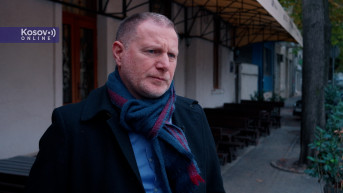
Dragisa Mijacic, Coordinator of the National Convention on the EU Working Group for Chapter 35, stated that the Brussels Agreement remains the foundation for all future discussions on the normalization of relations between Belgrade and Pristina. Speaking to Kosovo Online, he emphasized that the format of the dialogue is less important than fulfilling the agreed-upon obligations.
Commenting on the statement by Marta Kos during her hearing in the European Parliament, where she called for new approaches to the dialogue between Belgrade and Pristina, Mijacic noted that while her perspective deserves attention, it is merely a subjective opinion that does not influence or alter the essence of the negotiation process.
He also pointed out that Kos has not yet been confirmed as the Commissioner for Enlargement, and her appointment must go through various EU bodies.
“She made certain statements during the hearing, but this does not necessarily mean she will be selected as Commissioner, although the chances are high. Another important aspect is that the Commissioner for Enlargement is not directly involved in the dialogue process. Therefore, her opinion on the dialogue is subjective. While it warrants attention, the Commissioner for Enlargement does not have any authority over the dialogue. This is why her statement in that direction is somewhat surprising,” Mijacic explained.
He was adamant that the Brussels Agreement and its annex from Ohrid remain the basis for all future talks.
“Everyone, including Marta Kos, knows that the dialogue is not progressing as desired. A different negotiation model is indeed necessary, but the foundation remains the agreement on the path to normalization, which was accepted in Brussels last year along with its Ohrid annex. These will serve as the basis for all future discussions within the European platform for dialogue between Belgrade and Pristina,” Mijacic stressed.
Regarding Pristina’s position, which has for years insisted on changing the dialogue format—a stance supported by some MEPs—Mijacic highlighted that the format is less relevant than fulfilling obligations.
“Pristina is obligated to adhere to the normalization agreement. Regardless of the format, it cannot evade its responsibilities. What Pristina is trying to do is to introduce other topics to avoid establishing the Community of Serb Municipalities, which is its obligation not only under the most recent agreement but also under the one from 2013. Therefore, Pristina’s demands to change the format will not alter the essence or the international community’s requirement to establish the CSM,” he concluded.
He added that Pristina’s demands have recently become numerous but have yielded no results.
“Every time a proposal is presented, Pristina counters with its own. When the European Union proposed a three-point plan, they responded with their five-point plan. When the EU offered a sequential plan, they came up with an alternative sequential plan. However, none of these efforts have borne fruit. Regardless of Pristina’s demands, the obligations of both Pristina and Belgrade are clear. These demands merely serve to buy time rather than contribute constructively to the dialogue,” Mijacic concluded.


0 comments