
Andric Rakic: Statements from Brussels abstract, Europe still lacks a solution for dialogue issues
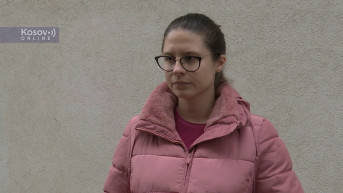
Milica Andric Rakic, Program Manager at the NGO Social Initiative, says that the new compositions of the European Parliament and the European Commission have not only failed to provide concrete solutions for the dialogue between Belgrade and Pristina, but also seem uncertain about the direction to take. Speaking to Kosovo Online, she notes that they appear to be waiting for signals from Washington.
"Considering that these are new compositions of both the European Parliament and the European Commission, it would truly be irresponsible of them not to acknowledge that the dialogue has faced problems. However, so far, all statements have been almost abstract and boil down to the admission that the dialogue was not good. There needs to be a new solution, but no one is identifying the framework for that new solution, and I think this is largely because they themselves are not sure," she says.
She points out that the stance of the new U.S. administration remains unclear, presenting three main scenarios:
"In this scenario, the U.S. continues to cooperate with the EU as it has so far. The European Union plays a leading role, while the U.S., so to speak, lends a certain kind of power to the EU. If you ask me, this is the least likely scenario," Andric Rakic assesses.
"Here, the U.S. sees little room for progress in the dialogue and opts not to associate itself with something that, so to speak, reeks of failure," she adds.
"The U.S. actively undermines the EU's role in the dialogue, as was the case in 2018 and 2020, and fully takes over the process. I think Europe still does not know what the U.S. Congress's stance will be, and therefore, they are unsure about what needs to be improved in the dialogue. This is why we are seeing these rather abstract and general statements about what the process might look like," Andric Rakic emphasizes.
She also recalls the testimony of Kaja Kallas in the European Parliament, which, according to her, did not provide any indications of potential changes.
"There were speculations that she might decide, like Mogherini or Ashton before her, to personally take charge of the dialogue. However, given how little she spoke about the dialogue—practically just one sentence—I assume this is no longer an option. She will almost certainly appoint a new mediator to lead the dialogue on her behalf. This is the only policy we can predict for now, and it essentially represents no real change. It’s more or less a continuation of what we’ve had so far," the NGO Program Manager evaluates.
According to her, progress in the dialogue can be expected after Kosovo's parliamentary elections.
"Until then, I think many things will remain frozen. I even believe that the number or scope of unilateral moves from Pristina will decrease, as, more or less, everyone is now waiting to see how the new U.S. administration will approach global issues. It is particularly important who will be in charge of the Balkans in that administration. That’s why I think all actors, especially Pristina in this context, will calm down until the elections," says Andric Rakic.
She adds that much depends on whether the Serbian community will participate fully in the elections.
"So far, all indications suggest there will be participation. However, if significant escalations occur—though I do not expect them—we could see a scenario of partial boycott, with no voting in the north but participation in the south. There are many variables, and things will only become clearer by February next year," concludes Andric Rakic.

0 comments