
Milivojevic: Qualified majority decision-making means revising the Lisbon Treaty
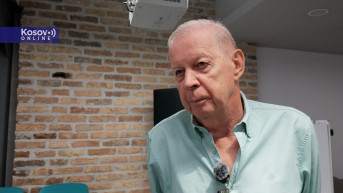
If the European Union adopts the principle that decisions should be made by qualified majority rather than consensus, this will mean a revision of the Lisbon Treaty, that is, a revision of the EU, career diplomat Zoran Milivojevic pointed out.
"If this is adopted, it means a revision of the Lisbon Treaty, a revision of the Constitution of the European Union, because it calls into question the equality of member states," Milivojevic told Kosovo Online.
He explains that the initiative to allow decisions to be made by qualified majority rather than consensus on certain issues is an expression of the current situation – the dominance of geopolitical interests over what the EU has been until now, as well as the problems the EU is facing in its enlargement policy.
"It is facing two problems. One is the problem of functioning, the other is decision-making. With geopolitics dominating, it has become clear that both problems call the prevailing policy into question, particularly when it comes to Ukraine. The Hungarian case is well known, but it is not the only one. Quite simply, because of the dominance of geopolitics, the EU is neglecting its internal reform processes, and this is an attempt to enable functioning and decision-making through a forced solution that serves the geopolitical interests now in the ascendancy," Milivojevic said.
However, he believes this will create a problem, because it remains to be seen whether other countries will accept it, as it calls into question equality, that is, the basic principles on which the European Union rests – equality and unanimity on key issues, such as the budget or enlargement policy and the admission of new members.
"This is an open issue. I do not know how it will end, but it is being strongly pushed by the hard core, which includes the founding countries, Germany, France and the Benelux countries, along with some other states whose motives are geopolitical – the Baltic and northern countries. We will see how far this will take hold. In any case, this is the beginning of a process of revising not only the basic documents, but also the substance and functioning of the European Union as a whole," Milivojevic said.
He says that if a possible change also affects enlargement policy, Montenegro will be the best test case.
"We saw how this went with Iceland. Iceland has already decided through a referendum to remain sovereign and not take that risk. Such a change means a revision of enlargement policy, because joining under these conditions would not constitute full membership, but rather reduced membership subject to what is dominant now – geopolitical interests, with future enlargement policy then needing to be phased, postponed, without voting rights and so on," our interlocutor said.
He therefore says that this represents a double challenge – for the Union and for candidate countries.
"For the EU, what would enlargement policy mean then, and how far would it depart from the basic principles and positions, since the Lisbon Treaty provides for admission with full membership? Is the EU also embarking on a revision of its founding documents? Second, there are challenges for the candidate country as well – is it willing to give up equality from the outset? Whether that means voting rights or whatever else, it is equality in any case. In Serbia's case, that is still a long way off, because political conditions, rather than substantive conditions, are being applied to Serbia. Accordingly, we remain in the status quo ante situation, as before," Milivojevic said.
In Serbia's case, he adds, the opening of clusters is not substantive and is not linked to the standard principle and procedure for accession, but rather to political conditions.
"As things stand now, Serbia has no intention of giving up two key elements that are part of the political conditions – Kosovo and Metohija and the non-imposition of sanctions on the Russian Federation," Milivojevic said.
Asked whether this measure could be dangerous given that five EU member states do not recognize Kosovo, Milivojevic said that this would bring the issue into territory similar to that of the Council of Europe, where decisions are made by a two-thirds majority. He added that Serbia's condition is progress in Chapter 35, which, like Chapters 23 and 24, has a suspensive clause – if there is no progress in that area, there is no progress at all.
"Serbia's accession is a long way off. It is uncertain whether Serbia will reach the point, under these conditions, where accession negotiations can be discussed. I am not convinced of that given the current situation, and therefore this does not yet apply to Serbia. It is applicable in a pragmatic sense to the idea that Aleksandar Vucic and Edi Rama once put forward as an approach to the Schengen area, because of the free movement of people, goods, services and capital and access to the market, as a pragmatic solution that could be treated as such, but exempted from the procedure for full membership," Milivojevic said.



0 comments