
Curcic: It is unlikely that the EU decision-making system will change in the short term
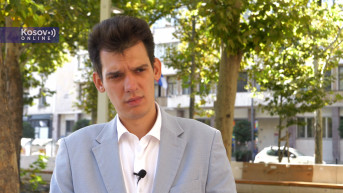
Petar Curcic, a researcher at the Institute of European Studies in Belgrade, believes it is uncertain whether the EU will succeed in reforming its decision-making system, given that smaller countries see their power precisely in the ability to block initiatives they do not agree with with a single vote.
"That initiative came from the largest and most significant countries, and their influence is indeed such that it can largely contribute to changing policy. However, you have small European countries that see their power precisely in that, in the ability to block initiatives with a single vote and raise their own foreign policy profile. We had the example of Viktor Orban, who used this very often," Curcic told Kosovo Online.
He says that the initiative by 11 EU member states to allow qualified majority voting instead of consensus on certain issues is driven by two reasons – the issue of the European Union's defense, that is, its rearmament and the package of sanctions against Russia, and, on the other hand, the issue of European integration.
"We see, for example, that Bulgaria has been blocking North Macedonia for years, and that is why I do not believe Bulgaria would give up that right so easily. It will always use it to influence other member states. In that sense, there are two reasons why this initiative has been launched. However, we must bear in mind that it is unlikely that changes will come in the short term. All countries must agree to this, and it requires a certain procedure. Ultimately, a simple majority has been introduced in some areas, so the European Union is gradually adopting this, while other member states accept it or do not accept it. Within this initiative, we have something called constructive abstention from voting. That is supposed to be a measure that will be introduced. However, in practice, let's see whether such changes will actually come about. The EU has 27 member states, which is a major mechanism. It takes time for all of them to reach agreement," Curcic explained.
Asked whether the new decision-making method could apply to decisions concerning enlargement or the opening of clusters, he said that this was precisely one of the reasons why the initiative had been launched.
He added, however, that Serbia's Cluster 3 has not yet been opened for other reasons, as the Baltic and Scandinavian countries are blocking it because of the issue of Russia, while Croatia, Bulgaria, the Netherlands and Belgium are doing so for their own reasons.
"Ultimately, I do not think they will change the fundamental things, namely that EU membership will not be decided by a simple majority, but that there must be consensus among all member states. It seems unrealistic to me to expect these changes to come quickly, meaning that a simple majority would be introduced on issues concerning negotiations and enlargement, because this is an area in which all member states have been coordinating their positions for decades. It is not realistic to expect the principle of a simple majority to be introduced for enlargement. Perhaps they will introduce it for some other foreign policy matters," Curcic said.
Asked whether a new decision-making principle would be dangerous if it were applied to Kosovo's European integration, given that five EU member states do not recognize Kosovo's independence, Curcic believes that the Kosovo issue will remain within the framework in which it is currently situated.
"Kosovo began its European integration processes, clearly in parallel with Serbia, with all countries, including those five, agreeing on certain issues. We can see that Chapter 35 in Serbia's negotiating framework is precisely the one concerning relations between Serbia and Kosovo. So, it is obvious that these processes are included in the negotiating agenda. The European Union cannot fundamentally change its positions. Most EU member states recognize Kosovo's independence, while on the other hand, there are those five that consistently do not recognize it. I think that in this sense, the Kosovo issue will remain within the framework in which it currently stands, with Europe essentially conducting its own negotiation policy and serving as the moderator in the long negotiations between Belgrade and Pristina," Curcic concluded.


0 comments