
Miskeljin: Kurti intends to 'control the damage' of unilateral actions due to elections

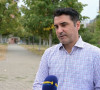
Marko Miskeljin, a researcher at the Center for Social Stability, stated that Albin Kurti's goal is to "control the damage" until the elections and to present to the public that the unilateral actions in northern Kosovo have not harmed relations with the West.
"It seems to me that Kurti and his administration primarily wish to present it in such a way, to somehow justify to the Kosovo public the truly harsh condemnations we have heard, primarily from the State Department. These are the words that resonate the most in public discourse in Kosovo and are certainly the ones that can hurt the most," Miskeljin told Kosovo Online.
He emphasizes that in this context, the statement by the Minister of Administration and Local Government, Elbert Krasniqi, that "Kosovo's international partners were informed about the action of the Kosovo Police and the closure of Serbian institutions in the north" should be viewed.
"All of Kurti's statements and actions from this point until the February elections will mostly be in this context, primarily aimed at improving his ratings. Krasniqi's statement is related to this, even though it contradicts what the State Department itself claimed," Miskeljin said.
He views Krasniqi's claim as an attempt to "control the damage" caused by the statements from representatives of the international community.
"This was not just a casual condemnation. We have indeed, especially from the State Department, heard that what is happening continuously seriously threatens the further partnership between the US and the Pristina administration. These are far more serious criticisms than to take them lightly," Miskeljin emphasized.
When asked whether the harsh reactions to Pristina's unilateral moves could provoke a more concrete response from the US or the EU, Miskeljin says it is unrealistic to expect that, adding that the key problem is that the EU lacks mechanisms to punish those who do not respect the agreements reached.
"There is no reason to believe that pressures from the EU will be stronger. But the more serious question now arises: does the European Union really have the mechanisms to exert influence? We must not forget that the EU is the guarantor of the Brussels Agreement, which has been flagrantly violated for over a decade. The formation of the Community of Serb Municipalities is no longer even mentioned, not to mention the other points that are violated daily. We see that those who are guarantors and mediators in the negotiations do not seem to have enough strength to reprimand the side that is clearly working towards escalation," Miskeljin concluded.


0 comments