
Mitic: Erdogan could contribute to peace in the region that Albin Kurti has destabilized
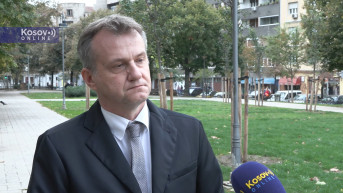
Scientific associate at the Institute for International Politics and Economics, Aleksandar Mitic, believes that Turkish President Recep Tayyip Erdoğan could be the one with enough influence to help resolve the problems in the region, whose stability, he says, has been endangered primarily due to the extremely radical hybrid measures that Kosovo’s Prime Minister Albin Kurti is implementing against the Serbian people in Kosovo.
Commenting on Erdoğan's visit to Serbia and Albania, Mitic expressed hope that this visit would contribute more to the stability of the Western Balkans than the previous one, during which, he recalls, drones known as "Bayraktars" were delivered to Kosovo.
In addition to the situation in Kosovo and the behavior of Pristina, Mitic emphasized that another destabilizing factor in the Balkans is the political stance of Sarajevo towards the Republic of Srpska.
"The situation here is tense because of the extremely radical, hybrid measures that Albin Kurti is carrying out against the Serbian people, not only in the north of Kosovo and Metohija but throughout Kosovo, which go unpunished, sometimes with tacit support, and occasionally with open support. That is the main destabilizing factor in the Balkans. The second destabilizing factor is, of course, the political efforts of Sarajevo to pressure and involve its allies in further exerting pressure on Banja Luka and the Republic of Srpska, which could also cause destabilization. Therefore, on both of these issues, Erdoğan can play a political role. If Sarajevo and Kurti in Pristina are unwilling to cooperate with Belgrade in a way that would contribute to stabilization, then let's see if Erdoğan could be the one with enough influence, given that Western powers are unwilling to do anything about it," Mitic explained to Kosovo Online.
He also pointed out that the broader geopolitical context, which is far from simple, has a negative impact on the Western Balkans region.
It is well-known, he noted, what the situation is like on the frontlines in Ukraine, and that the progress of the Russian army is extremely decisive and irreversible. Regarding the Middle East, there are various interests for the conflict to escalate, while the great powers are trying by all means to prevent that, Mitic added.
Given all these circumstances, the scientific associate at the Institute for International Politics and Economics believes it is positive that Serbia and Turkey are strengthening their ties.
"What is clear is that President Erdoğan said that cooperation between Serbia and Turkey is based on economic collaboration, and that we are in a golden era when it comes to that cooperation. It is evident, when we look at the data presented by both him and President Vucic, that this is a very successful upward trend. Industry and cooperation in that area had been largely neglected," Mitic emphasized.
However, Mitic reminds that despite all efforts to strengthen relations, Ankara and Belgrade have completely opposing views when it comes to Kosovo.
"Of course, we know the whole geopolitical context, and especially our regional context, particularly regarding the issue of Kosovo and Metohija. The fact is that Turkey has delivered 'Bayraktars' to so-called Kosovo and has been working for years on building what they call a project of a Kosovo army, which is in complete contradiction with Resolution 1244 and all possible agreements within NATO. We know there is no consensus in NATO on this issue. So, it is clear that there were disagreements. It is obvious that despite this, there is a very high level of trust between the two presidents, as they have managed to overcome these disagreements and strategic differences, primarily concerning the issue of Kosovo and Metohija," Mitic emphasizes.
He recalls that Serbia and Turkey also have differing views on the situation in Bosnia and Herzegovina, with historically and strategically divergent perspectives on both sides.
However, he views positively that President Erdoğan has very solid relations with the President of the Republic of Srpska, Milorad Dodik.
"If we are also talking about some potential military cooperation, we know that the Federation of Bosnia and Herzegovina has a much more developed military industry than the Republic of Srpska. Perhaps it would not be a bad idea to take this opportunity to strengthen the military industry of the Republic of Srpska, and for this to be a joint contribution to the security of both the region and, primarily, Bosnia and Herzegovina," says the expert on political affairs in the region.
Serbia and Turkey, he adds, do not have identical views on some key geopolitical issues, but they strive to soften these differences.
"We have seen them try to reduce differences regarding the conflict in Ukraine and the conflict in Gaza. Belgrade and Ankara do not have identical views, but they advocate for the peaceful resolution of these conflicts and for the quickest possible cessation of war-related destruction. That is something that can be considered positive," Mitic assesses.
As a particularly interesting moment in the relations between Serbia and Turkey, Mitic highlights the broader context of the upcoming BRICS Summit in Kazan.
"We know that this summit begins in about 10 days, and we know Turkey's stance on joining BRICS. This has surprised many in the West, especially since Turkey is a NATO member. Perhaps this is some sort of encouragement for Belgrade to get more actively involved in this initiative," he suggests.
Before visiting Serbia, Erdoğan visited Albania, and Mitic says that this decision by the Turkish president is not surprising, given that Ankara and Tirana have a long-standing strategic partnership.
First and foremost, they share the same stance on Kosovo, and both countries are members of NATO, he observes.
"It doesn't surprise me that President Erdoğan is visiting Albania first. Although Albania is less strategically important for Ankara, it has been a long-term strategic partner of Turkey. We know Turkey's position on Kosovo and Metohija (KiM), and we know Albania's role regarding Kosovo and Metohija. The fact is that Albania, like Turkey, is a member of NATO, and from that perspective, it's understandable that it was the first stop of this visit," Mitic said.
According to him, Erdoğan's visit to the region could signal that Turkey, after a long time, is once again dedicating attention to Balkan issues.
"After focusing over the past three years on Ukraine, problems in the Black Sea, Gaza, and the Middle East—without even considering all the other geopolitical issues Turkey is involved in—it seems that Turkey, after a period of neglecting the Balkans, is somewhat returning to Balkan issues with this visit. We all hope this will be a constructive contribution, which will be different from last year when they delivered those drones to the illegal army of Kosovo, that is, the Kosovo Albanians," Mitic concluded.


comments