
Mojsilovic: The military alliance of Zagreb, Tirana and Pristina is directed against Serbia and Serbs in the region
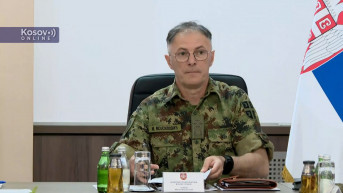
Chief of the General Staff of the Serbian Armed Forces, General Milan Mojsilovic, pointed out that the military alliance of Zagreb, Tirana and Pristina is directed against Serbia and Serbs in the region, adding that efforts to transform the Kosovo Security Force into an army and integrate it into military alliances are particularly problematic. According to him, the security situation in Serbia is stable, but certain challenges and risks remain, primarily in Kosovo, Novosti reported.
“We are convinced that the military alliance of Zagreb, Tirana and Pristina is directed against Serbia and Serbs in the region. It is a means of exerting pressure on our country and a serious security challenge, as well as an attempt to establish the so-called Kosovo Security Force as a genuine army. This alliance is contrary to United Nations Security Council Resolution 1244, the Dayton Agreement, the Agreement on Sub-Regional Arms Control, and the Military-Technical Agreement. In defining the capabilities required, the Serbian Armed Forces have taken into account the existence of this trilateral alliance and are already capable of countering it independently, and I can tell you that they will become even stronger,” Mojsilovic said in an interview with Novosti.
He stressed that unilateral actions by the authorities in Pristina, the imposition of laws, and the intimidation of the Serbian population cannot be characterized as democratic and constructive conduct and are in direct contradiction to the aspiration of all states in the region to build a peaceful and prosperous region.
“In that regard, efforts to transform the so-called Kosovo Security Force into an army and to integrate it into military alliances are particularly problematic, contrary to UNSC Resolution 1244, the Military-Technical Agreement and other signed agreements. In terms of organization, strength and operational capabilities, this formation cannot match the Serbian Armed Forces, but its potential use against Serbs in the province is worrying, and for that reason we are monitoring the security situation with particular attention,” Mojsilovic said.
He noted that, with a view to preventing an escalation of the crisis and maintaining vigilance and readiness to protect Serbs in Kosovo, he is in constant contact with the KFOR Commander and the Commander of NATO’s Joint Force Command Naples, under whose authority the international security forces in Kosovo operate.
According to the Chief of the General Staff of the Serbian Armed Forces, cooperation with KFOR is professional, correct, direct, and serves the purpose of preserving a stable and secure environment.
“We view KFOR as the only legitimate armed formation in Kosovo and Metohija which, in accordance with the mandate given to it by the UN Security Council, is obliged to ensure security and freedom of movement and is the only force capable of protecting Serbs in our southern province,” Mojsilovic said.
He assessed that the security situation in Serbia is stable, but that certain challenges and risks still remain, primarily in Kosovo.
Mojsilovic also noted that a decision had been made to engage the Serbian Armed Forces in enhanced protection of certain critical infrastructure facilities, above all as a precautionary measure, in order to prevent surprises and damage, on the basis of monitoring developments at the global level and taking into account the frequency of security incidents affecting energy infrastructure in various parts of the world.
“In this way, members of the Serbian Armed Forces are actively contributing to the enhancement of energy security, which is of great importance for achieving economic development and overall prosperity, as one of the national interests defined by Serbia’s National Security Strategy,” Mojsilovic said.
According to him, although the current armed conflicts—both the one in Europe and those in the Middle East—are extremely specific in their characteristics and can hardly be fully transposed to our environment, they provide military experts with unique insight into various aspects of the real-life application of new technologies, ranging from unmanned systems to artificial intelligence, and the associated changes in tactics and the principles of conducting combat operations.
“We in the General Staff of the Serbian Armed Forces, as well as in the competent services of the Ministry of Defence, are analyzing all aspects of modern warfare and the use of equipment on the contemporary battlefield, and we are incorporating our findings and conclusions into plans for the further equipping and training of units. Changes are occurring faster than ever before, and only those armies that embrace new technologies in time and adapt swiftly to new circumstances can hope to succeed on the modern battlefield,” Mojsilovic said.
He added that Serbia’s status of military neutrality gives it flexibility and enables the Serbian Armed Forces to cooperate with various partners, within the framework of political, security and geopolitical constraints.
“Neutrality with regard to existing military alliances gives us room to participate in joint exercises with both Western and Eastern partners and to develop bilateral military cooperation without formal collective defence obligations. Such an approach allows for the acquisition of a wide range of tactical and technical experience, interoperability in peacekeeping operations, expansion of contacts and military-diplomatic ties, and a more flexible approach to modernization and training. In other words, neutrality increases the ‘diversity’ of experience, which is a real advantage. Our officers train with members of the world’s strongest armed forces, as well as with many countries in the wider region,” the Chief of the General Staff said.
He specified that, for this year, participation of Serbian Armed Forces units is planned in exercises in Bulgaria, Greece, Hungary, Romania and the United States, as well as the presence of Serbian Armed Forces officers in observer status at several more exercises outside the country.
Next month, he announced, the “NATO–Serbia” exercises will be held in Serbia, followed by the now traditional “Platinum Wolf” exercise and the air force exercise with Hungary, “Cross Landing”.
He emphasized that the Serbian Armed Forces are ready for the reintroduction of compulsory military service and that the necessary regulatory documents, training plans, methodological manuals, accommodation and training facilities have been prepared, and new equipment has been procured to welcome the first generation of recruits.
“We have not stopped there. We are continuing to increase the capacity for the intake of recruit contingents and to improve conditions for future soldiers, which will be far better than those in which their fathers served military duty. Preparations are being accelerated at Ministry of Defence centres that will handle registration and conscription, as well as the expansion of capacity for soldiers’ health care. Draft legislative solutions have been prepared, and once they are adopted, we will very quickly be in a position to receive the first generation of recruits for military service. We have indications that this will be in the spring of next year,” Mojsilovic said.
According to him, the Serbian Armed Forces still include a large number of officers who took part in the defence of the homeland during the NATO bombing, as well as in the counter-terrorist operation in the south of central Serbia in 2001.
“It is true that the officers who then held higher positions are mostly retired, but their experience forms part of the institutional memory of the Serbian Armed Forces, as a serious and well-organized institution, and has been incorporated into the training process and the mindset of the command cadre—both formally and informally—and that is our comparative advantage,” Mojsilovic said.
Asked whether, 27 years after NATO’s aggression against the FRY, he could compare the army’s readiness and level of equipment then and now, he said that today the Serbian Armed Forces represent a significantly stronger, technologically more advanced, modernly equipped and professionally trained armed force, with a greater degree of mobility, operational efficiency, and capabilities that we did not possess at that time, and as such represent a credible deterrent to any potential aggressor.
“The Yugoslav Army entered the 1999 aggression weakened by sanctions and the absence of investment in maintaining equipment and procuring modern weapons and military equipment, with outdated weaponry, limited resources, and technical inferiority, but with an experienced officer corps, highly motivated and determined to defend the homeland. The country was economically exhausted, with limited reserves of fuel, spare parts, and modern electronics. Despite this, the Army bravely stood up to the most powerful alliance in human history and, thanks to the high level of training, resourcefulness and adaptability of its soldiers and officers, put up a tenacious resistance such as few could have expected. At that time, by adapting to the extremely unfavorable situation in which it found itself, our army changed its tactics and the rules governing the use of units and assets on the move, which, to the complete surprise of the aggressor, enabled it to preserve its personnel and equipment and to write some of the most glorious pages in Serbian military history,” Mojsilovic said.



comments