
Muhaxhiri: In 99.9 percent of decisions, Osmani sides with Self-Determination because she aims for another term
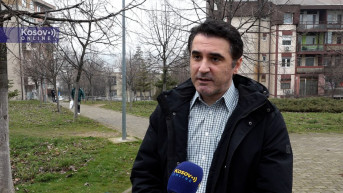
Political analyst Artan Muhaxhiri assesses that Kosovo President Vjosa Osmani sides with Self-Determination in 99.9 percent of decisions, which, he says, is understandable because she is aiming for another term and knows that without the support of Prime Minister Albin Kurti she has no chance whatsoever.
Muhaxhiri says that Osmani has shaped her political positions and ideas together with Self-Determination, and that the most recent decision confirming that she sides with Self-Determination was the setting of the election date.
All other parties, Muhaxhiri recalls, were against December 28 as the election date because it was not logical, while only Self-Determination supported December 28, and Osmani decided that the elections would be held on that day.
“But that is understandable because she wants a new term and knows that she cannot even dream of securing another presidential mandate without the support of Mr. Kurti. The problem, however, is that the situation has changed compared to 2021, when Mr. Kurti had 50 percent of the vote. Back then it was much easier because they could do it on their own. Now it is not likely that she will so easily become president again, and she needs a coalition with other parties. But with this approach she is losing allies, because I do not think that the LDK or the PDK will so easily vote for a new mandate for President Osmani,” our interlocutor says.
As he adds, this means that in April there will be another major crisis on Kosovo’s political scene and that new elections will most likely be called. The gap between the parties, he says, is enormous, which is why he does not believe there will be an agreement on the election of the president.
Asked whether voters will interpret the lifting of EU sanctions on Kosovo, which Osmani announced to the public, as a success of Self-Determination, Muhaxhiri says that this depends on the category of voters.
“Militant voters will present this as a joint success because they see Kurti and Osmani as one team. However, rational voters will know that this was merely the fulfillment of the European Union’s requirements to conduct a democratic voting procedure in the north, with the return of Serbian mayors in four municipalities with a Serbian majority in the north. That is very clear. However, we are now entering a war of reinterpretations, and everyone will reinterpret it as they wish,” he points out.
Speaking about the message Osmani sent by visiting South Mitrovica and Mayor Faton Peci as soon as he took office, Muhaxhiri says that this is fully in line with what happened during the elections, since Kurti was 100 percent focused on Peci’s campaign and victory in South Mitrovica.
“I think that this was strong support both for Mr. Peci and for Mr. Kurti, but also generally for the entire idea of the government’s and Kurti’s focus on Mitrovica, both in the north and in the south,” Muhaxhiri concludes.


0 comments