
Nikolic: Kurti seeks to introduce alternative topics in the dialogue to avoid “breaking his teeth” on the Community of Serb Municipalities
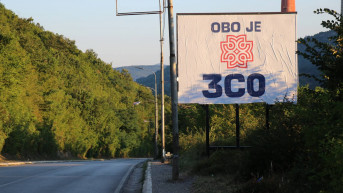
Albin Kurti aims to drive out the remaining Serbs from Kosovo and to introduce alternative topics in the dialogue in order to avoid “breaking his teeth” on the Community of Serb Municipalities, stated Danijela Nikolic, Chair of the Committee on Kosovo and Metohija of the National Assembly of Serbia. She added that Belgrade insists on the full implementation of the Community of Serb Municipalities with all executive competencies. Aleksandar Rapajic, Programme Director of the Center for Advocacy of Democratic Culture, said that Kurti and his government have no intention whatsoever of initiating the process of establishing the Community of Serb Municipalities, as reported by Euronews Serbia.
Nikolic pointed out that the responsibility for the failure to establish the Community of Serb Municipalities lies not only with Pristina, but equally with those mediating the dialogue.
“As I understand it, Pristina seeks to avoid formal blockages, namely by not submitting the draft statute to the Constitutional Court for a review of constitutionality, and perhaps by introducing, in phases, areas such as education, healthcare, local governance, and so on. In other words, to gradually incorporate elements into what they call the Community of Serb Municipalities, as they perceive it, and to impose through institutions that it lacks institutional weight. That is not acceptable. We know what the obligations are,” Nikolic told Euronews Serbia.
She recalled that the Community of Serb Municipalities is part of the Brussels Agreement and has clearly defined competencies.
“That is why it is sui generis, why it is specific. It did not originate from the Ahtisaari Plan, so that we are merely ‘attaching’ ourselves to it. It is complete and autonomous, and as such must have its own competencies, weight, and executive powers,” Nikolic emphasized.
She stressed that the Community of Serb Municipalities is precisely what Kurti has been avoiding all along.
“He avoids the Community of Serb Municipalities. Whenever he has a problem with the European Union, he says: ‘Yes, we are seeking the CSM, but what kind?’ He is advocating precisely the model from the Ahtisaari Plan, which speaks of some form of association for minority communities to resolve their issues. But that is an NGO-type structure. It is not what was signed in Brussels on 19 April 2013, nor does it include the executive powers envisaged. That is why it is specific,” she said.
Nikolic noted that the Community should have a president and an assembly composed of ten Serb-majority municipalities, as well as executive powers.
“Education and healthcare would be part of the Community of Serb Municipalities, and it is clearly defined in the draft statute that our institutions fall under the budget of the Republic of Serbia and enjoy uninterrupted financing,” she stressed.
She clarified that at no point in Brussels had there been any discussion of financing education and healthcare from the Kosovo budget.
“We have seen throughout this period that Kurti, or Pristina, whenever it suits them, claim that the Community of Serb Municipalities is like Republika Srpska and therefore unacceptable, insisting it must be part of Kosovo’s institutions. I repeat once again, there has never been any discussion in the dialogue about education and healthcare being financed from the budget of so-calle Kosovo,” Nikolic stated.
She emphasized that it is crucial for the issue of the Community of Serb Municipalities to return to the negotiating table in Brussels in full capacity.
“The essence here is to create a form of functionality for what they call the Community of Serb Municipalities, as they see it, and to avoid political conflicts. Kurti is not the only one to blame for the failure to establish it. He has not been in power for 13 years. There was neither readiness nor political will in previous periods,” she added.
Commenting on the abolition of payment transactions by Pristina’s institutions, Nikolic stated that this had never been part of the dialogue.
“The draft statute of the Community of Serb Municipalities was written by my legal team. There was never any discussion about abolishing payment transactions or the dinar. What Kurti attempted—and what he did—was to abolish the dinar and payment transactions, not because of the Community, which he de facto does not want, but because he seeks to consolidate his sovereignty. The Community of Serb Municipalities is an obstacle for him. When I said he sees it as the Republic of Srpska—yes, he even said so in Brussels. The essence is that Kurti wants to complete the process: to drive out the remaining Serbs from Kosovo and Metohija and to impose alternative topics in the dialogue precisely to avoid ‘breaking his teeth’ on the Community of Serb Municipalities. Because every government in Pristina, current or future, whether led by Kurti or anyone else, will break its teeth on the Community of Serb Municipalities,” Nikolic stated.
She reiterated that Belgrade insists on the full implementation of the Community of Serb Municipalities with all executive powers.
Commenting on the meeting between Emmanuel Macron and Kurti, she stated that the French leader is currently among the most powerful figures in Europe, which is why Kurti sought his support, but “did not fare well.”
“That is why he went to seek help by any means, such as requesting that the Kosovo Security Force be deployed in the north and replace KFOR, claiming he would guarantee security. In a subtle way, he is trying to consolidate sovereignty and remove Belgrade from the dialogue, but that will not be possible. Macron did not allow it. As long as Belgrade remains part of the dialogue, they will never become either a state or fully independent,” Nikolic underlined.
She concluded that Belgrade’s chief negotiators consistently signal readiness for dialogue, but that it requires both sides, and thus also depends on Pristina.
Aleksandar Rapajic added that the European Union is in a hurry, but only to achieve a bureaucratic victory.
“I believe the European Union is in a hurry, but not to resolve the issues facing the Serb community in Kosovo or to improve their living conditions. The EU is eager to resolve relations between Belgrade and Pristina in order to integrate Pristina into European processes and to bring the Western Balkans closer to the Union. The EU’s idea is not to solve the problems of the Serb community, but rather to secure a bureaucratic success,” Rapajic told Euronews Serbia.
He explained that Kurti and his government have no intention of initiating the process of establishing the Community of Serb Municipalities.
“This has been Kurti’s core policy since his time in opposition—that he does not want any association or any special status for Serbs. On the contrary, he seeks to further deteriorate the situation and living conditions of the Serb community in Kosovo. I believe this is the main reason why we have not had a fully functional government in Pristina for nearly two years, and why Kurti uses his technical mandate—effectively governing and using the budget—while at the same time telling international actors demanding concessions that he cannot make major decisions due to his caretaker status. In reality, he does not want to form a government, because he knows the pressure would then intensify,” Rapajic explained.
He added that pressure on the Serb community has been significant over the past four years.
“Issues that were meant to be resolved through the Community of Serb Municipalities are instead being addressed through unilateral decisions by Pristina, completely contrary to what the Community envisages. We have seen incursions into temporary institutions, the abolition of payment transactions, the termination of trade with Serbia, and obstruction of commerce—all contrary to European values,” Rapajic emphasized.
He added that the EU’s idea is for the draft statute of the Community to be immediately submitted to the Constitutional Court, to prevent later obstruction of the process.
“We must note that one of the EU’s conditions is for the draft statute of the Community of Serb Municipalities—proposed by the EU and slightly amended from the Serbian proposal—to be submitted to the Constitutional Court. The idea is to do this at the outset, to avoid a situation later in the process where someone might question its constitutionality and block everything again,” he explained.
According to him, Kurti’s government has demonstrated one important point—that the Community of Serb Municipalities is necessary.
“The purpose of the Community is precisely to protect the Serb community and prevent what is currently happening under Kurti’s government—namely institutional pressure under the guise of law enforcement and administrative measures. The goal of the Community is to shield the Serb community from unlawful pressure emanating from the central authorities in Pristina,” Rapajic stated.
He added that he hopes the meeting between Kurti and Macron has revived the issue of establishing the Community, but remains pessimistic regarding the EU.
“We have seen in the past that the EU supposedly exerts pressure on Pristina, but that pressure is not truly effective. Sanctions have been introduced, yet they neither functioned properly nor posed a significant problem for Pristina,” Rapajic concluded.
A recent analysis by Kosovo Online also noted that there are ways to avoid submitting the draft to the Constitutional Court, while warning of the lack of political will on the part of Kurti to establish the Community, and stressing that the key lies in the EU’s readiness to fully utilize its political and financial mechanisms. Meanwhile, part of the expert community in Pristina believes that initial steps have already been taken.


0 comments